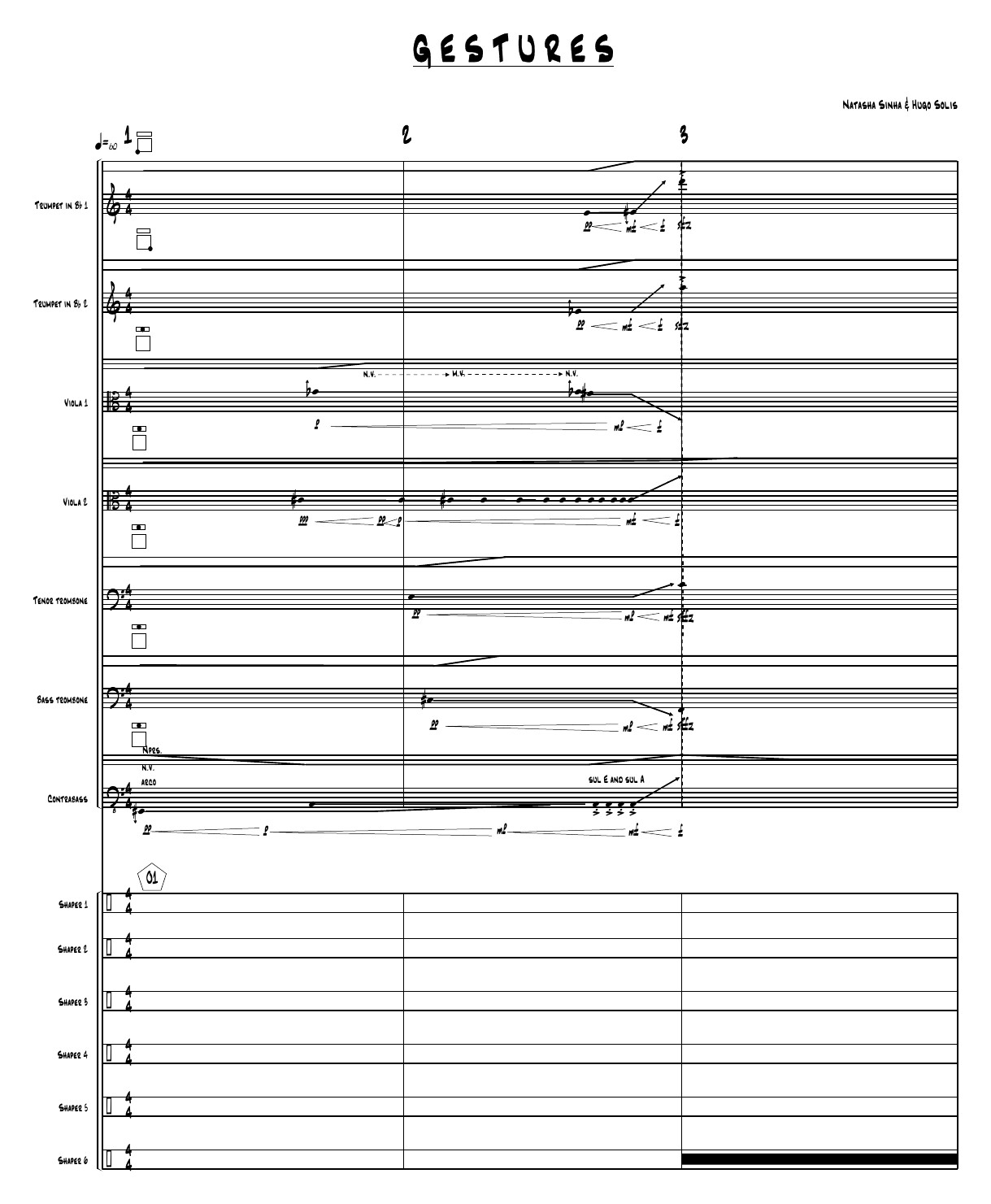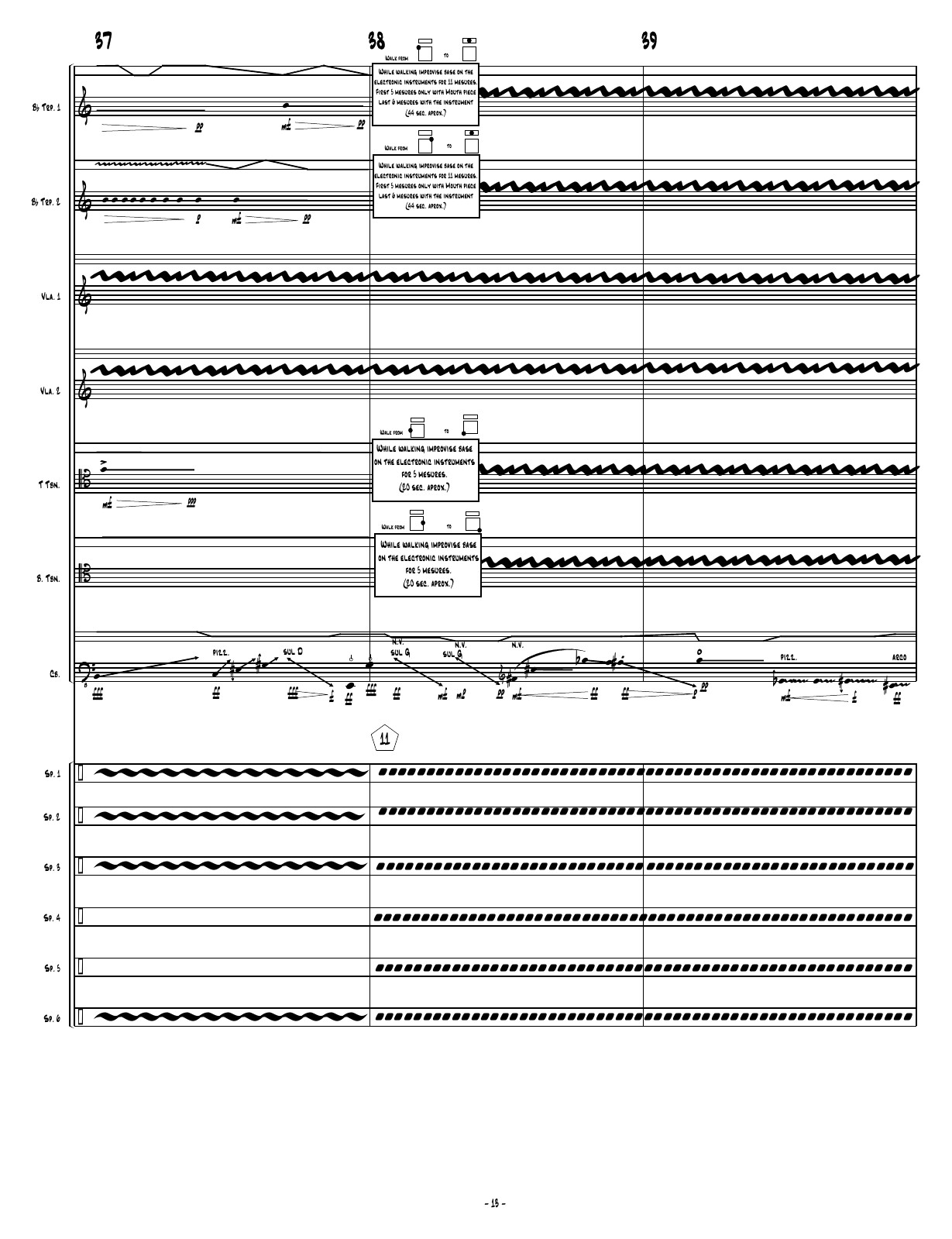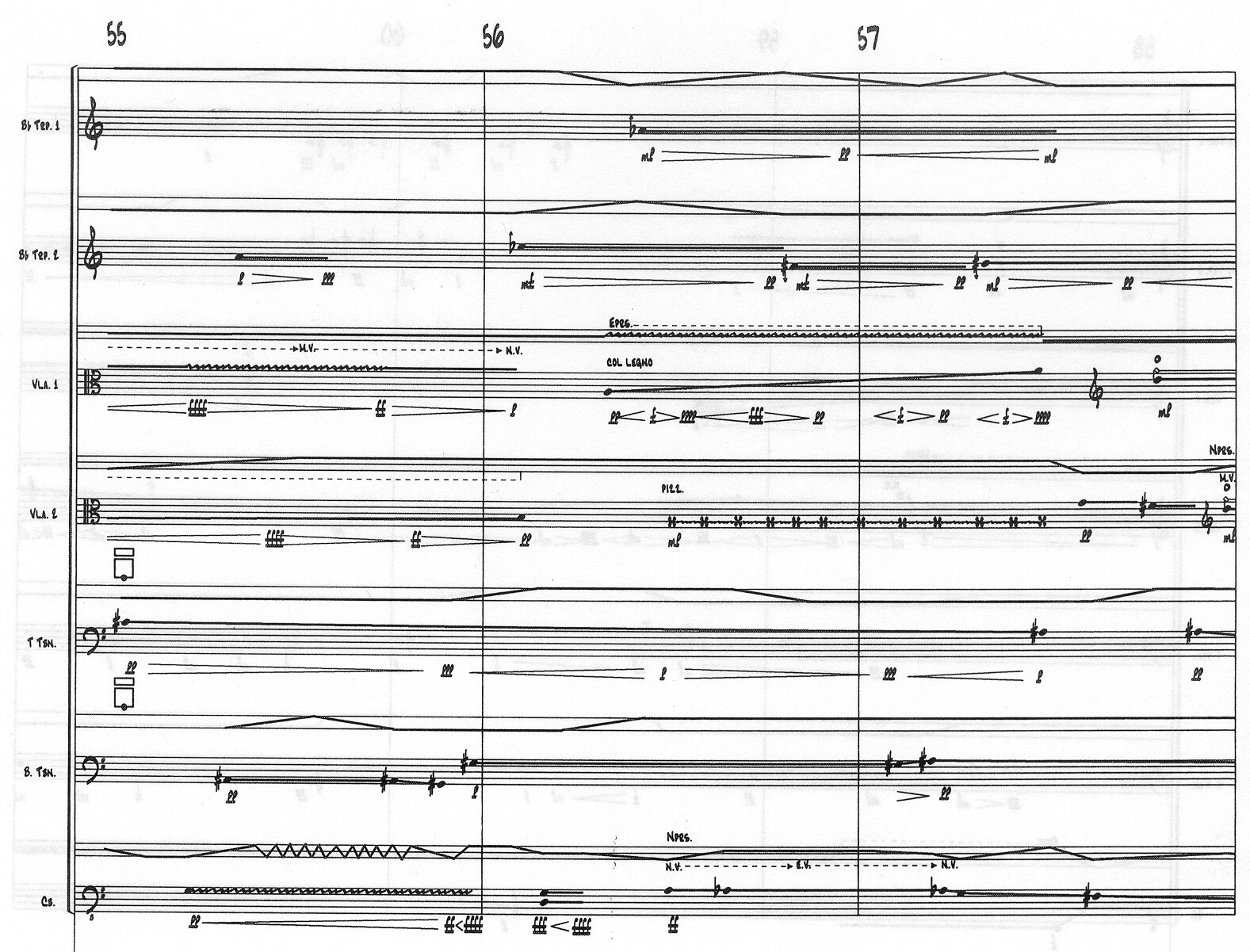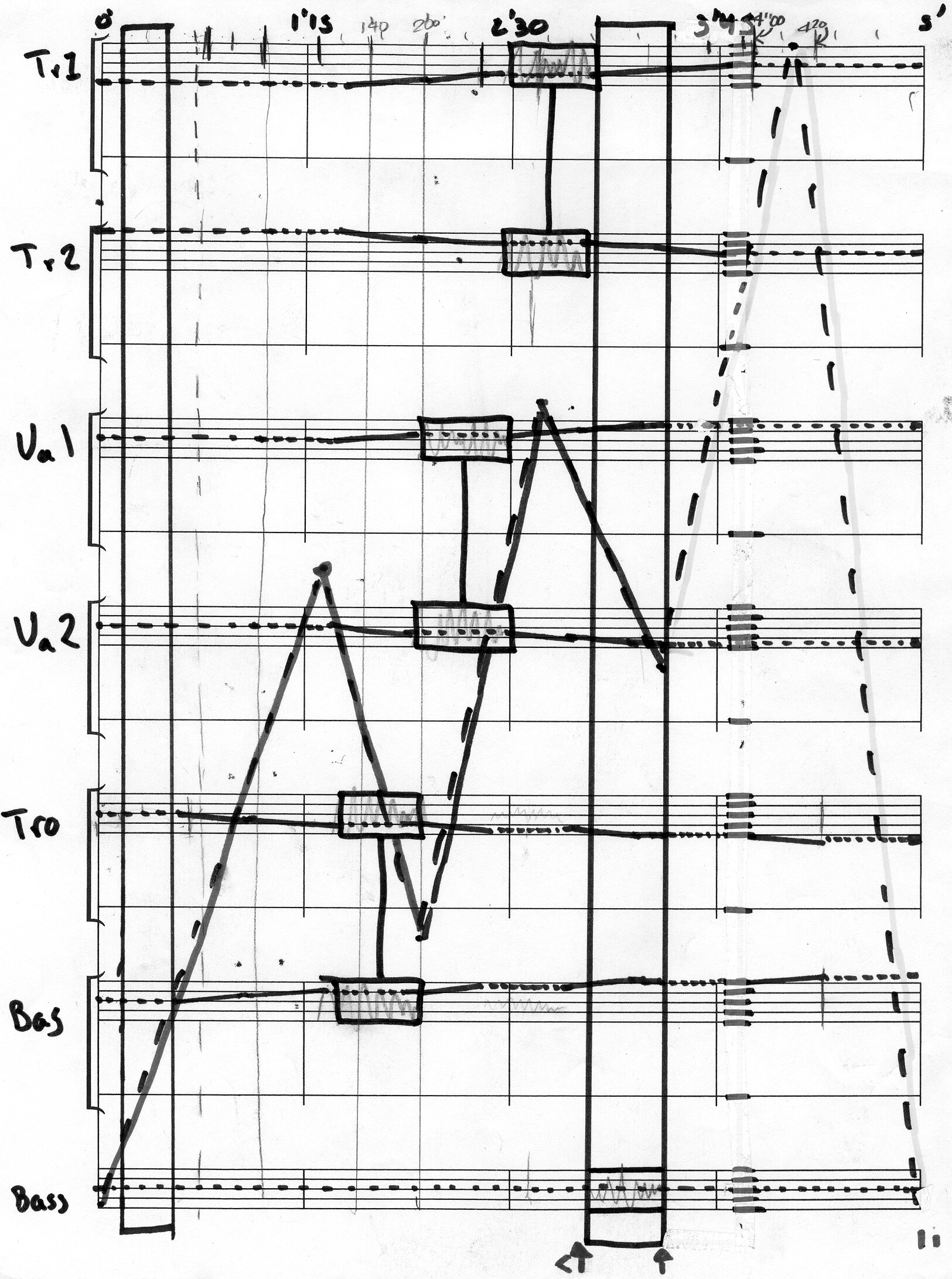
Gestures is a five-minute interactive piece for six Shapers, two trumpets, two trombones, two violas and double bass, which I composed in 2003 with Natasha Sinha, a 12-year-old composer, as part of Toy Symphony, the project led by Tod Machover and the Opera of the Future group at the MIT Media Lab that used new technologies to teach music to children with or without musical training.
The Shapers —developed at Opera of the Future by Roberto Aimi, Margaret Orth and Gil Weinberg— are soft spheres about five inches across, covered in embroidered fabric. Inside, a nucleus holds four copper plates and a microcontroller that measures how hard each area is squeezed and sends it as MIDI data. In Gestures six children play them on stage: their sounds are electronic variations —granulation, pitch shifting, time stretching, reverb, flanger— of recordings of the piece's instruments made with members of the MIT Symphony Orchestra, and a Max/MSP program transforms them in real time according to the pressure of the hands. Two Shapers derive from the trumpet, two from the viola and two from the trombone.
The piece explores sound in space. The double bass is the only instrument fixed on stage, beside the row of children; trumpets, trombones and violas are placed among the audience and move through the hall along routes set out in the score, as in Xenakis's Persephassa, alternating between reading at fixed points and improvising while they walk. The hall is kept in semi-darkness. From Luigi Nono's La lontananza nostalgica utopica futura comes the idea of music that is only suggested, whose volume and density never cross the threshold of semi-darkness and distance.
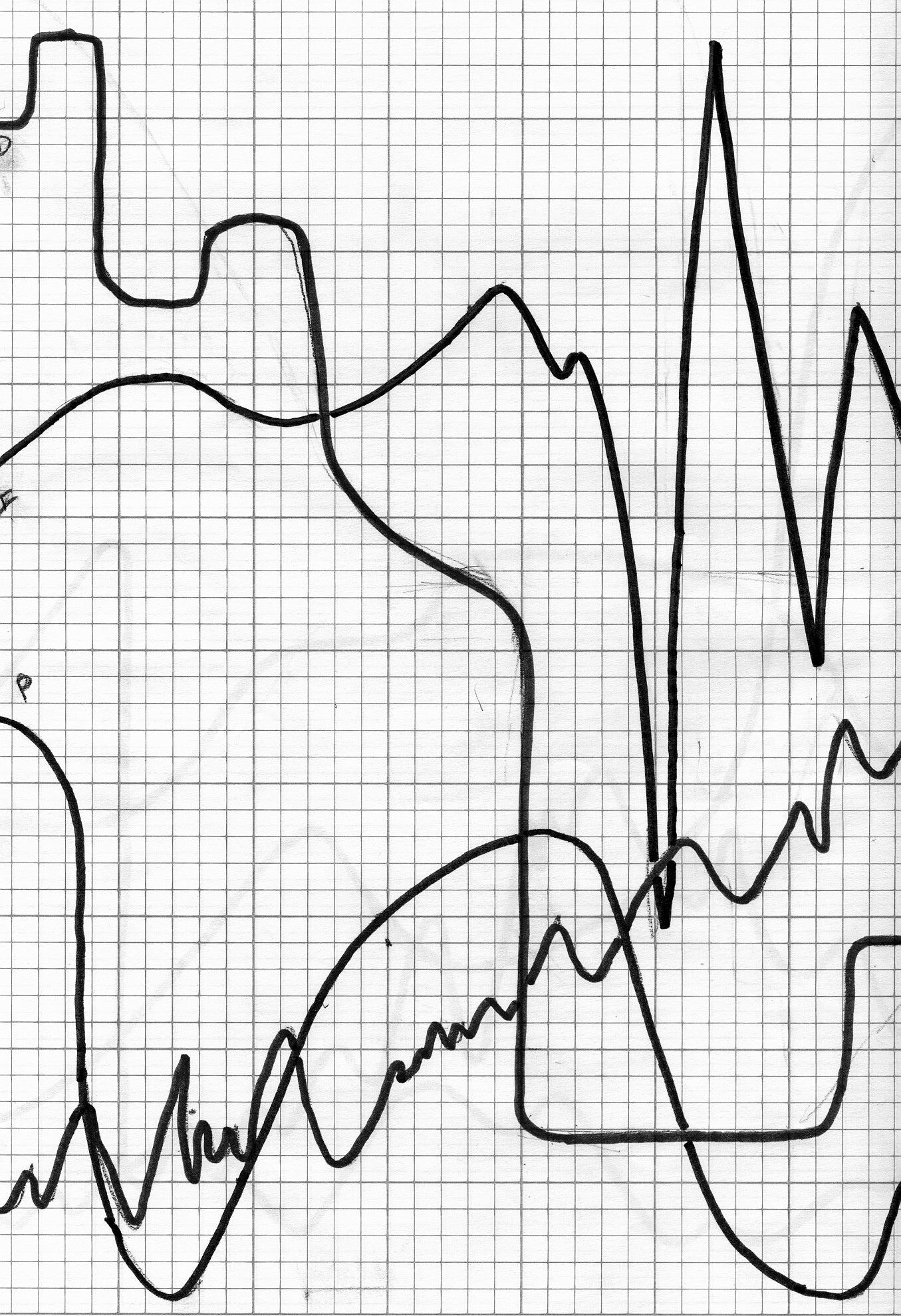
More than the finished work, what mattered was the process of teaching and collaborating. Natasha had years of traditional musical training but had not been exposed to contemporary or electronic music. We listened, score in hand, to Berio, Nono, Ligeti, Stockhausen, Subotnick, Nancarrow and Xenakis; we did vocal imitation exercises ("what is the soundscape of your kitchen at breakfast time?") and acoustic fantasies ("sing the sound of the color red, then change it gradually to blue"), and I asked her to invent her own ways of notating sounds that traditional notation cannot reach. With that we first drew a map of the musicians' movements and then a graphic score on a long roll of paper, with one colored line for each parameter: register, intensity, density and speed of change. From it we improvised the piece with our voices on a multitrack recorder, in pairs of instruments, and transcribed it into proportional notation with quarter-tone resolution and dynamics from pppp to fffff. Workshops at the Boston Children's Museum showed that total freedom was hard for children aged 6 to 8, so we simplified the Shapers' parameters and added a conductor.
It premiered on April 26, 2003, at MIT's Kresge Auditorium and was performed again on May 17 at the Winter Garden of the World Financial Center in New York, with the Boston Modern Orchestra Project conducted by Gil Rose and children from the Toy Symphony workshops. The process is described in the paper "The Experience of Teaching and Collaborating with a Young Composer in the Creation of an Electro-acoustic Piece".
Images: sketches and score of the piece.