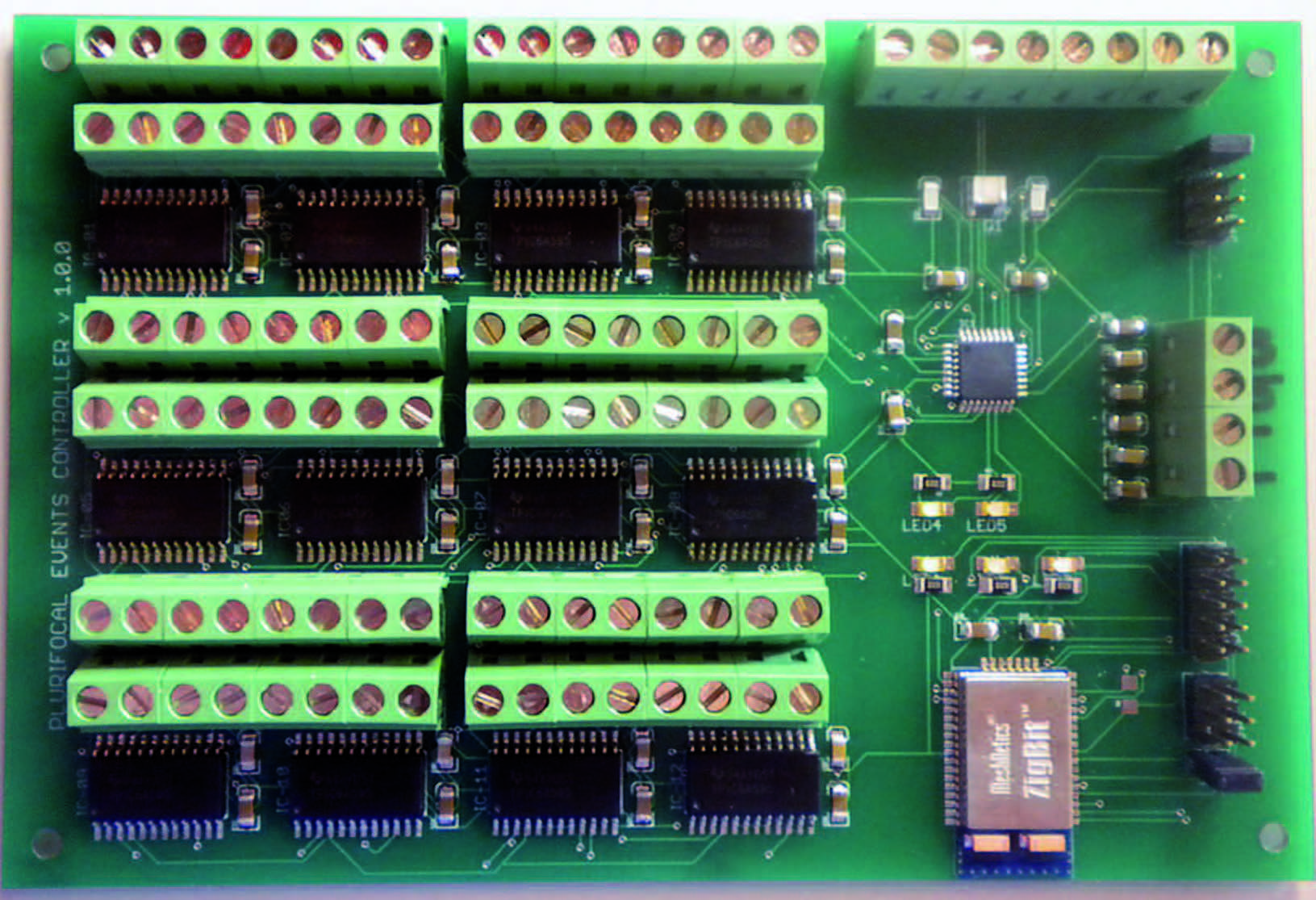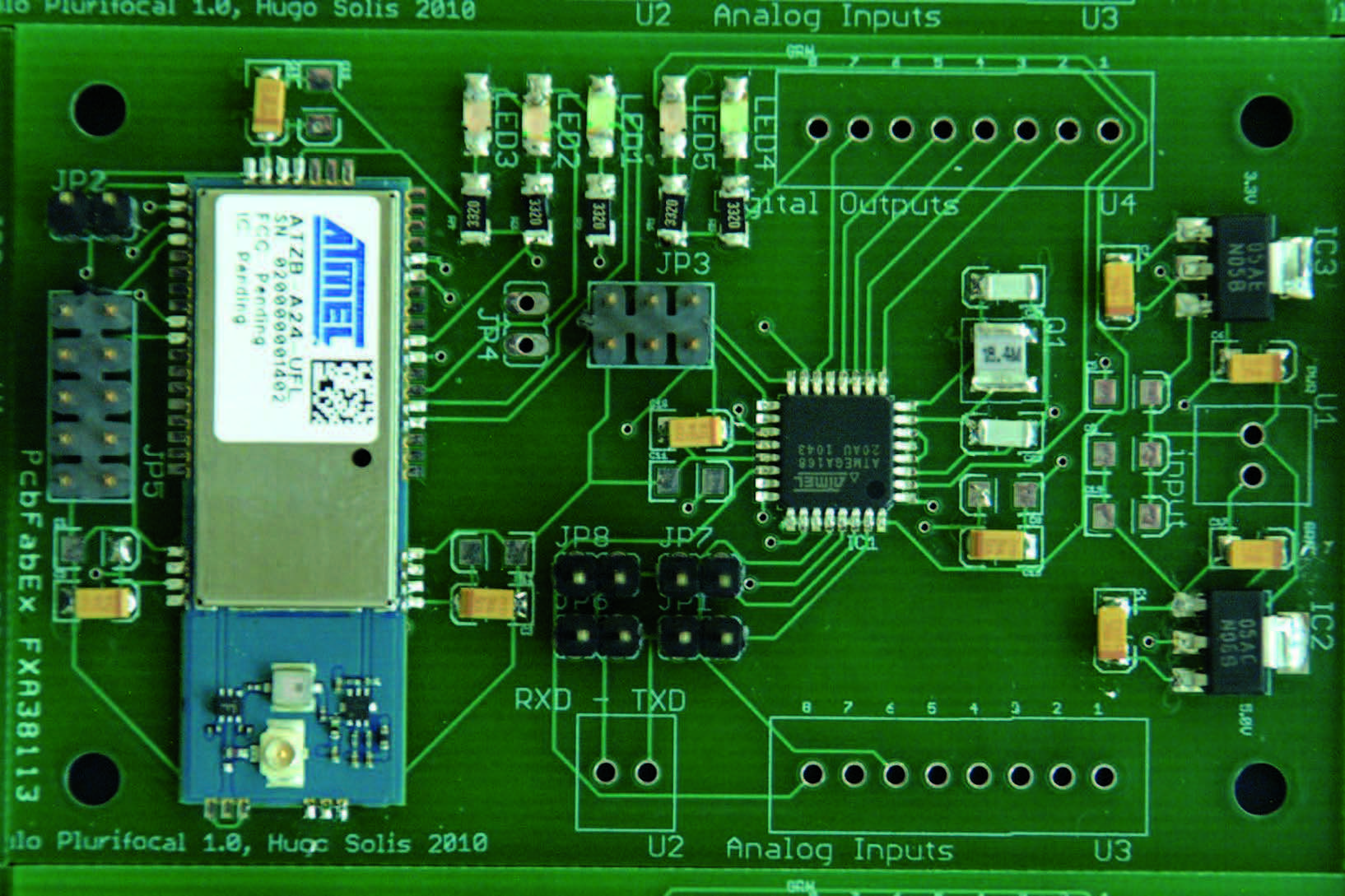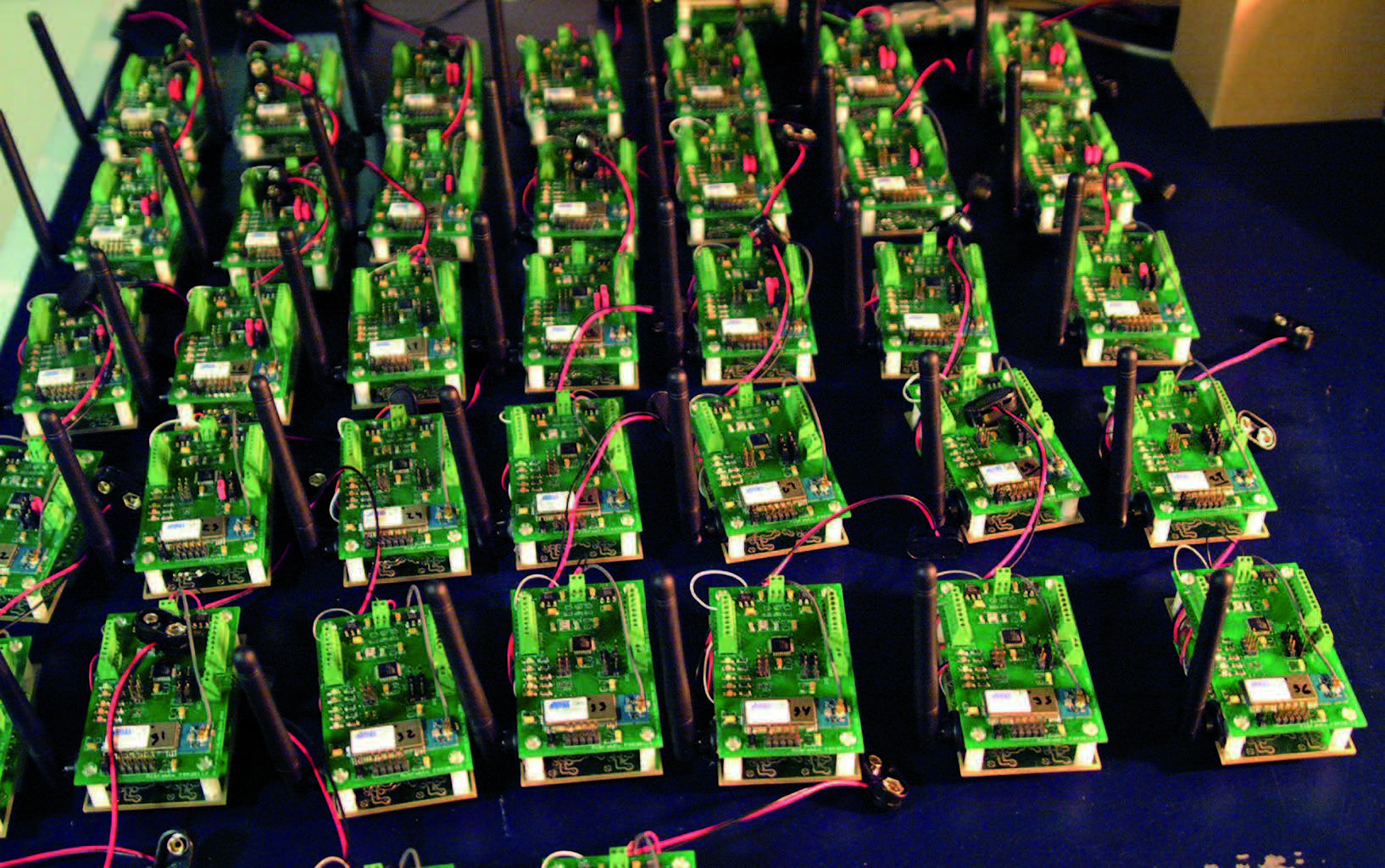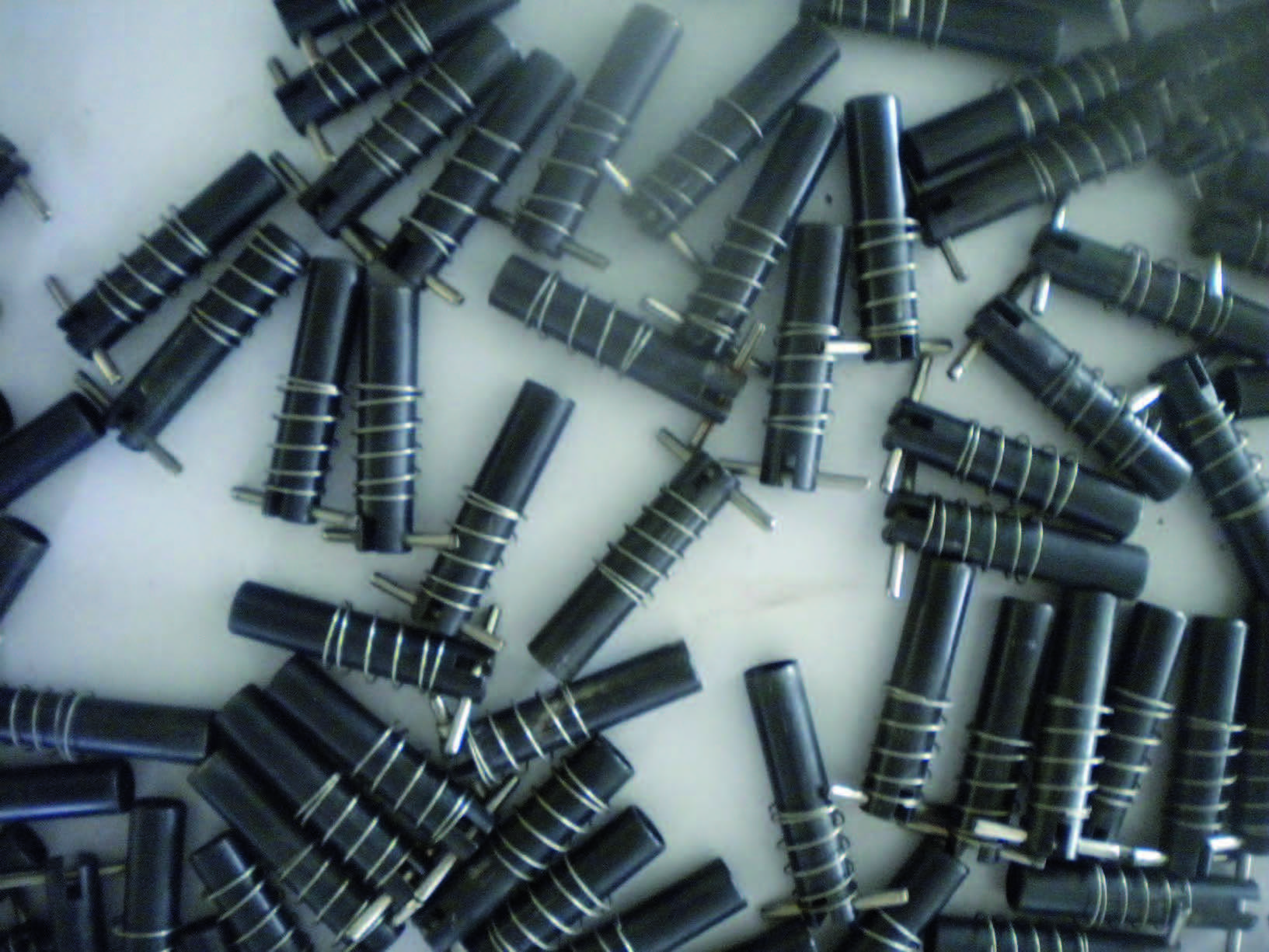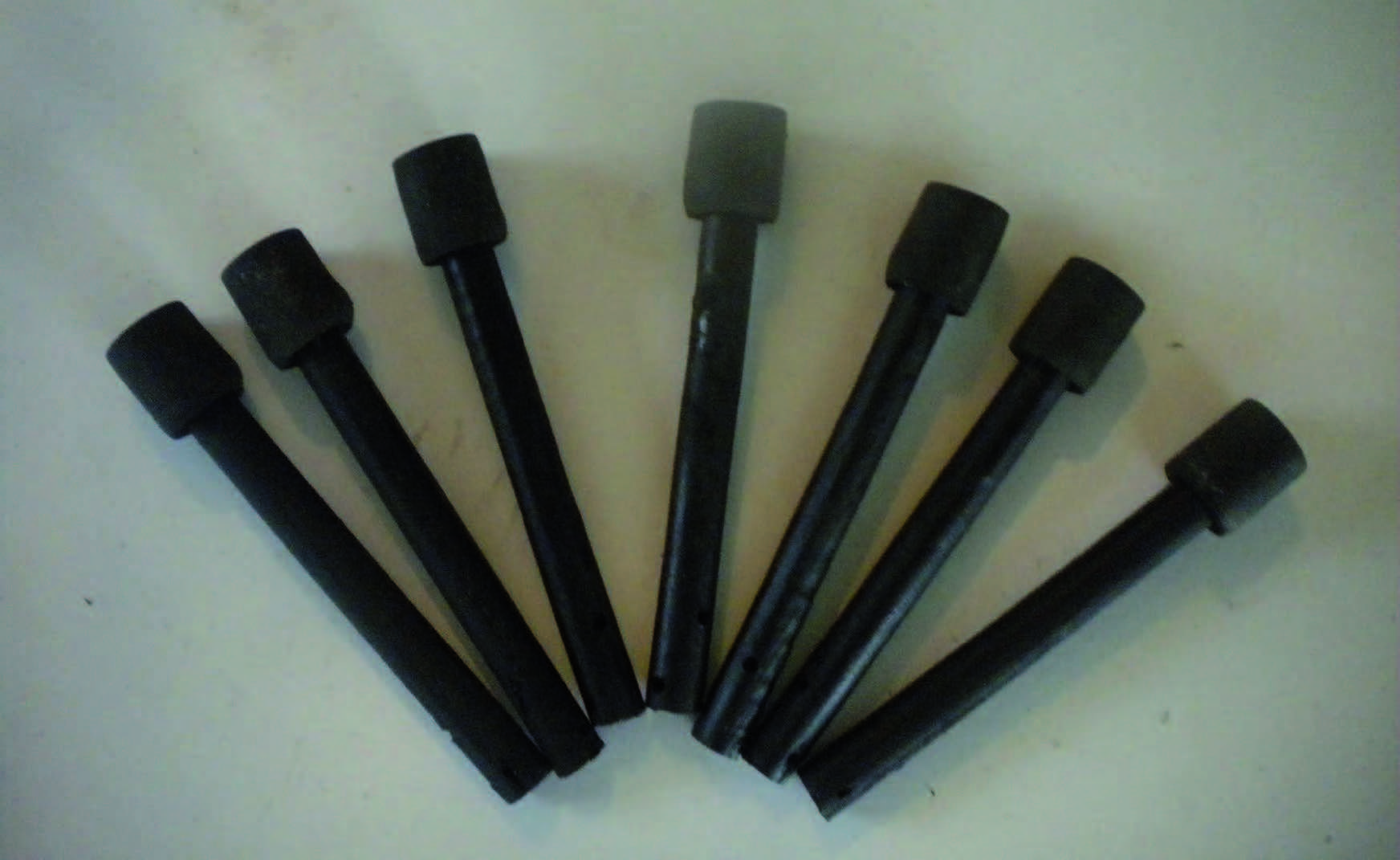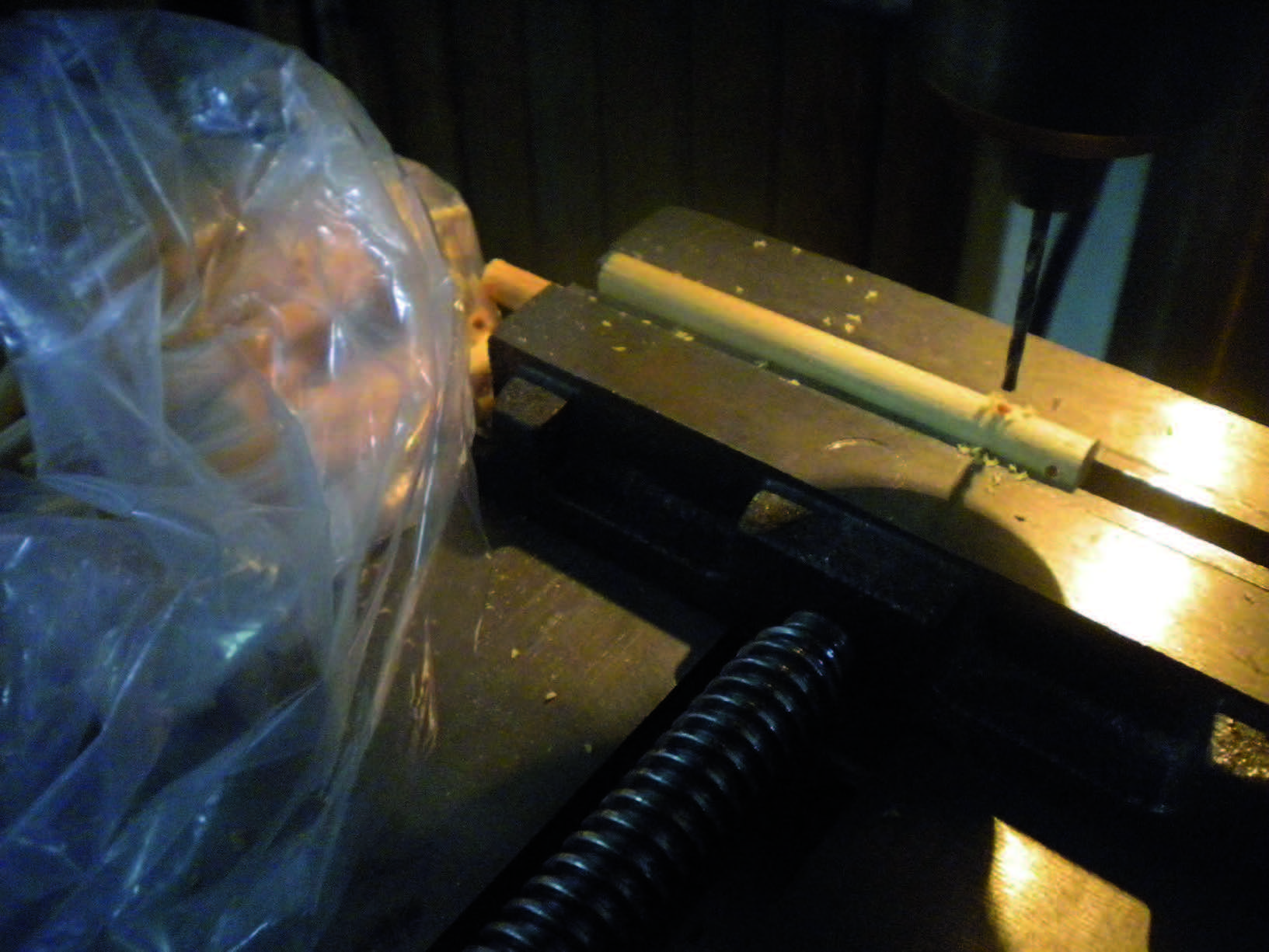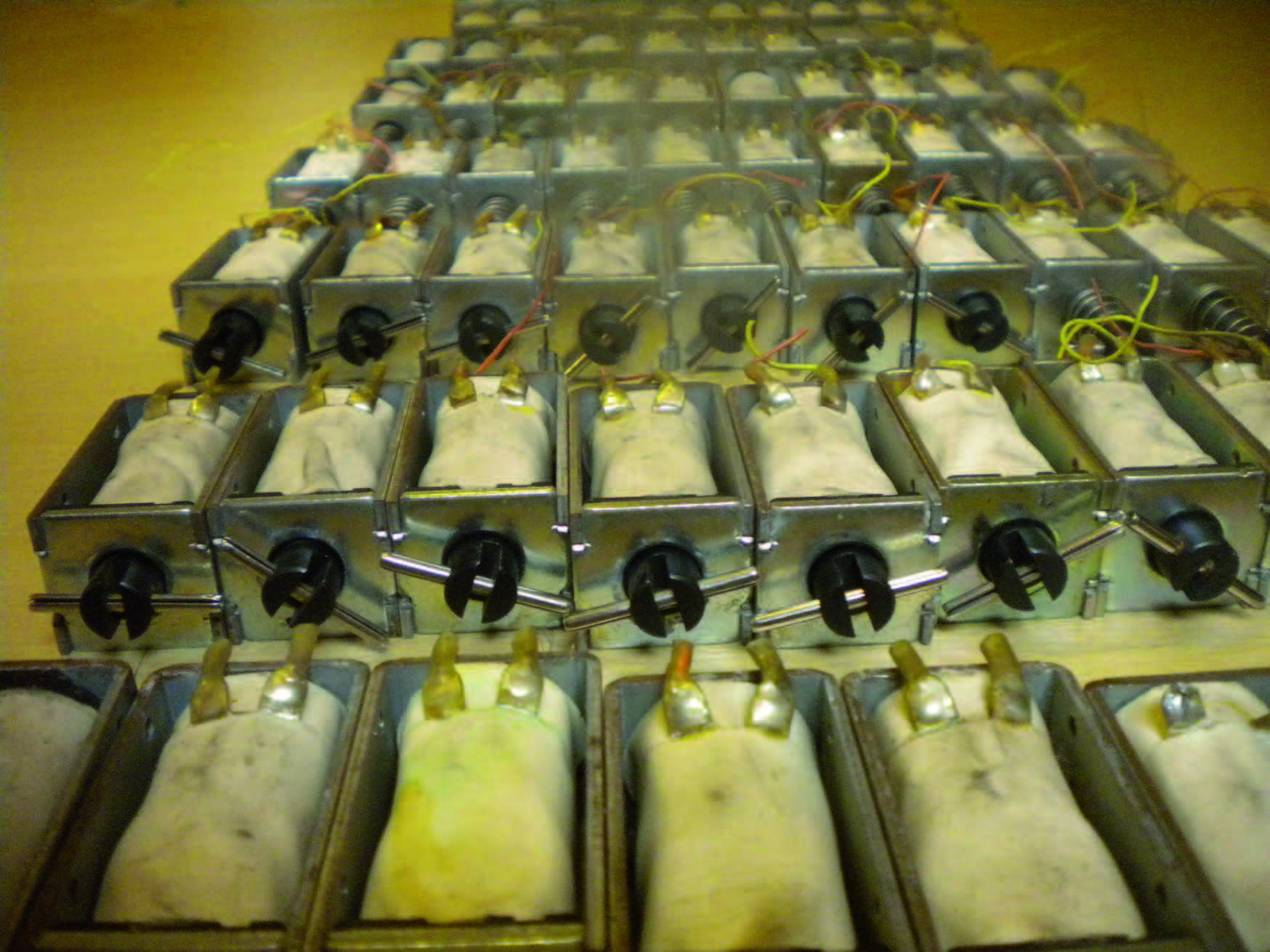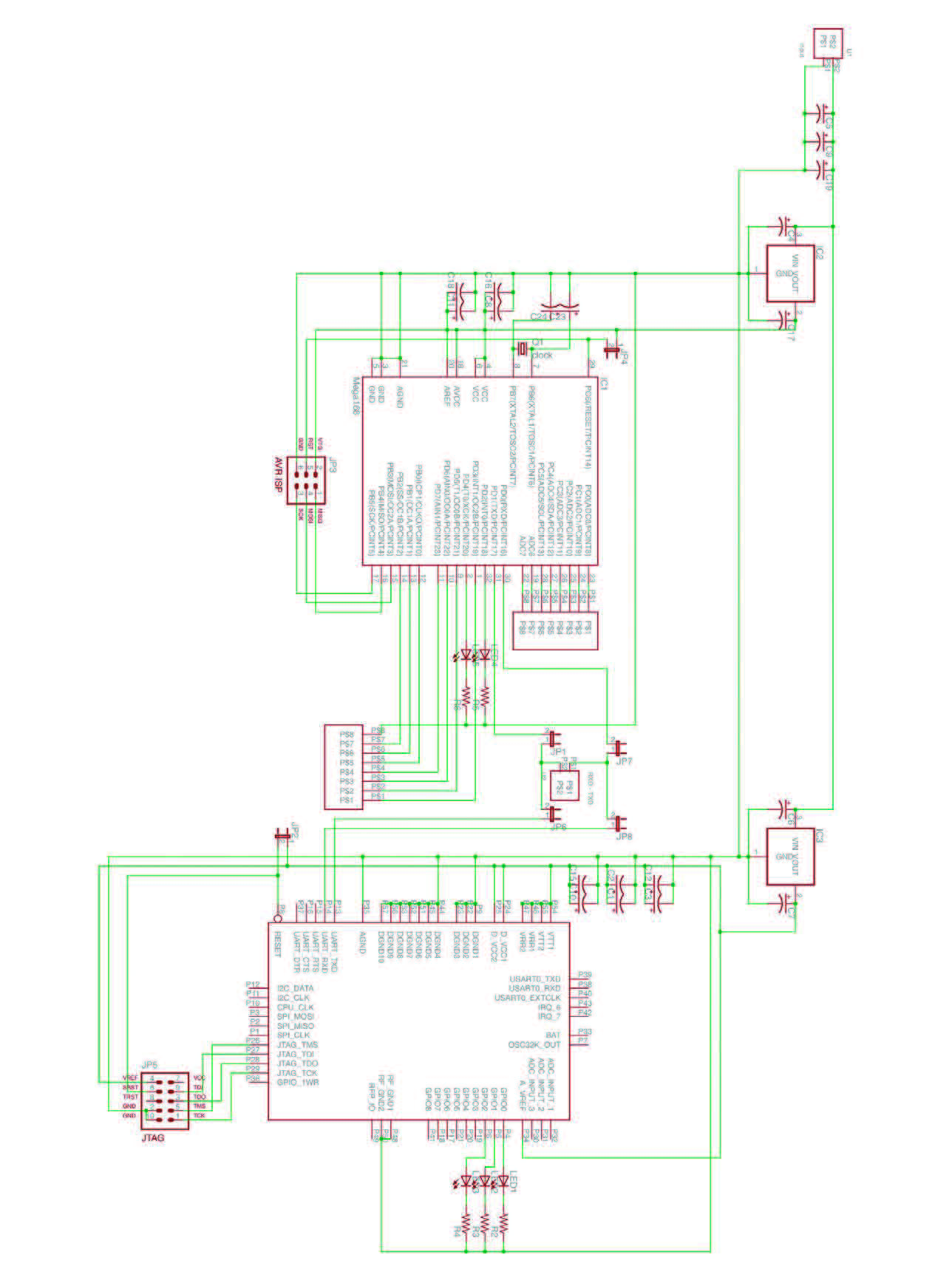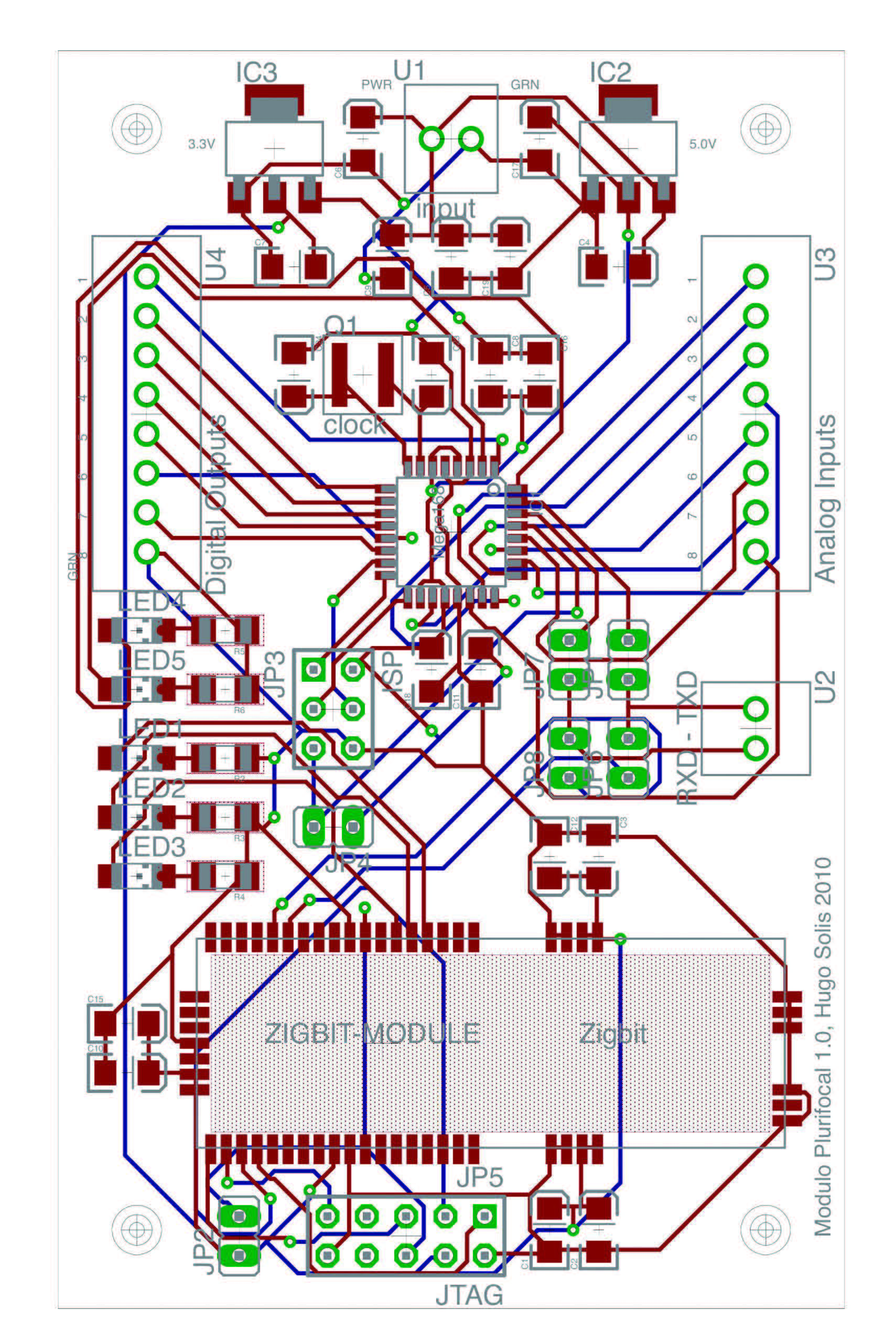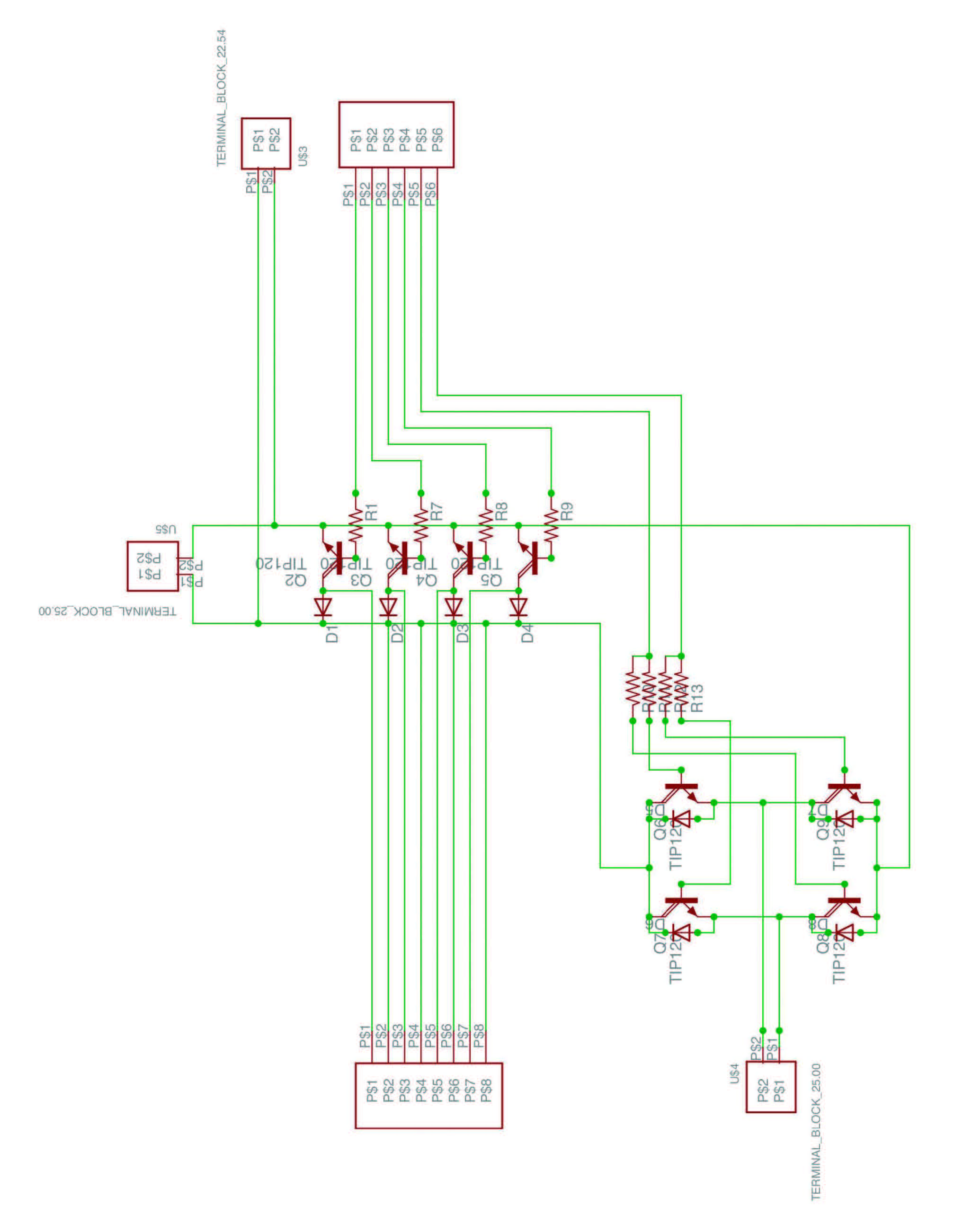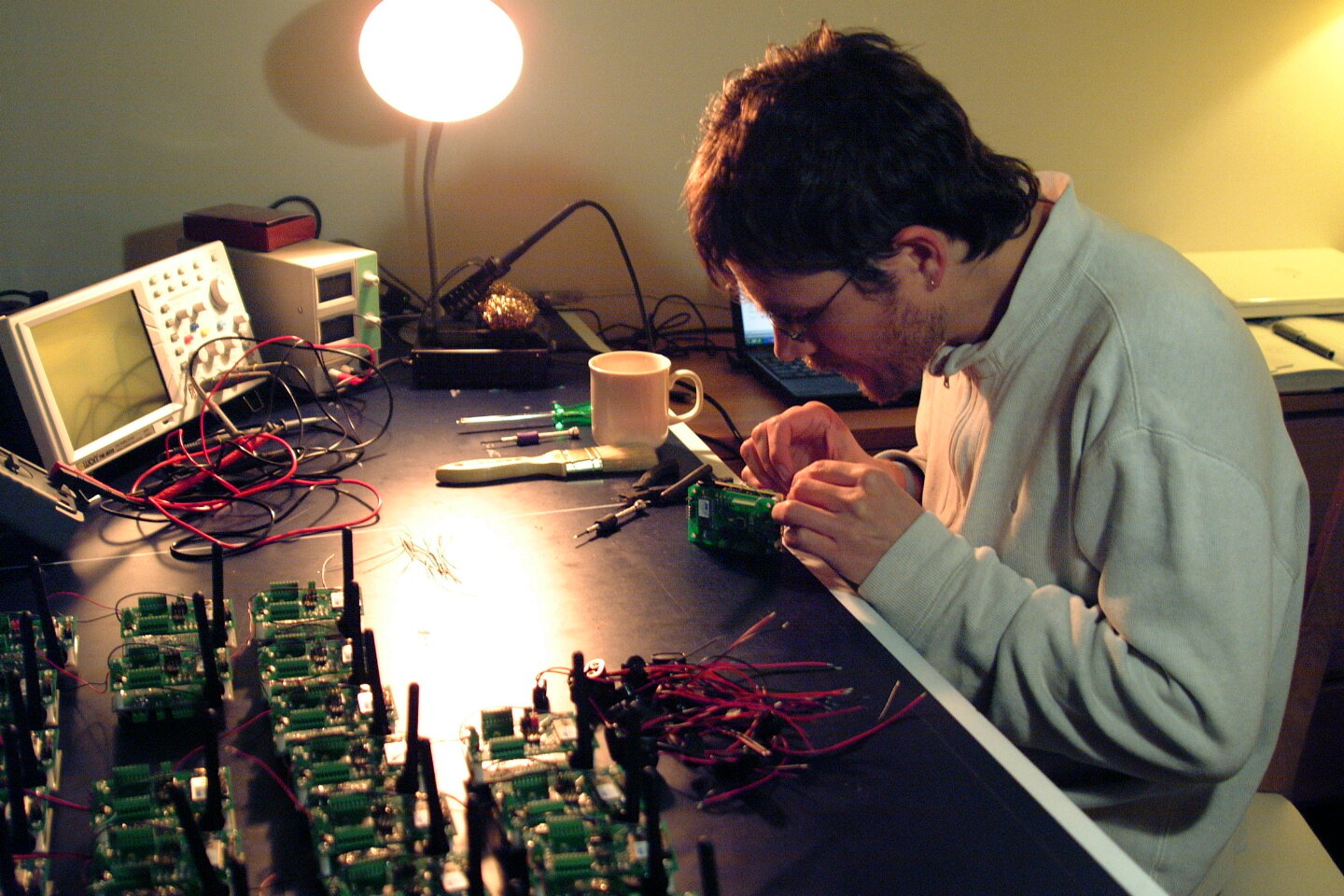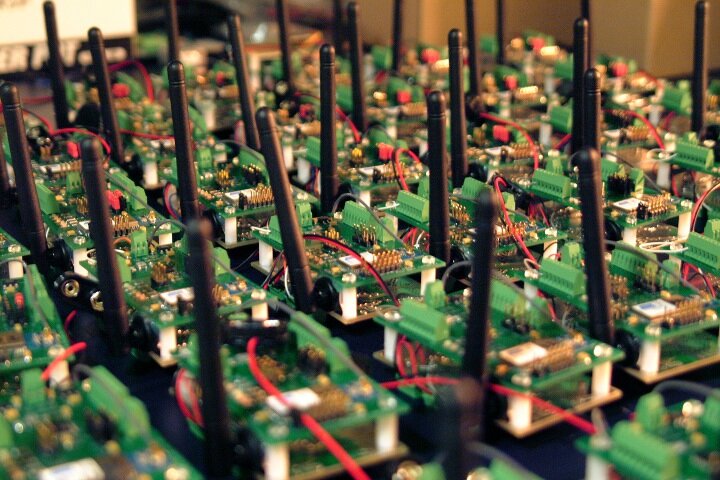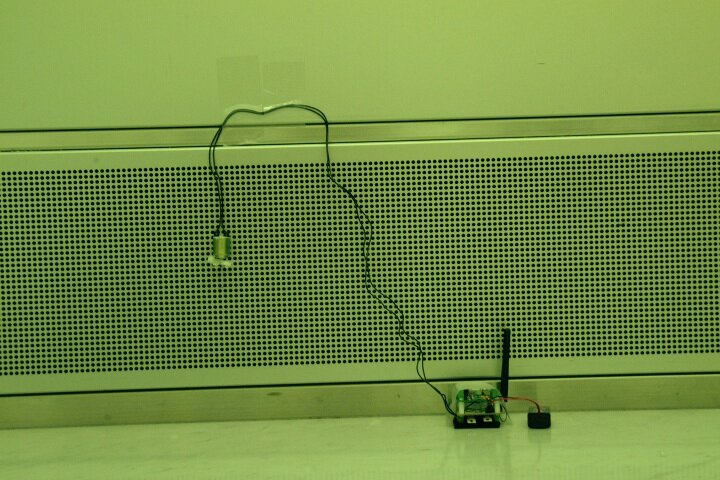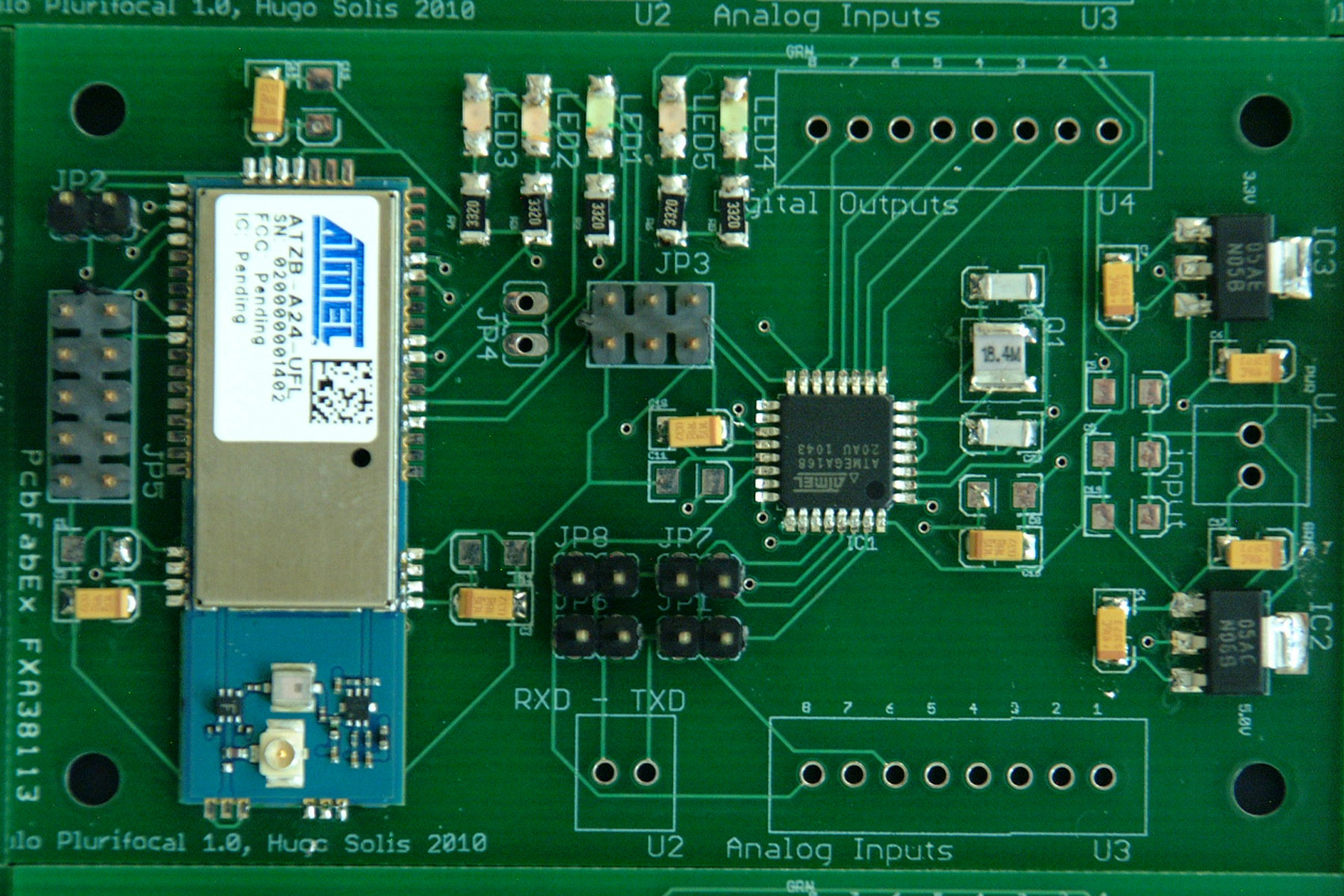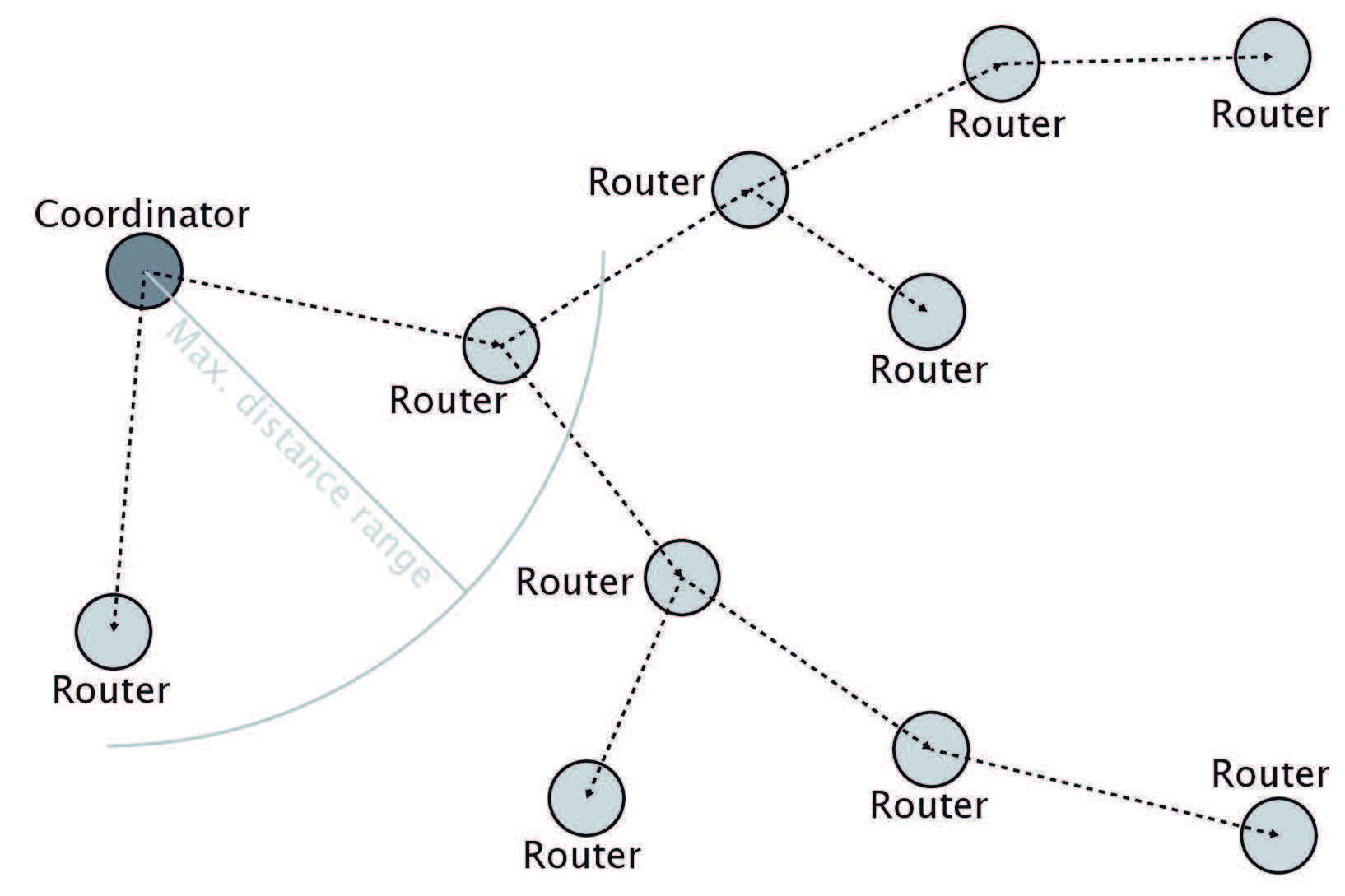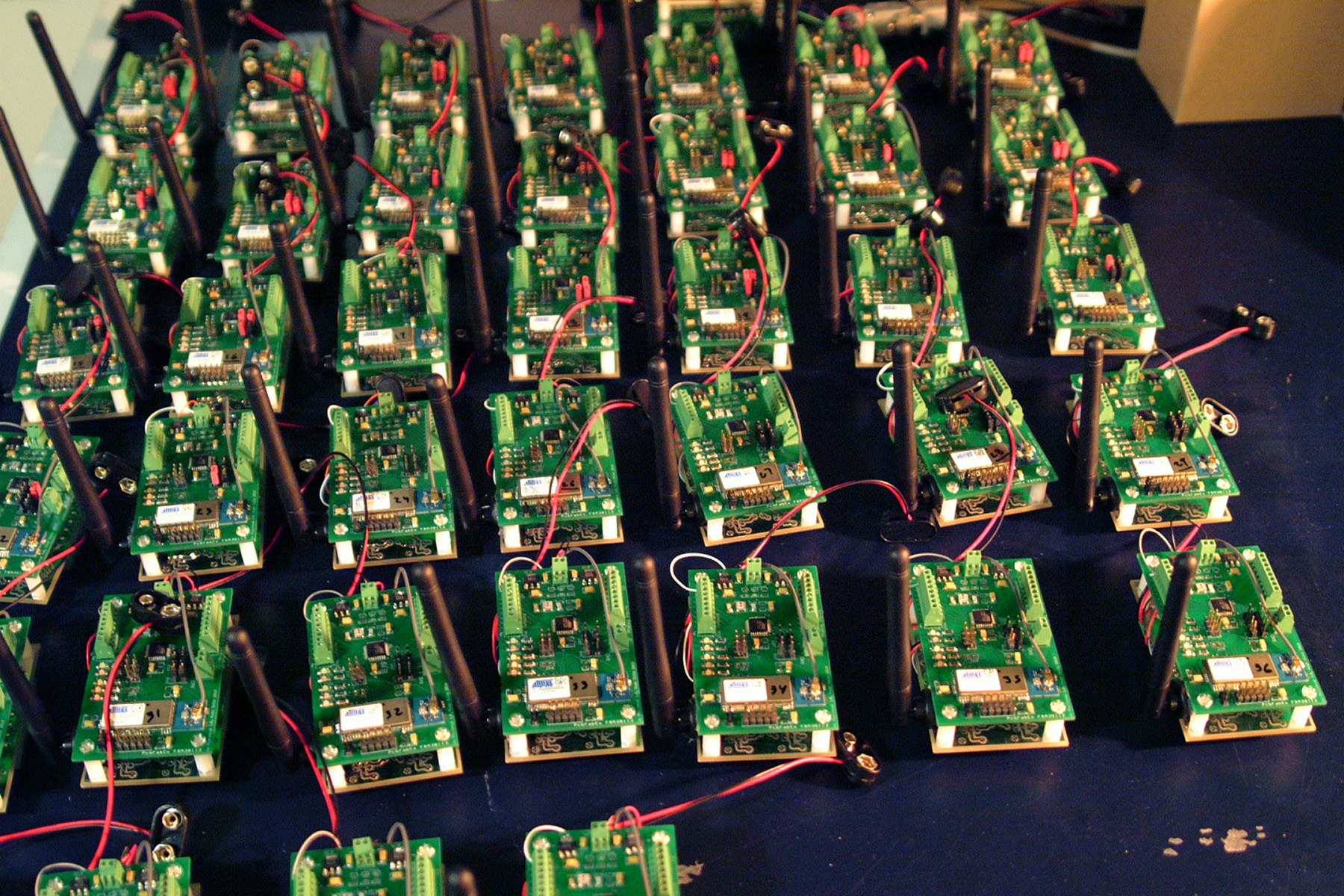
The Plurifocal Event Controller is a personalized electronic device that allows the generation of analog sound to spread over large physical spaces. Objects, containers, jars, walls, windows, etc. They can be struck, rubbed, brushed, or scratched with solenoids and modulated DC motors. A set with these electronic devices allows precise control of the mechanical equipment. The Plurifocal Event Controller was designed, built, and programmed by me. Each module has a main microcontroller, a wireless communication module, a set of voltage regulators, and a set of input and output ports. The module works in conjunction with a power supply board and the assembly allows the control of motors and solenoids. With a computer and using a custom protocol, a collection of these modules can be controlled wirelessly to generate synchronized events distributed over long distances. Fifty modules were manufactured during 2011 and used in various creative projects. So far two different versions have been created; the first functioned as a proof of concept and the second has been used in various installations that broadcast analog sounds in areas of different dimensions.
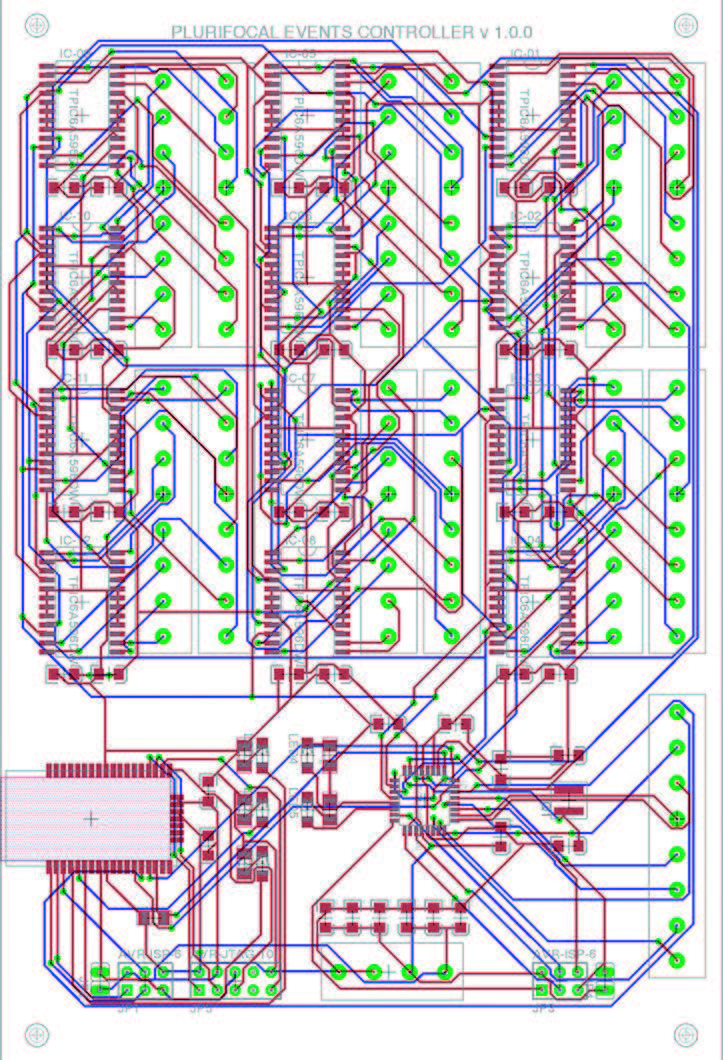
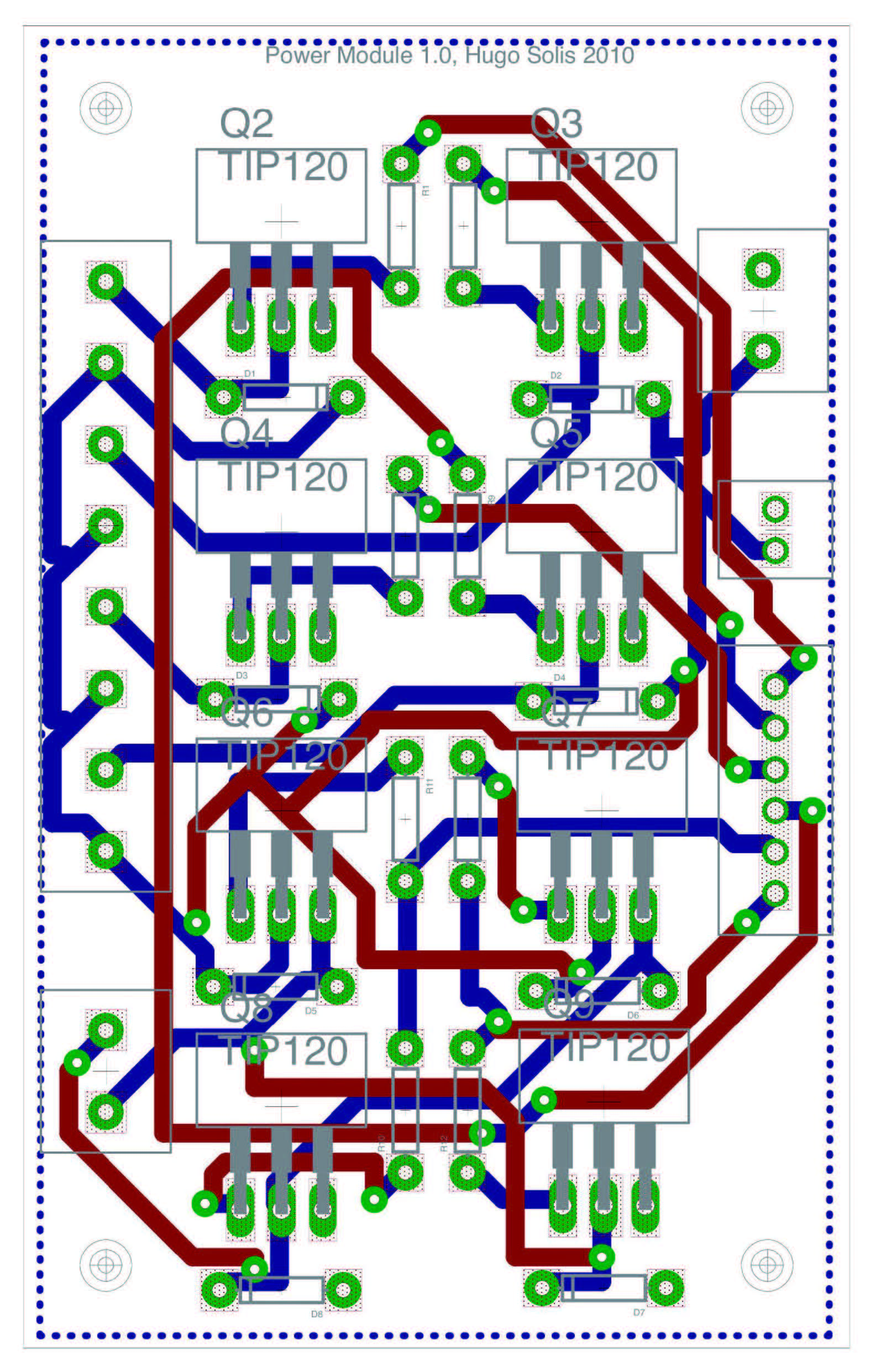
The Plurifocal Event Controller uses a set of standard integrated circuits and secondary electronic components such as voltage regulators, capacitors, LEDs, resistors, and clocks. The core of the system is a microcontroller and a ZigBit module. All components are mounted on a two-sided printed circuit board designed in Eagle software and manufactured externally in a PCB board factory using professional screen printing, the main business method for high-volume production.
Works made with the system
Echoes for Forgotten Locations (2011)
One of the first works made with the system was Echoes for Forgotten Locations (Ecos para Locaciones Olvidadas), a sound project that explores the acoustic properties of old or abandoned places such as houses, warehouses, churches and ruins. The spaces are intervened with a network of wireless devices that make sound with solenoids and percussive motors, controlled from a computer, to create plurifocal acoustic experiences. The first version was installed at the Museo Británico Americano, an abandoned neo-gothic church in downtown Mexico City, during the Transitio_MX 04 festival (2011). That same year it was shown with water jugs in the atrium of Laboratorio Arte Alameda as part of the Arte Shock competition exhibition.
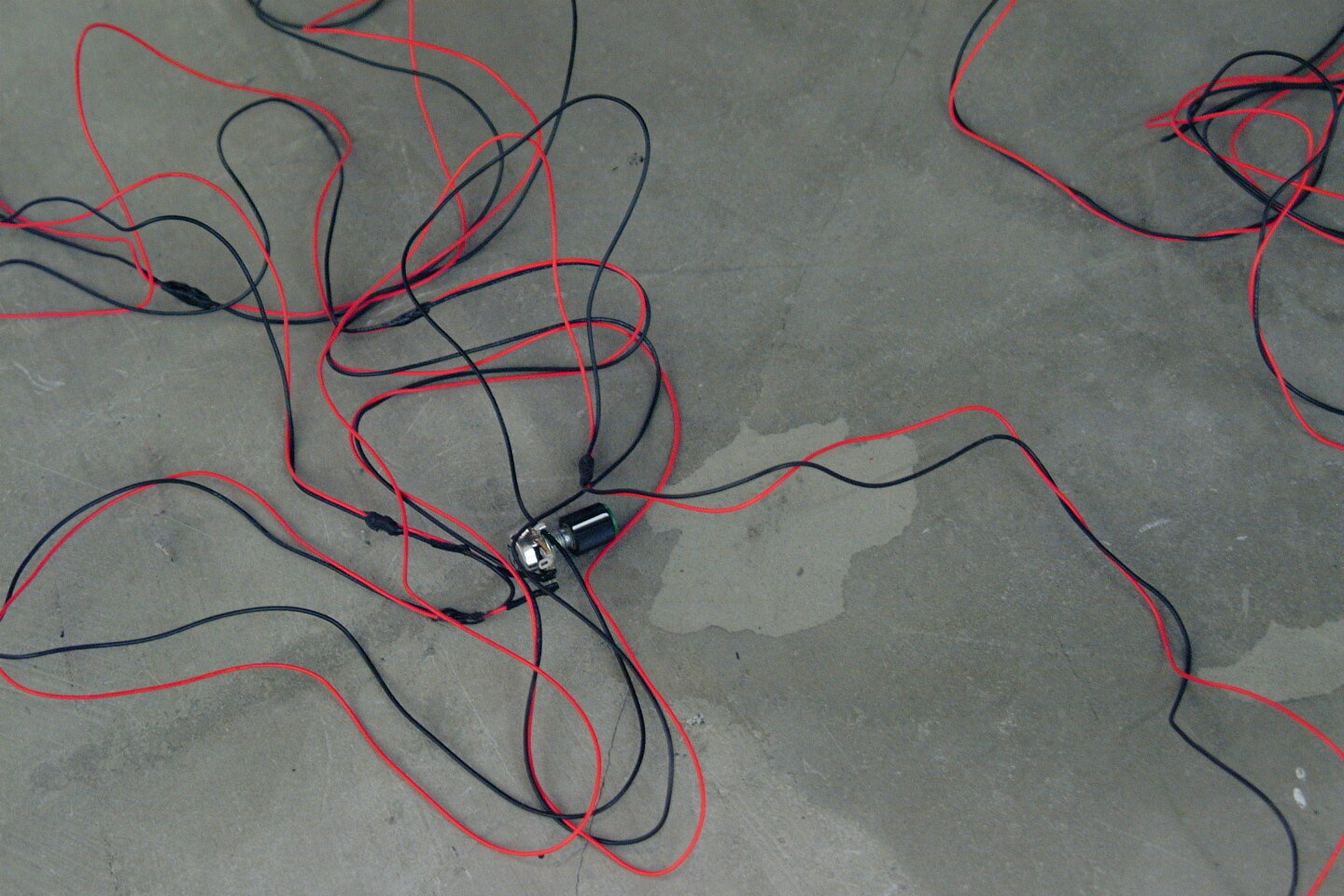
Walking through a place intervened by Ecos, visitors hear sounds coming from the ceiling, from the corners and from distant rooms: rough, harsh, prickly noises that together bear a clear relation to the architecture and function of the space. Coming closer, they find small battery-powered devices with vibrating motors or solenoids that strike cans, metal sheets and other found objects, and, looking for the transmitter, a computer that coordinates the whole network. For a later proposal to the Centro Nacional de las Artes the project was renamed Objetos resonantes III (Resonant Objects III), the name later taken by the installation Resonant Objects.
City Sonic Walks (Tokyo, 2011)
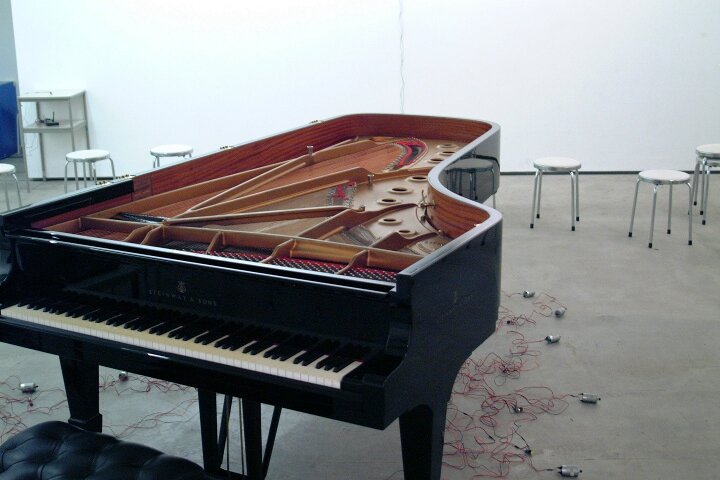
Between January and March 2011, during the Tokyo Wonder Site – FONCA residency, I used the system to develop the project City Sonic Walks (Caminatas Sonoras Citadinas): a series of collective, interactive sound walks in public spaces in Tokyo. Participants walk with a mobile device and headphones, hearing their acoustic surroundings extended with textures and fragments related to the history, architecture and function of the place. From a mobile telematic studio, the artist modulates the experience in real time with the Juum software, responding to the individual and collective behaviour of the walkers. The proposal works with sound, collectivity, the act of walking and the reappropriation of public space.
During the residency I built the wireless circuits of the Digital Plurifocal System, programmed the microcontrollers and the control software, and tested the system in different spaces in the city:
- Open Studio at TWS Aoyama (30 January 2011).
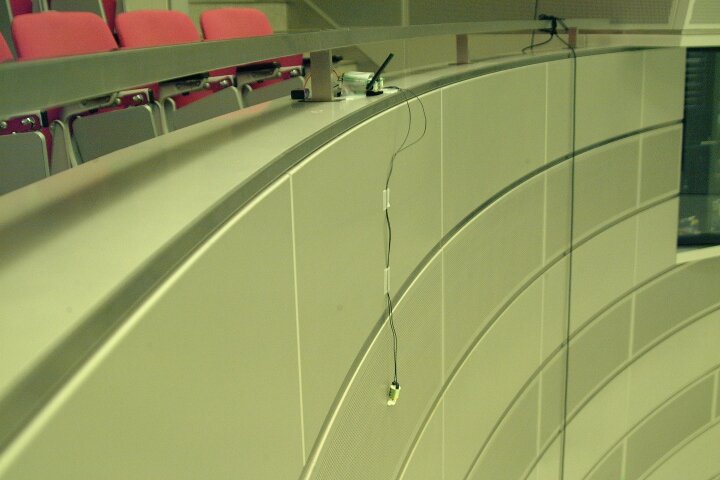
- Ensemble Modern & Tokyo Wonder Site Academy seminar (13–20 February) and final concert at the Tokyo Women's Plaza Hall (20 February), a circular hall with metal walls that I sonified with percussive motors.
- Concert at the Tokyo Experimental Festival – Sound, Art & Performance II, TWS Shibuya (25 February), where the sound intervention of the gallery was joined by piano improvisation and dialogues with viola.
The residency ended earlier than planned because of the earthquake of 11 March 2011. It also gave rise to the installation Collider, shown in the exhibition Tokyo Story 2010.
The Digital Plurifocal System was created with support from the 2010 Art and Media Production and Research Programme of Centro Multimedia, CENART, and the Tokyo Wonder Site – FONCA 2010 residency.