In Mexico, a devastating reality is unfolding. Since 2007, primarily as a result of the war on drugs, a wave of violence has been generated that has led to the disappearance of more than 300,000 people throughout the country. Of this unacceptable number, 21,763 have been located deceased. The situation is so grave that the government implemented a search program with statistics and databases of all missing persons. This information is public and is used as a consultation and analysis mechanism by family members, activists, journalists, and researchers.
This artistic project seeks, on one hand, to create a tribute and a ritual for the victims, and on the other, to contribute to the social denunciation of this unacceptable reality. To do so, it draws upon pre-Hispanic mythology and iconography, recovering a visual tradition that grants symbolic dignity to those who have lost their lives. The Tzompantli was an altar in the form of a rack where a collection of skulls were mounted in public view in order to honor the gods.
According to archaeological studies, it is believed that the Tzompantli was considered a cult of life and not a celebration of death. This distinction is fundamental to understanding the deep meaning of the project. Its root comes from the Nahuatl words "tzontli," meaning head or skull, and "pantli," meaning row or line. Therefore, Tzompantli means "row of skulls." Many tzompantlis are documented throughout Mesoamerica, with the so-called Huey Tzompantli, with more than 650 skulls, located in the archaeological zone of the Templo Mayor in Mexico City, being the largest found to date.
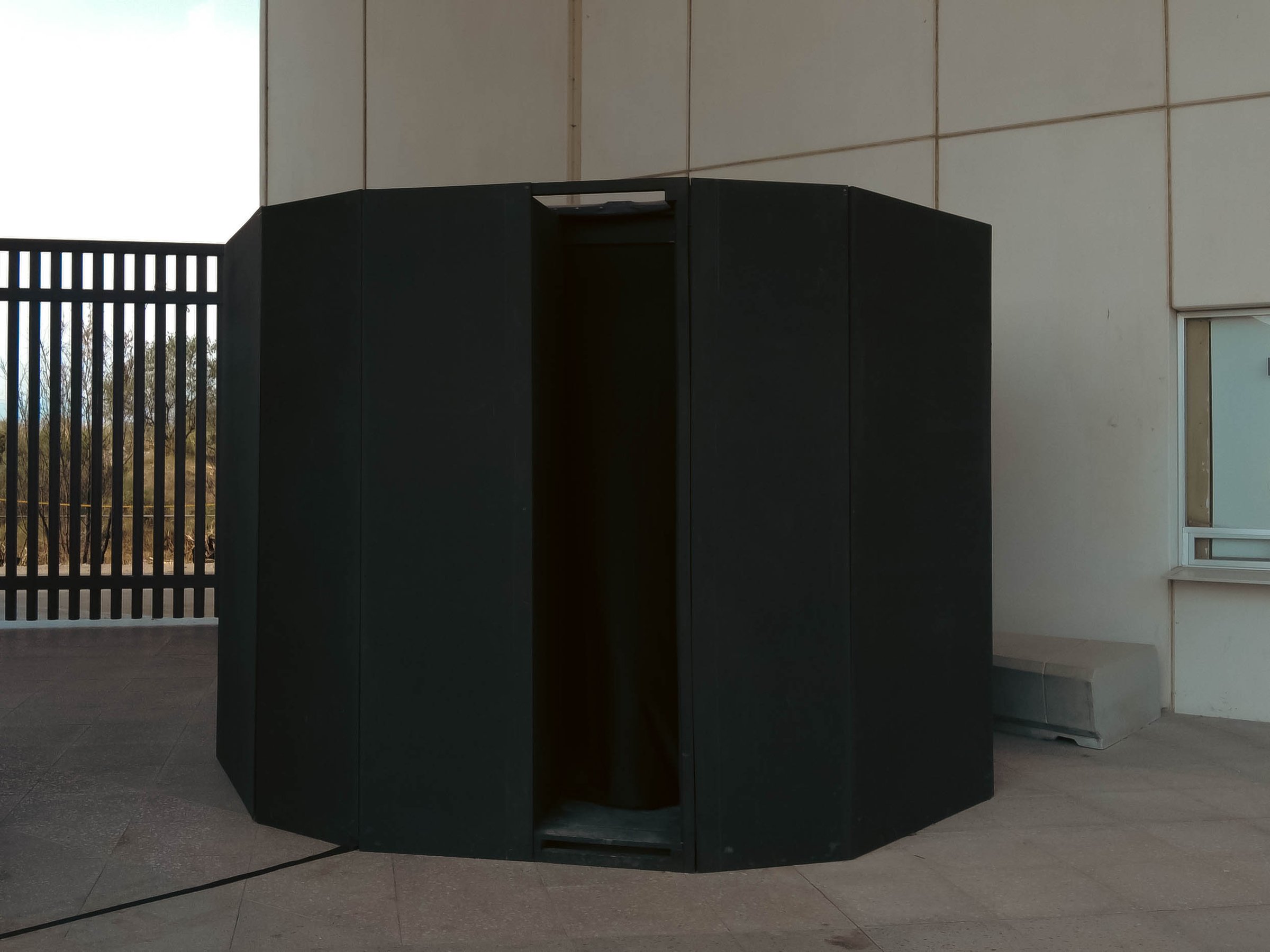
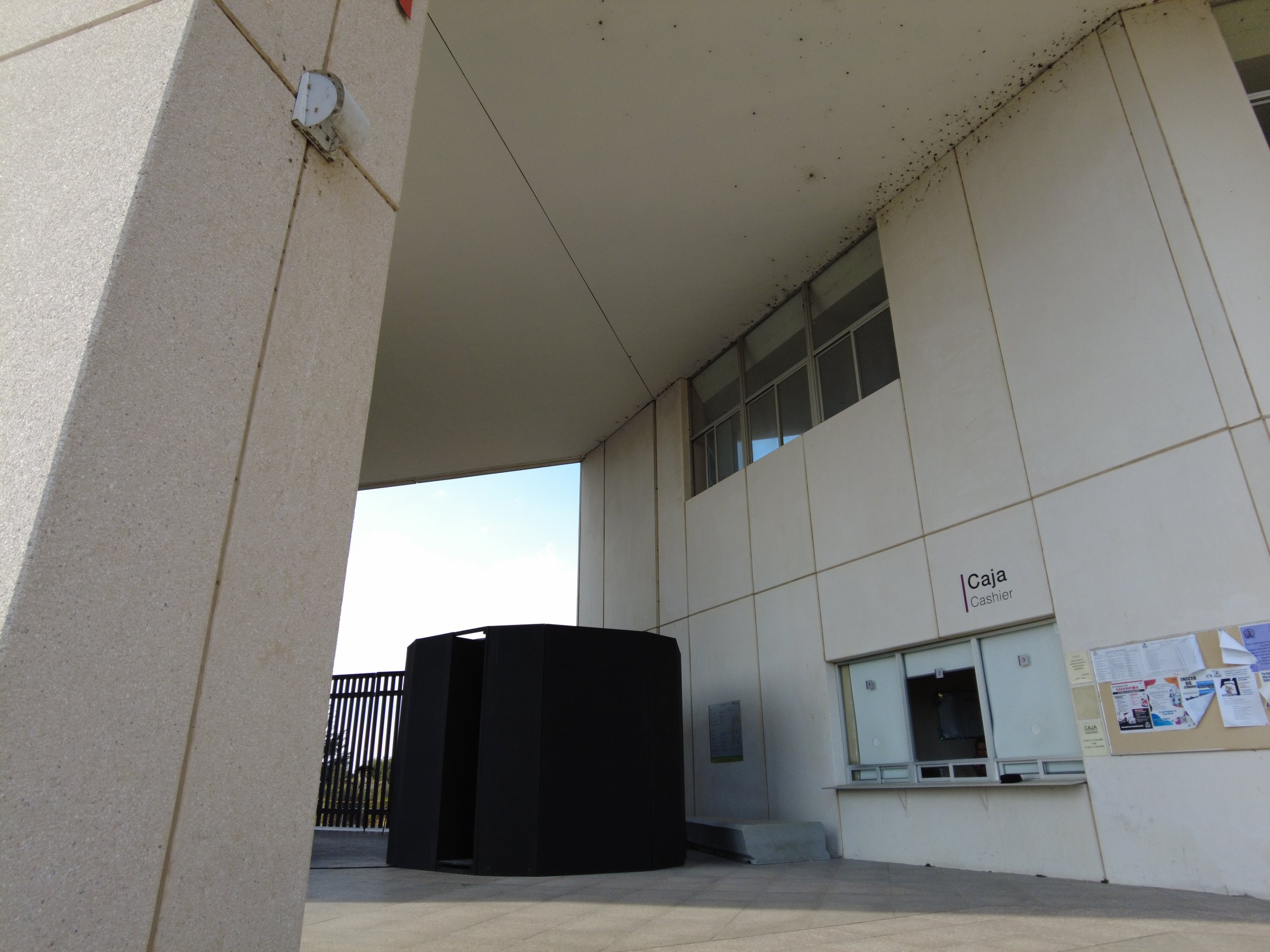
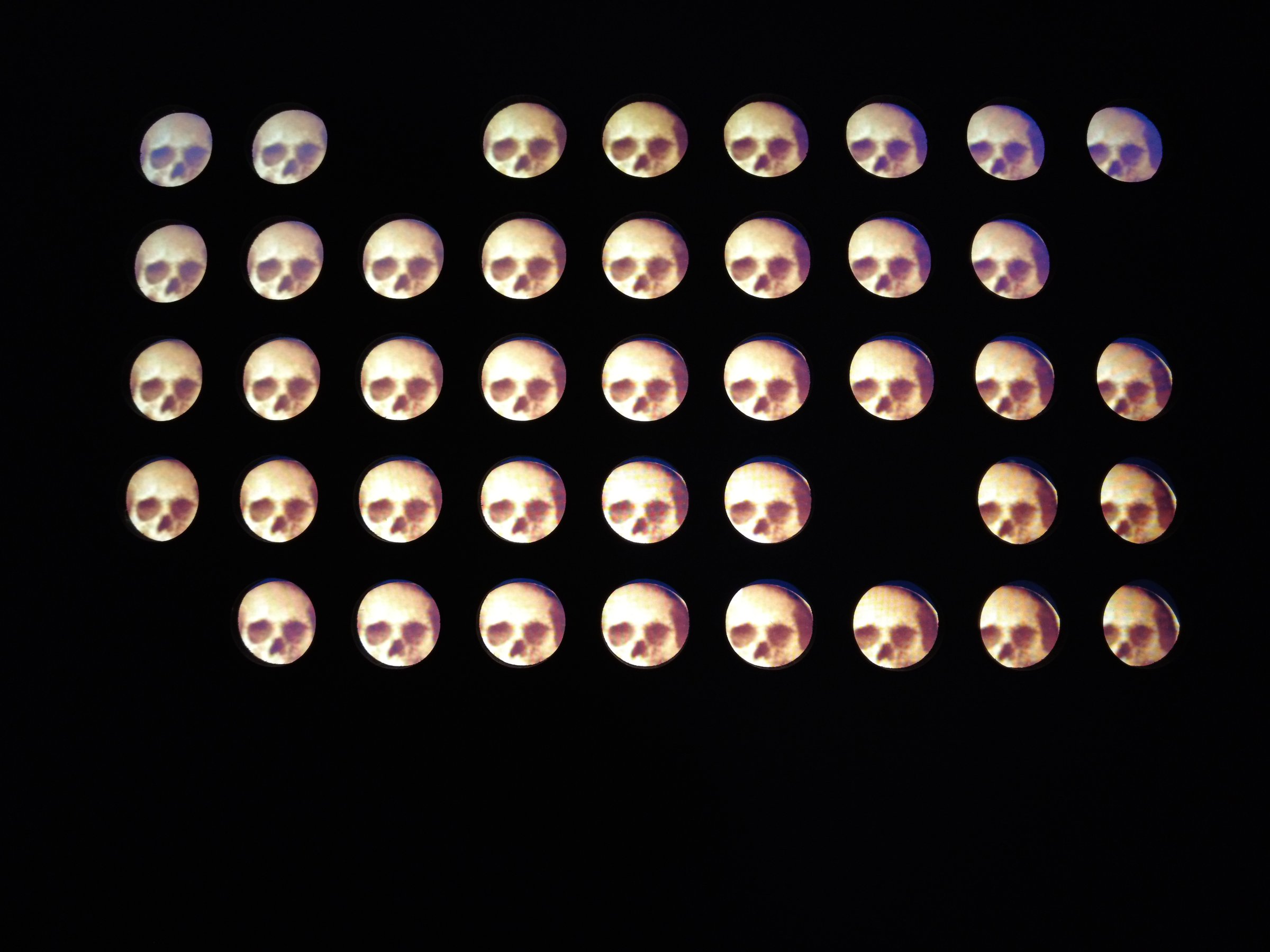
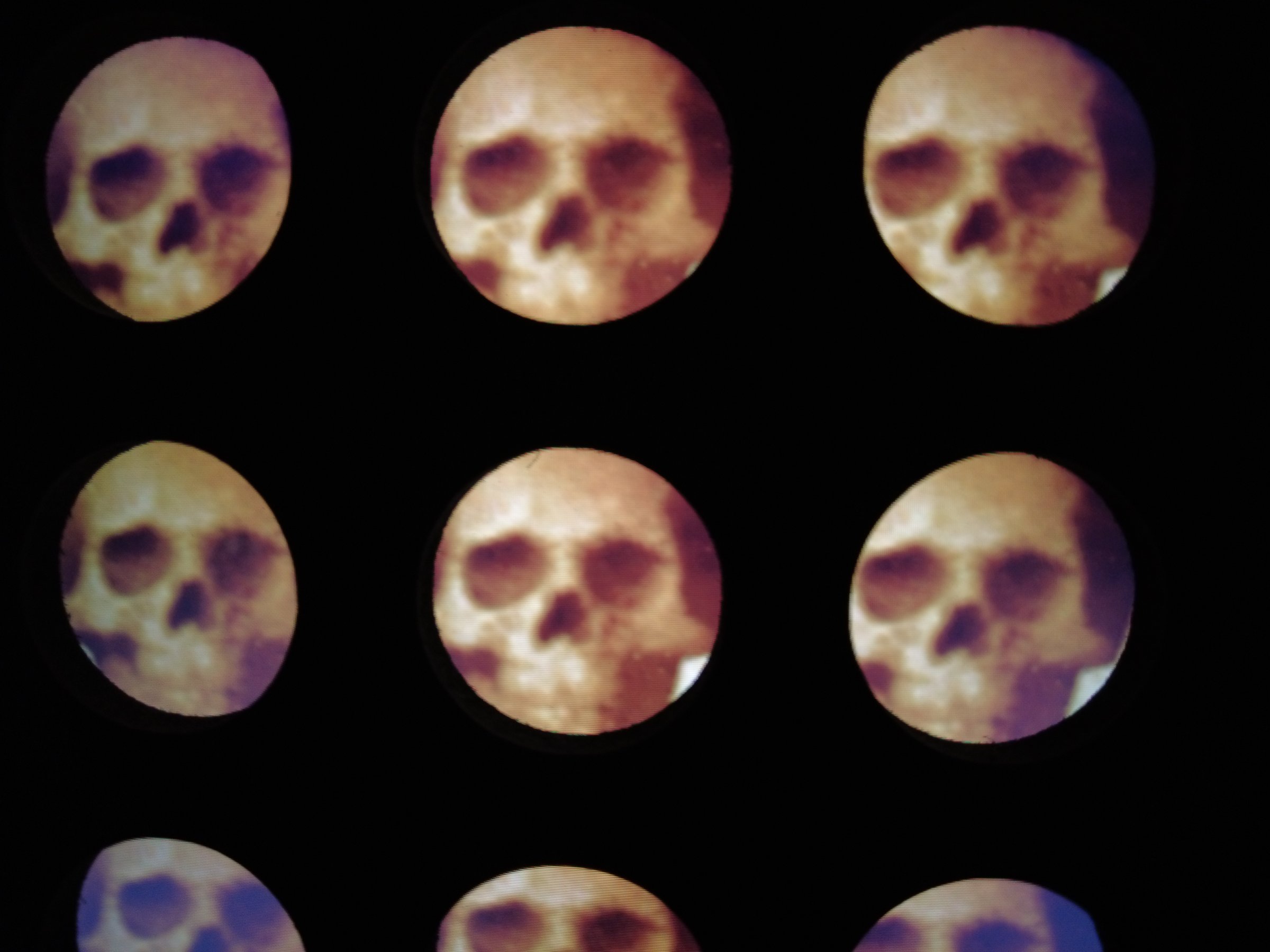
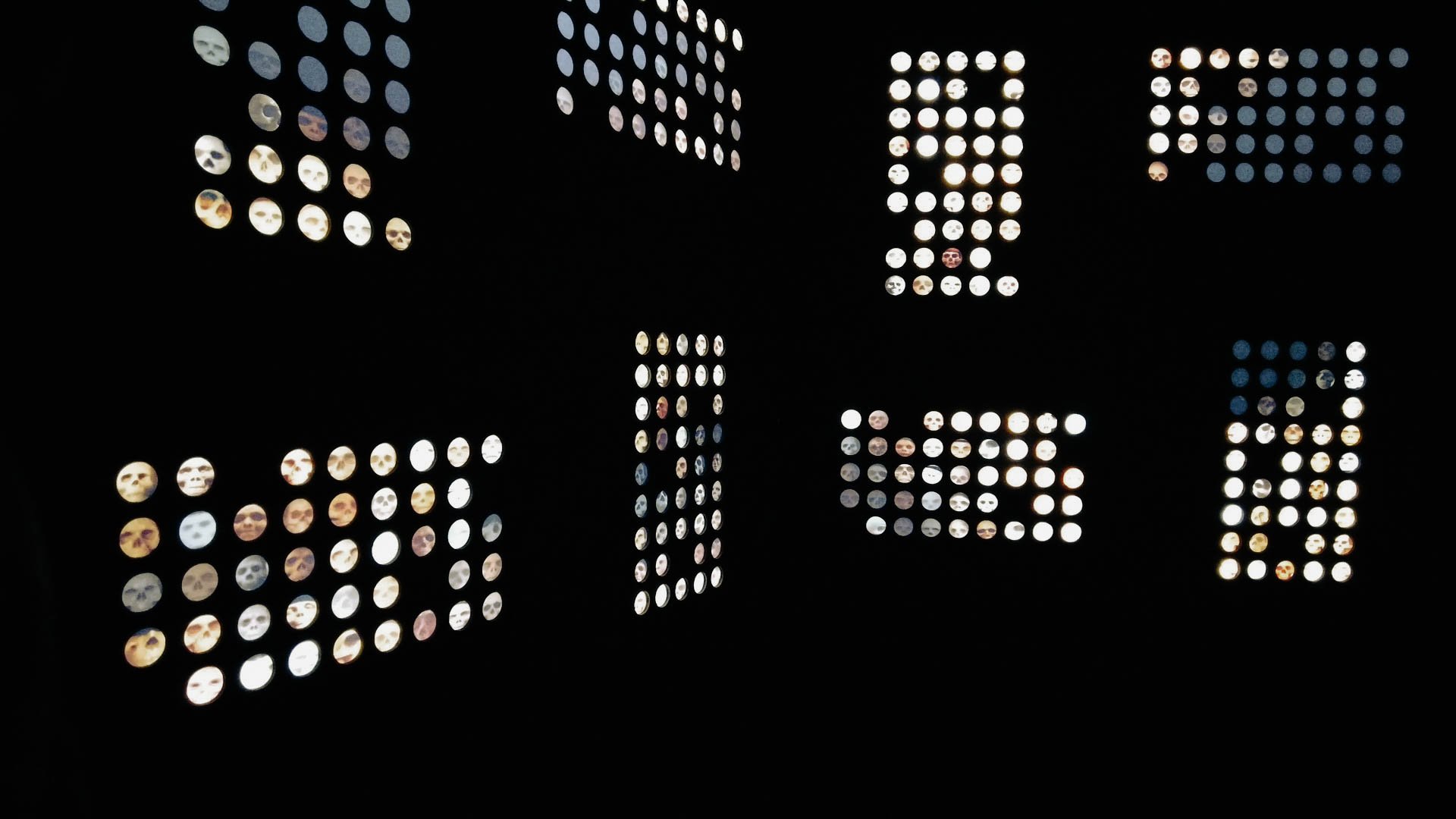
This artistic project consists of an audiovisual installation in which small images of skulls are presented, generated from the photographs of the people appearing in the database of the National Registry of Missing and Unlocated Persons. Of the 16,000 skulls generated for this project, 946 can be presented simultaneously in a digital grid that evokes the arrangement of the ancient altars. In each space, a different skull is displayed, and after a certain time, it is changed for another, generating a continuous flow of faces that prevents fixation on a single image and emphasizes the magnitude of the tragedy.
For the design of this altar, the images and public information were obtained and, using a computer system, skulls were generated for each one of them, with similar aesthetic to the actual ruins that exist of the pre-Hispanic tzompantlis. This digital process transforms the forensic record into an aesthetic memorial that redefines the meaning of absence.
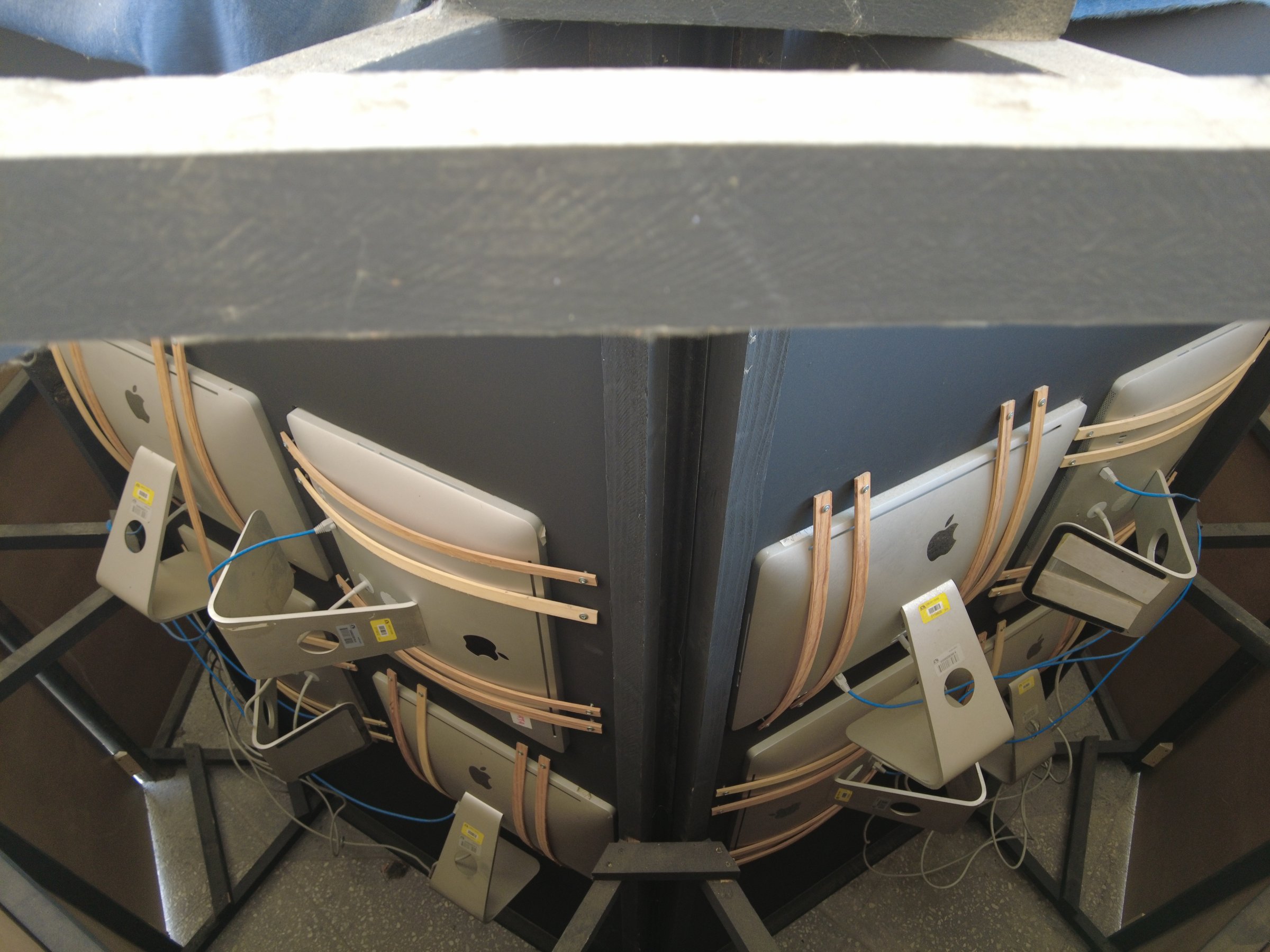
Technologically speaking, the piece is also a computational Tzompantli, as it was constructed with obsolete equipment that was decommissioned by the university due to the impossibility of updating and its problematic maintenance. This technical decision is not coincidental: the use of hardware discarded by the public education system operates as a metaphor for a society that also discards its citizens. The planned obsolescence of the machines dialogues with the forced disappearance of people.
Each of these images represents the power of the face and the stories of each of these people who, together, give identity to a festive society that loves life and energetically rejects the violence that exists in contemporary Mexico. Faced with systematic invisibilization, this installation proposes a symbolic resistance: to return a face to those who have been torn from the community and to remember that behind every statistic there is a life, a name, and a story that deserves to be told.
Video
Credits
Idea, coding, design, fabrication, sound and documentation: Hugo Solís, with the help of Luis Zhiwei Huang Alvarado.
Supported by Universidad Autónoma Metropolitana, Lerma campus.
TouchDesigner and Python; skulls generated with Stable Diffusion from the portraits. Hardware: 22 decommissioned Mac computers, an old router and wood.