Video Ópera MX: In atl in tepetl
A macromatic video opera
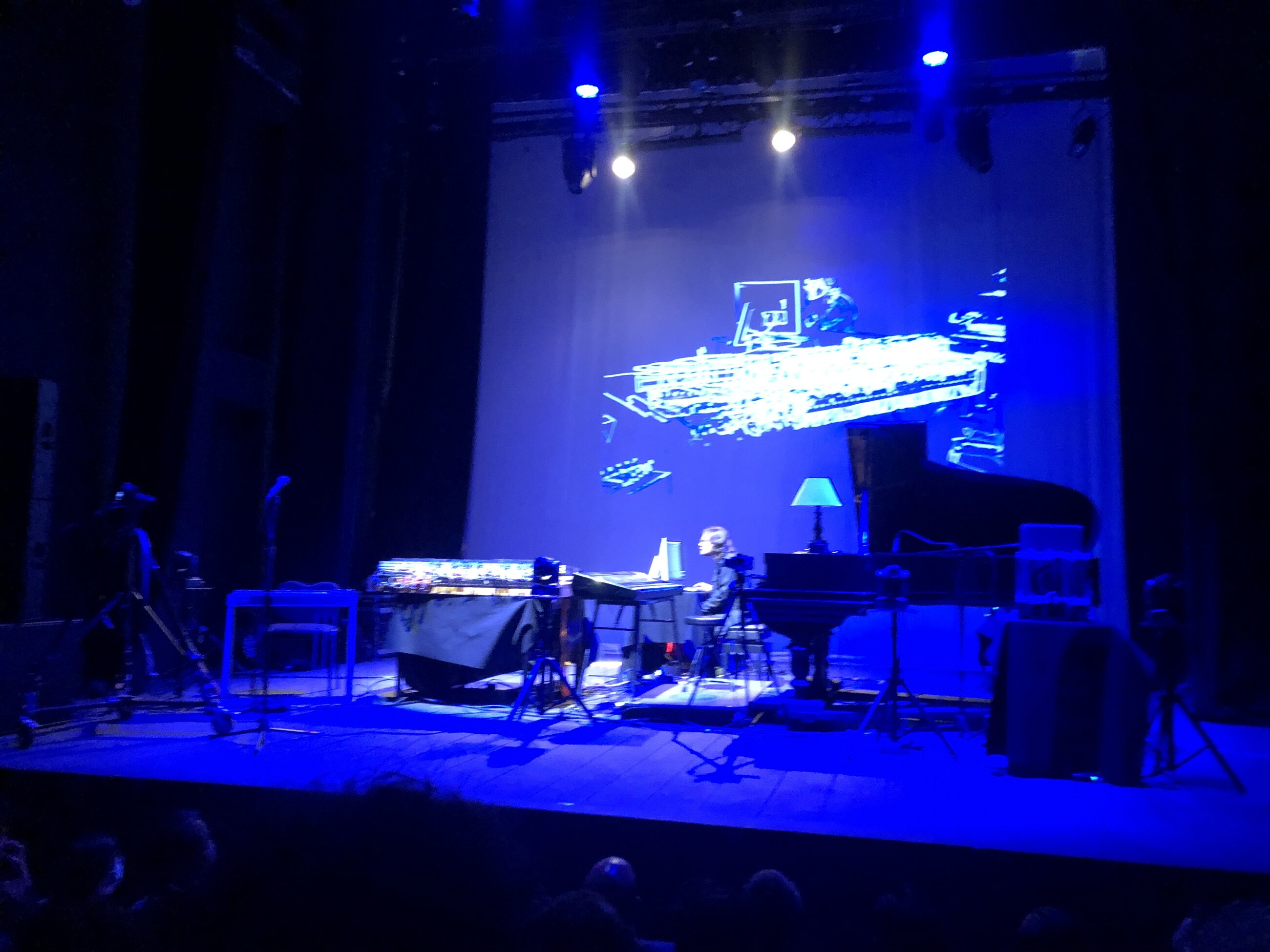
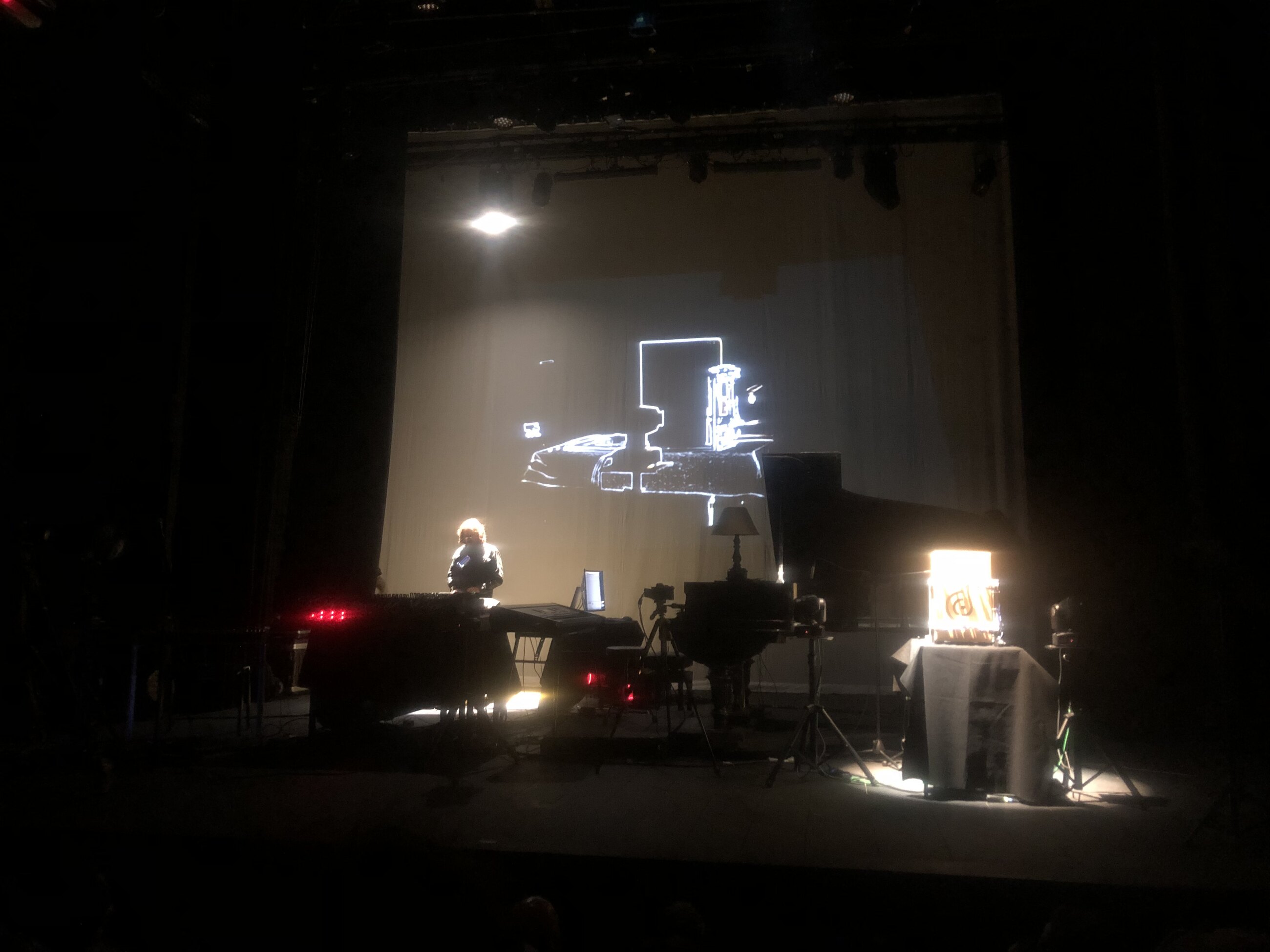
Video Ópera MX: In atl in tepetl is a macromatic video opera of approximately 90 minutes, organized in an overture and five acts, that turns Mexico City into the protagonist of the stage. Instead of singers, the work gives voice to the city itself: its chroniclers, artists, vendors and inhabitants, and its spaces (monuments, squares, markets, canals and streets), understood as characters in dialogue throughout the piece.
Video opera emerged as an evolution of contemporary and experimental opera, drawing on advances in audiovisual technology and the growing importance of the visual in art: a hybrid genre that combines elements of traditional opera with video and other multimedia technologies. The piece is macromatic because it takes elements at a large scale and translates them into sound and visual data, combining sound, image and technology in an audiovisual experience with live musical performance.
The work uses computer programming and digital processing to question ideas such as memory, time (the daily pulse of a city that wakes up every morning) and the impact of technological development on Mexico City. The video draws on testimonies from chroniclers, artists and inhabitants of the city, as well as texts written specifically for the piece by the poet Gabriela Villa.
Background: In calli Ixcahuicopa
This proposal grows out of In calli Ixcahuicopa, the macromatic video opera I created for UAM's 50th anniversary, premiered on 11 October 2024 at the Centro Cultural Mexiquense Bicentenario. Video Ópera MX brings to Mexico City the same approach —voices and spaces as protagonists, data processed in real time, video on the cyclorama and live music— that In calli Ixcahuicopa applied to the university.
Structure
- Overture: Dawn. The city wakes up: the Metro starts running, markets open, the first street cries are heard.
- Geometries. Built from computational models of emblematic monuments.
- Spaces. Triggered by FPV drone flights over different boroughs.
- Numbers and Data. Translates open data on mobility, air quality, seismic activity and water consumption into sound and image.
- Ideas. Based on testimonies from chroniclers, artists and inhabitants.
- Future. Based on interviews with urban planners and scholars.
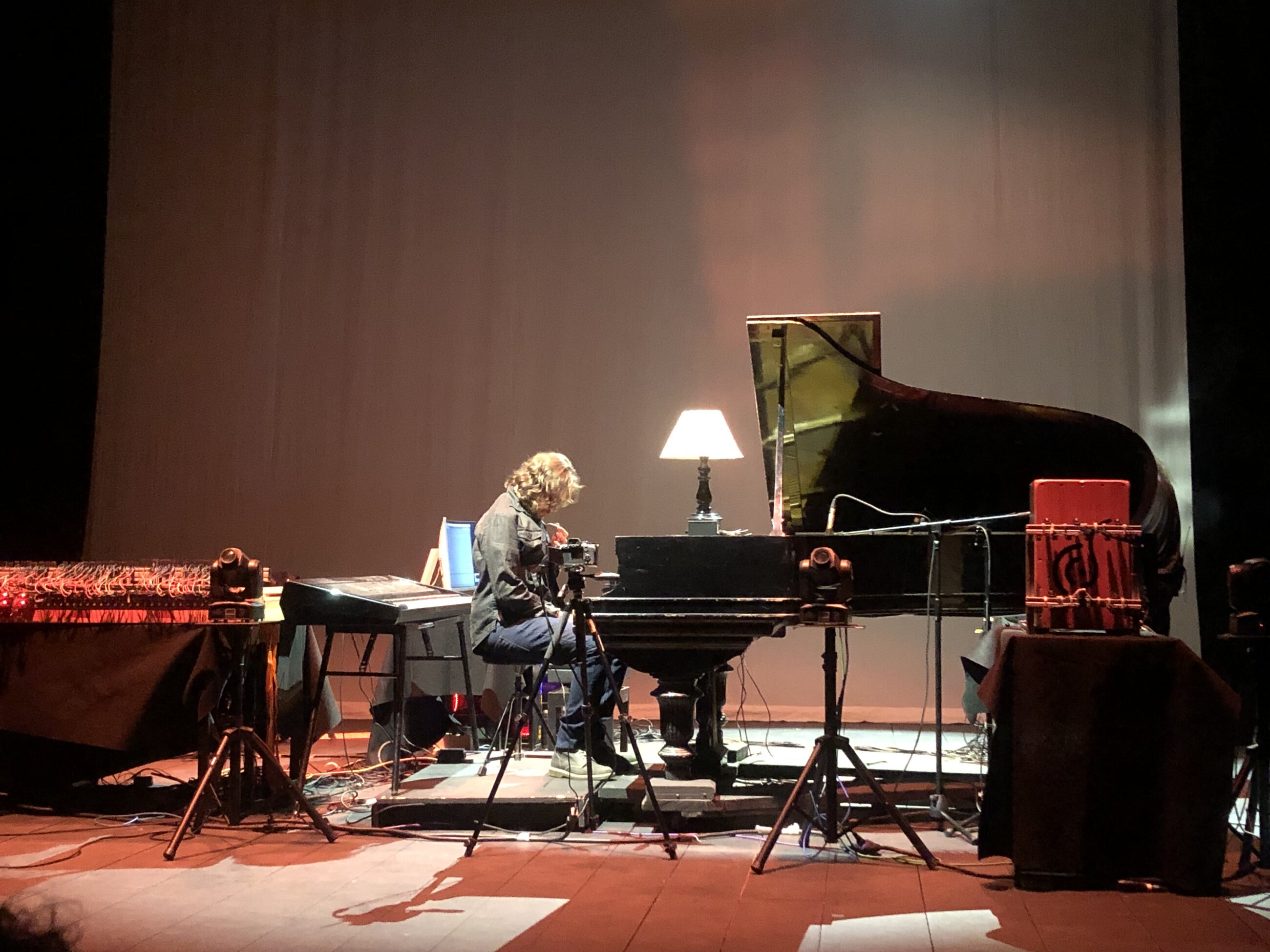
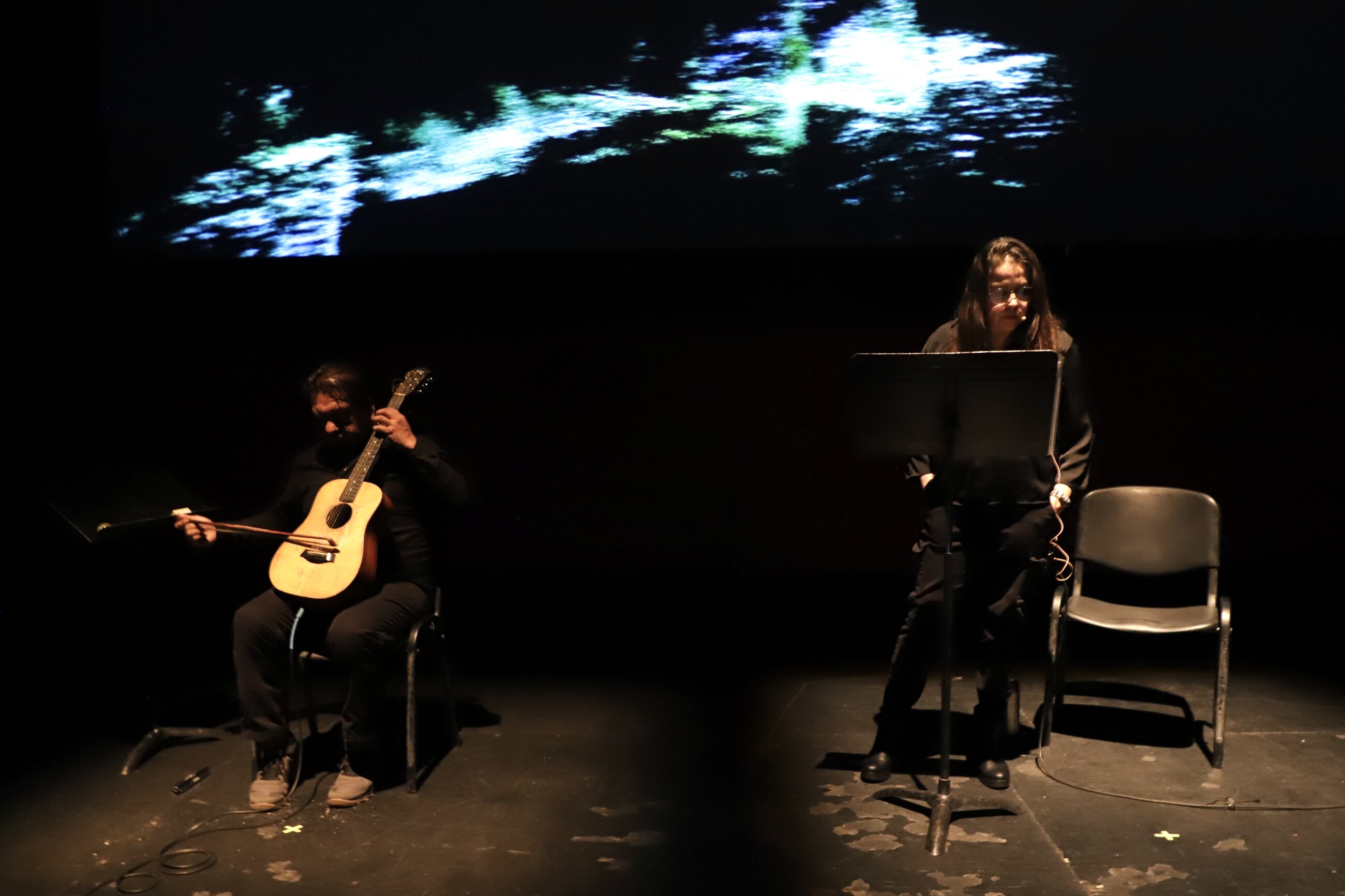
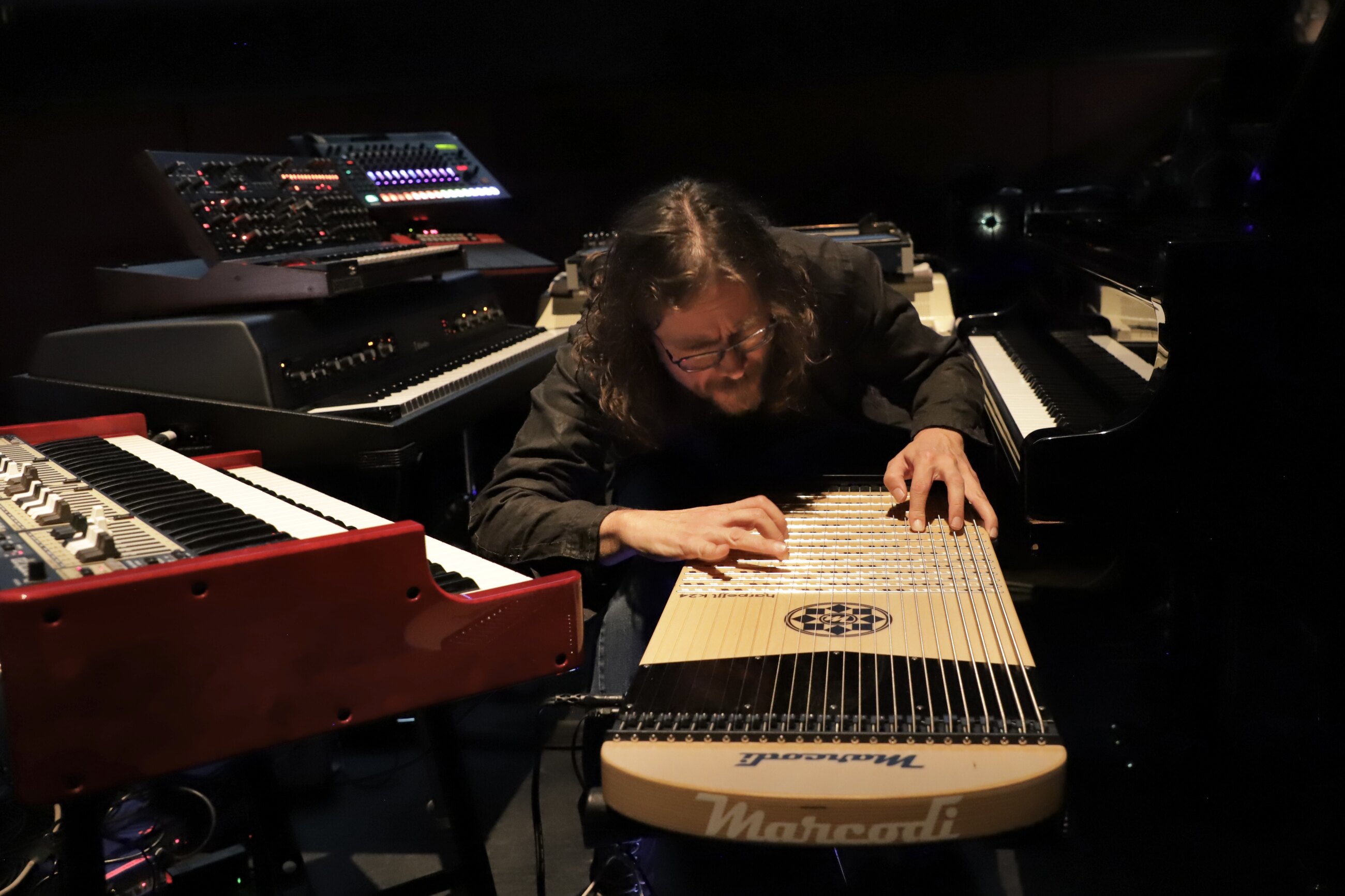
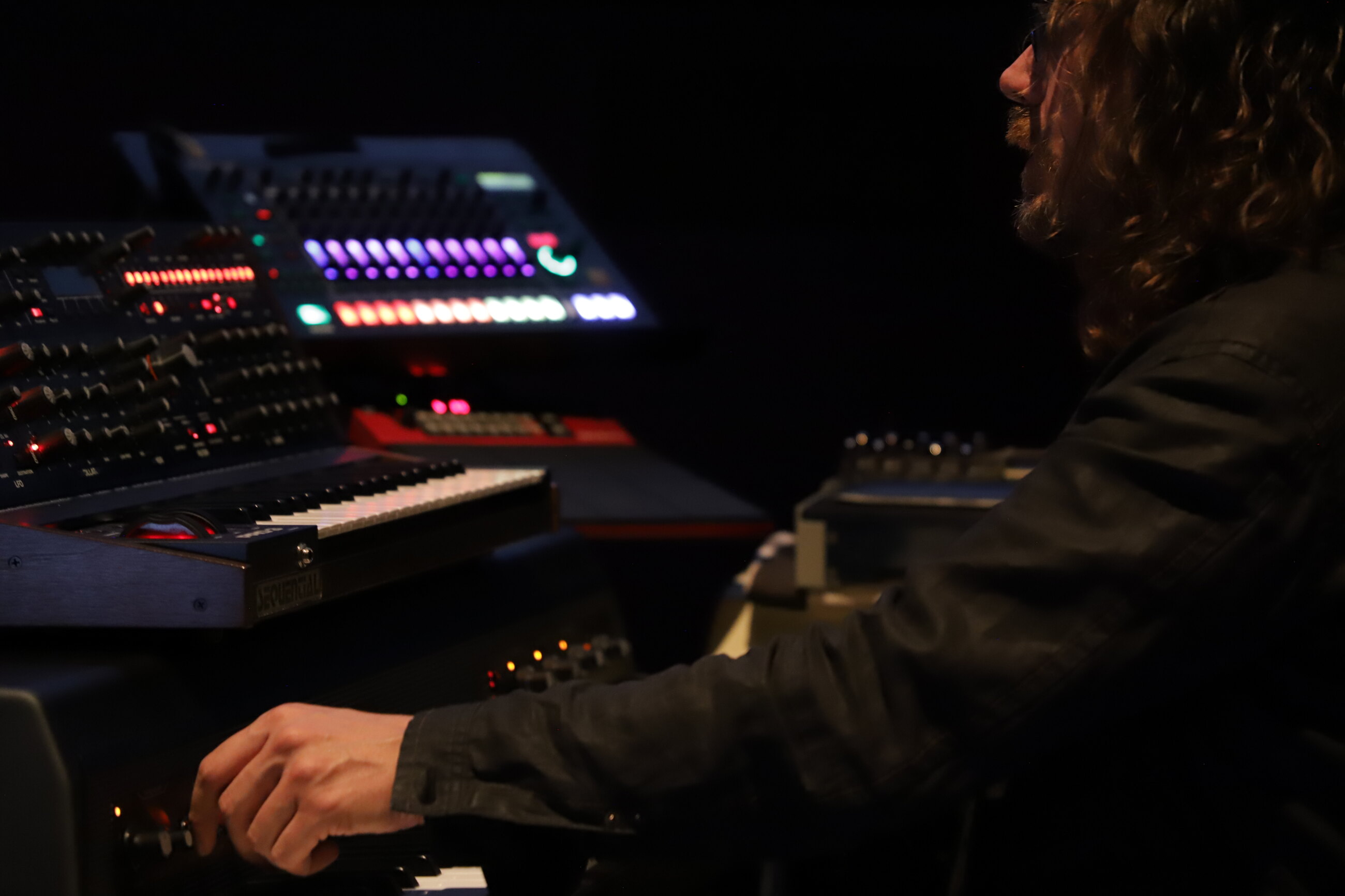
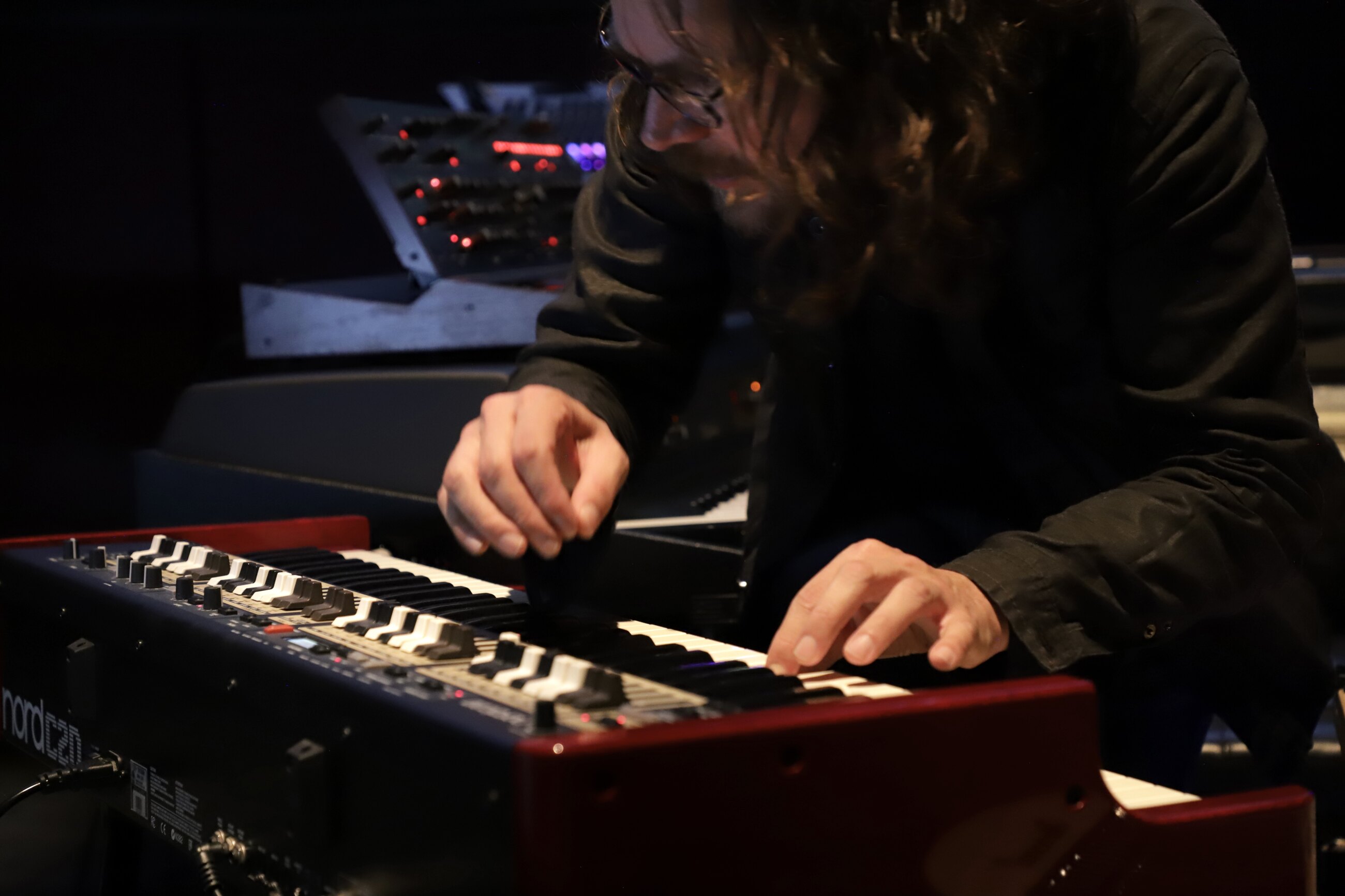
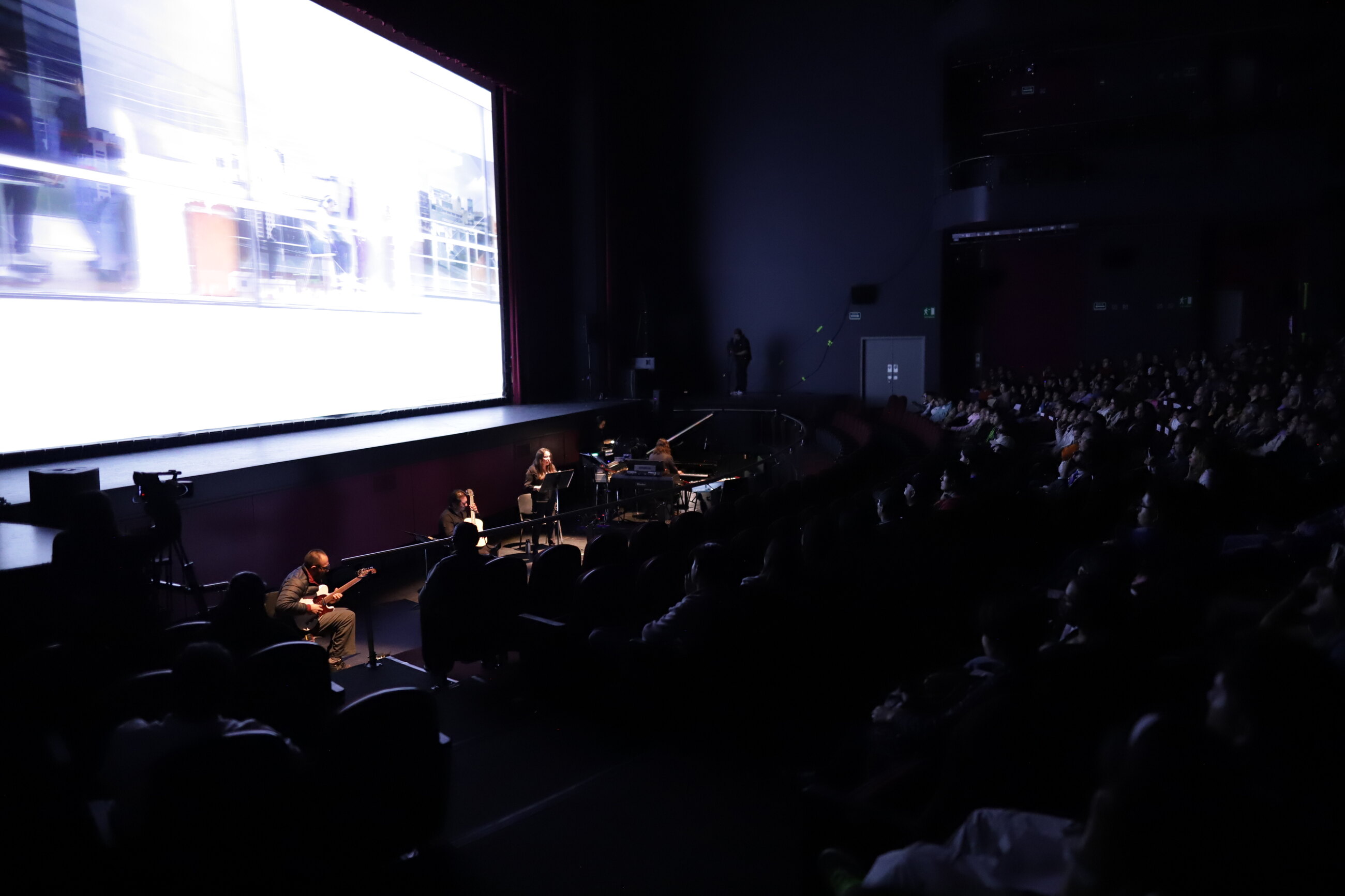
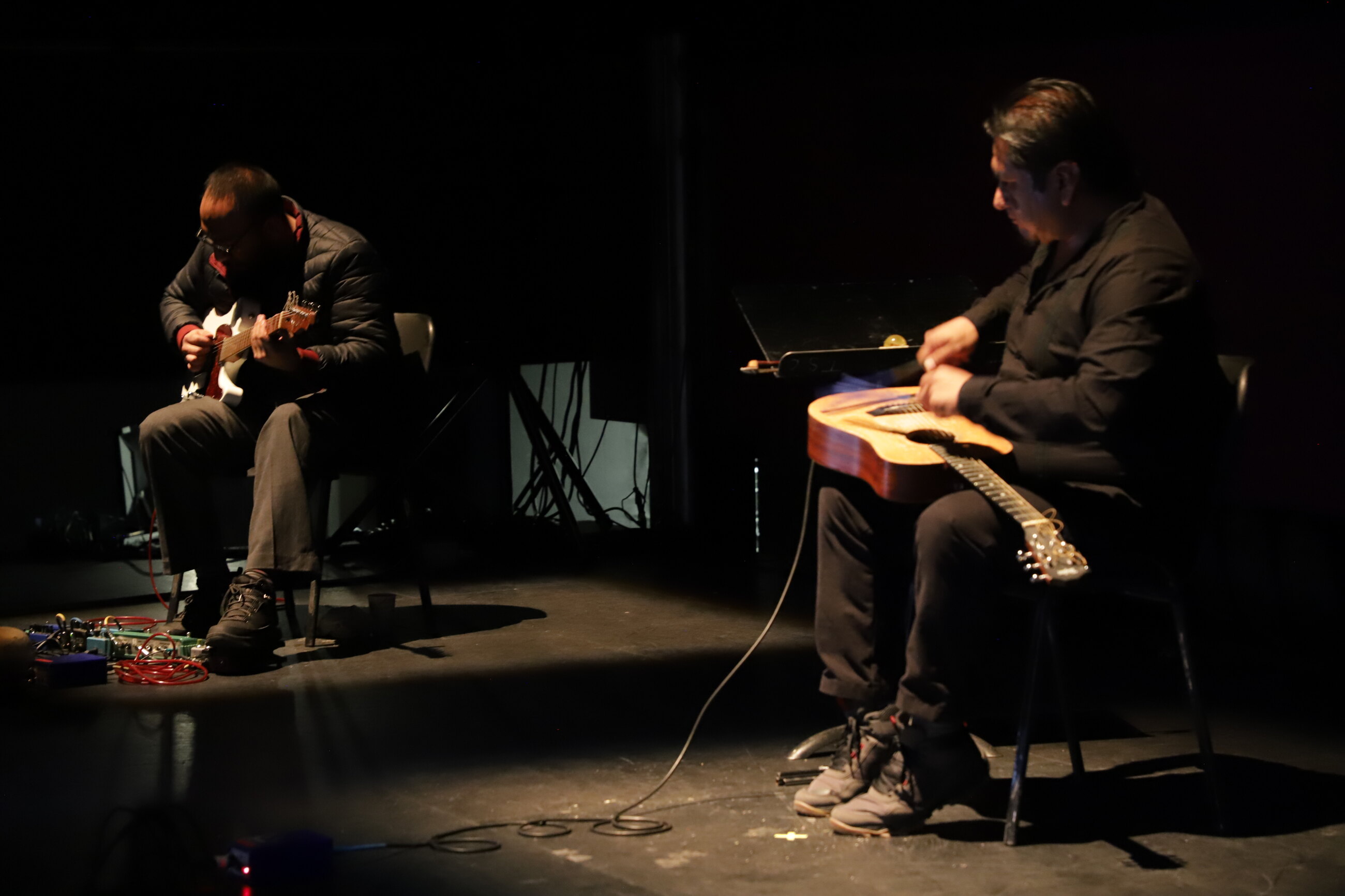
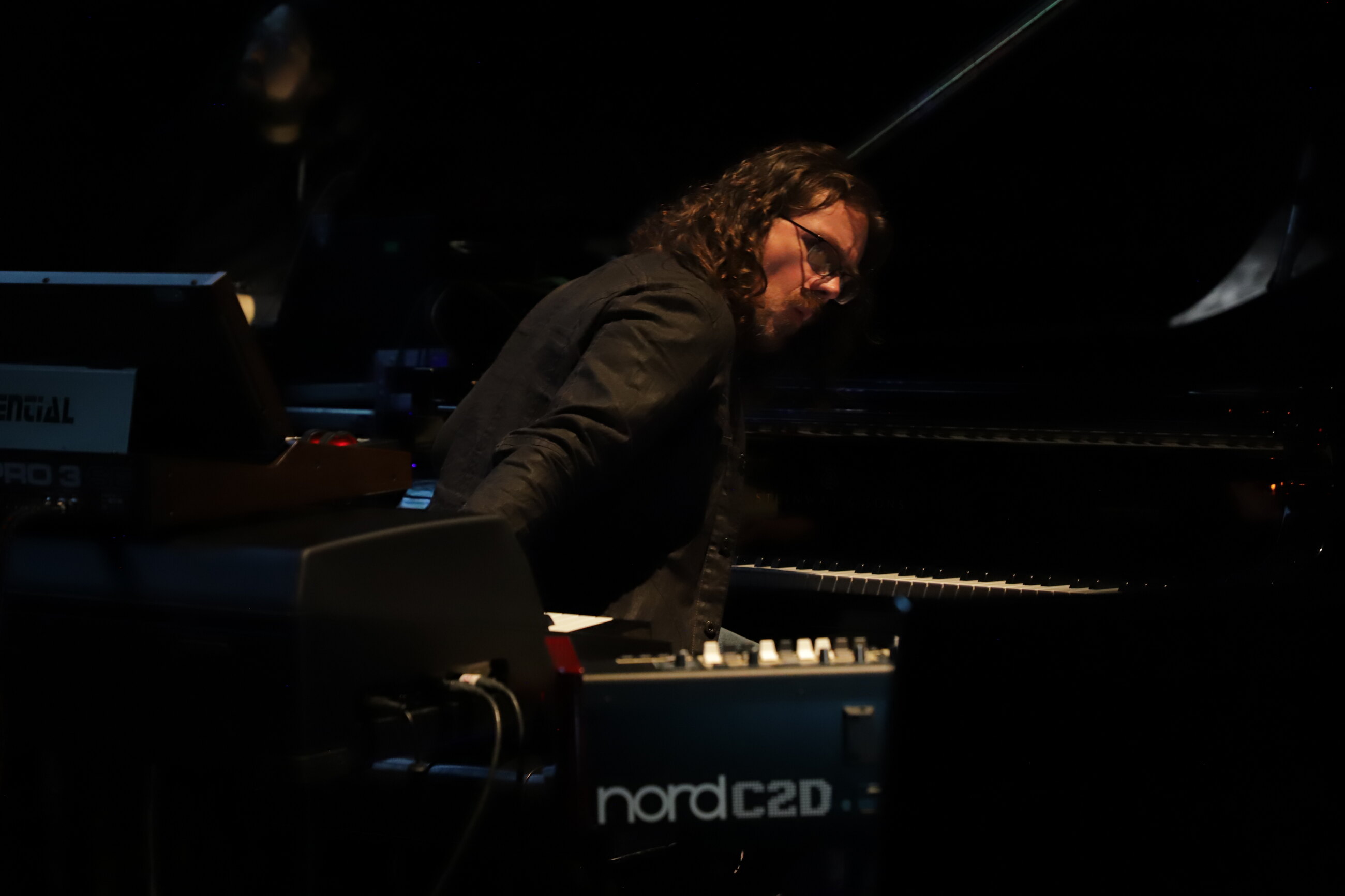
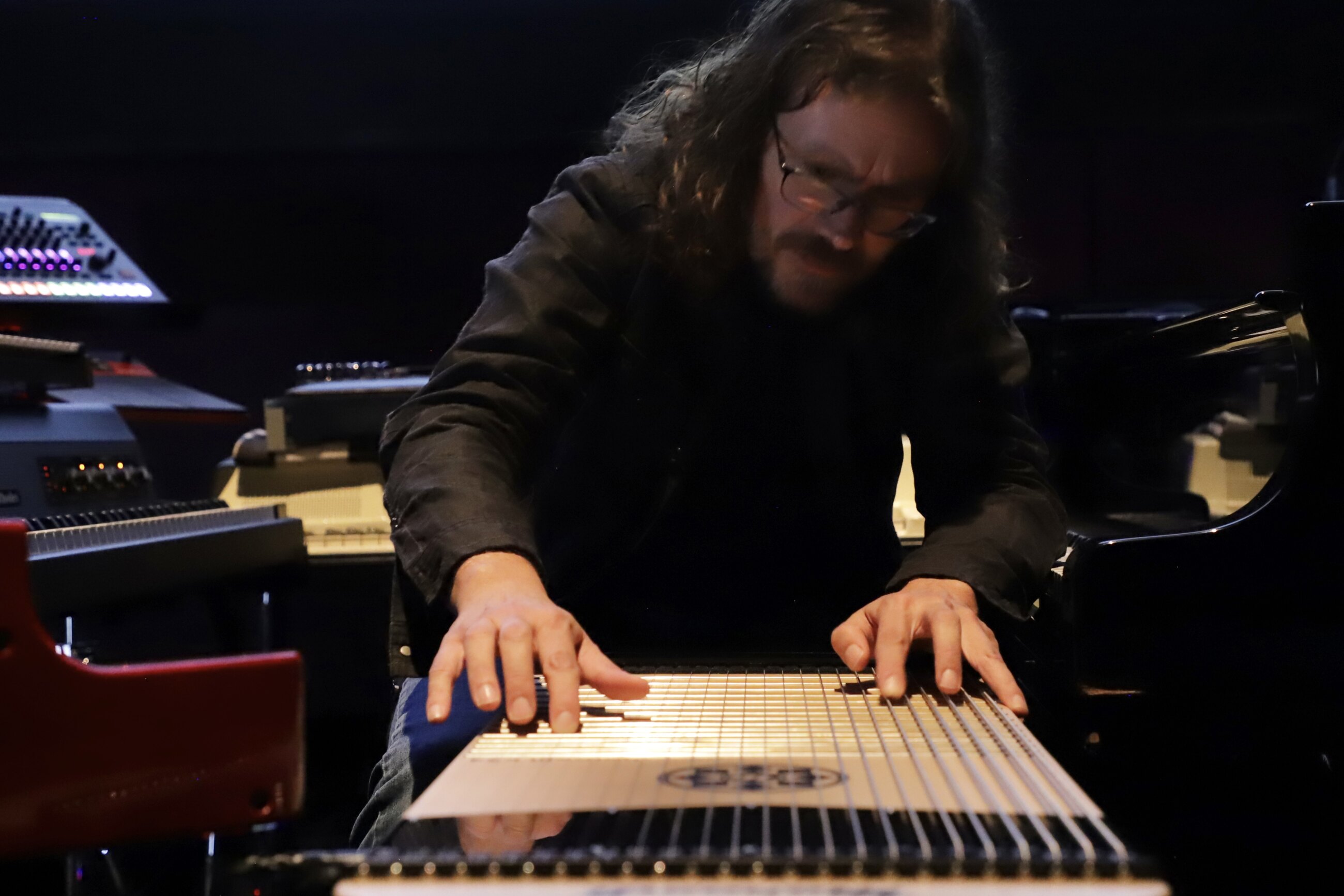
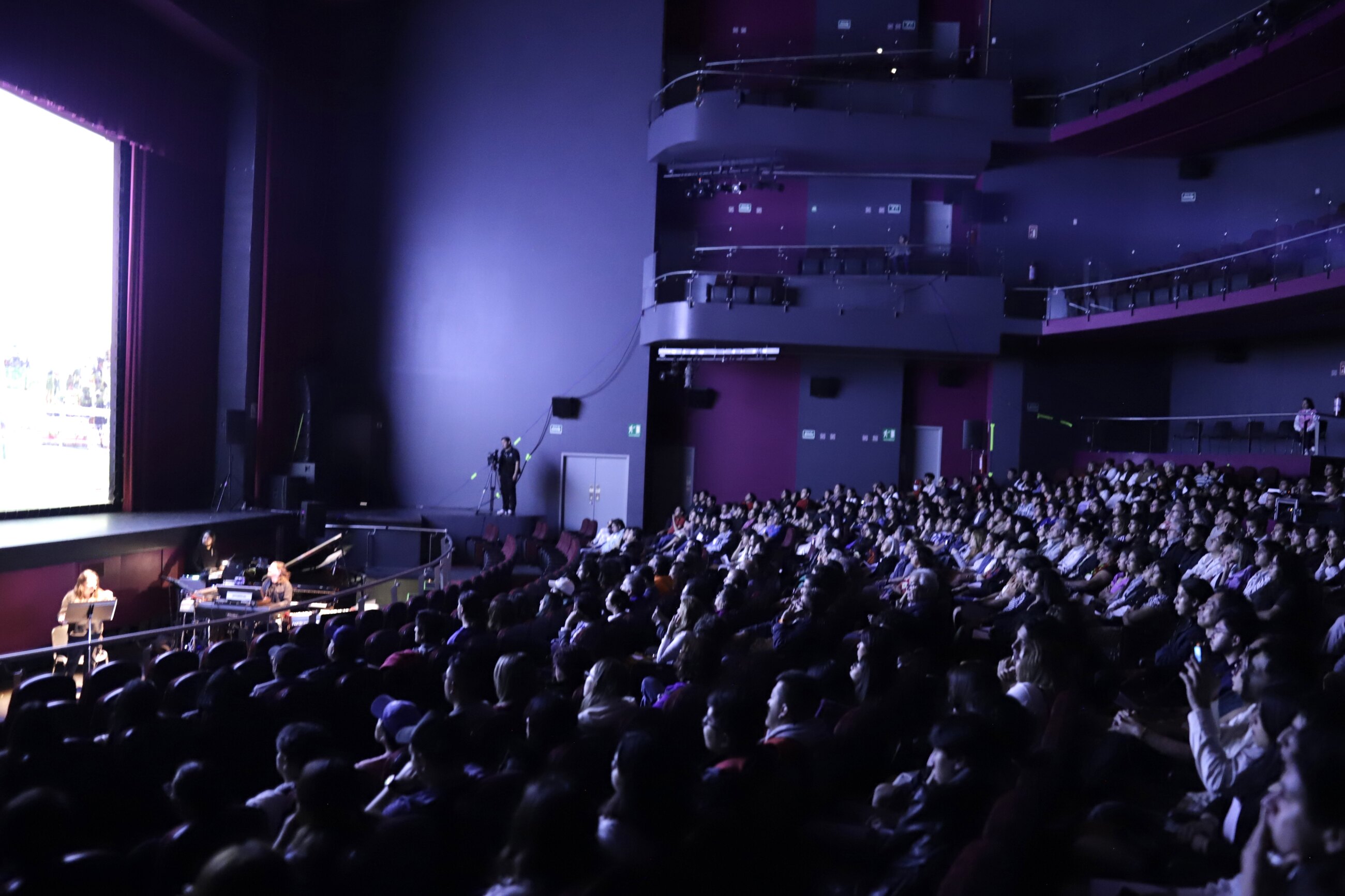
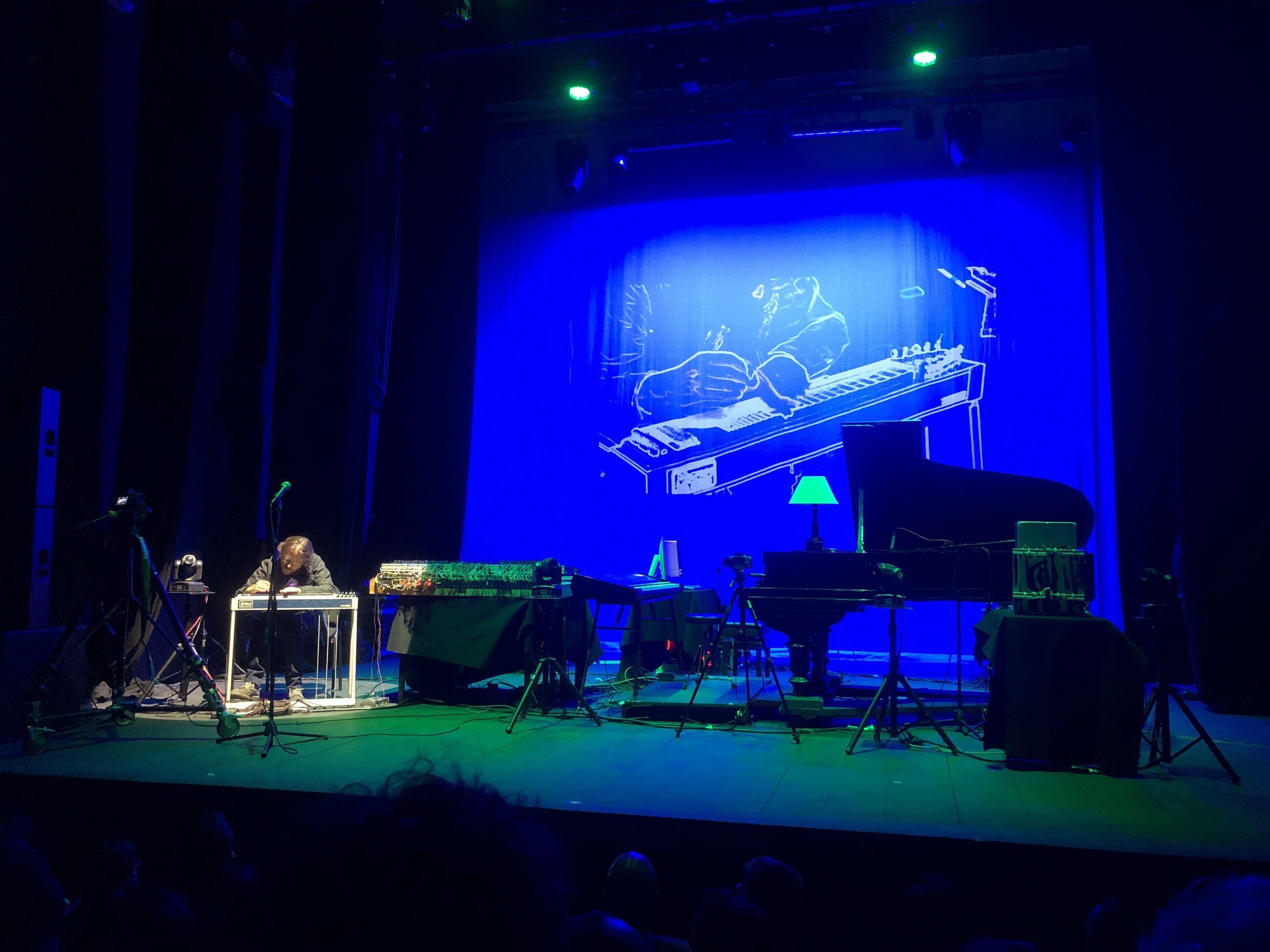
Between the acts, sound bridges recorded in 3D audio in markets, street markets (tianguis), the Metro and public squares connect the journey. The image is projected in anamorphic format on the cyclorama, and immersive sound is diffused through eight loudspeakers surrounding the audience. On stage, the music is performed on acoustic and robotic piano, electric pianos, organ, synthesizer, harpejji, drum machine and six sound robots, in dialogue with the image in real time.
In atl in tepetl means The water, the hill in Nahuatl, the expression used to name the city (altepetl).
Credits
Artistic direction: Hugo Solís García
Live performance
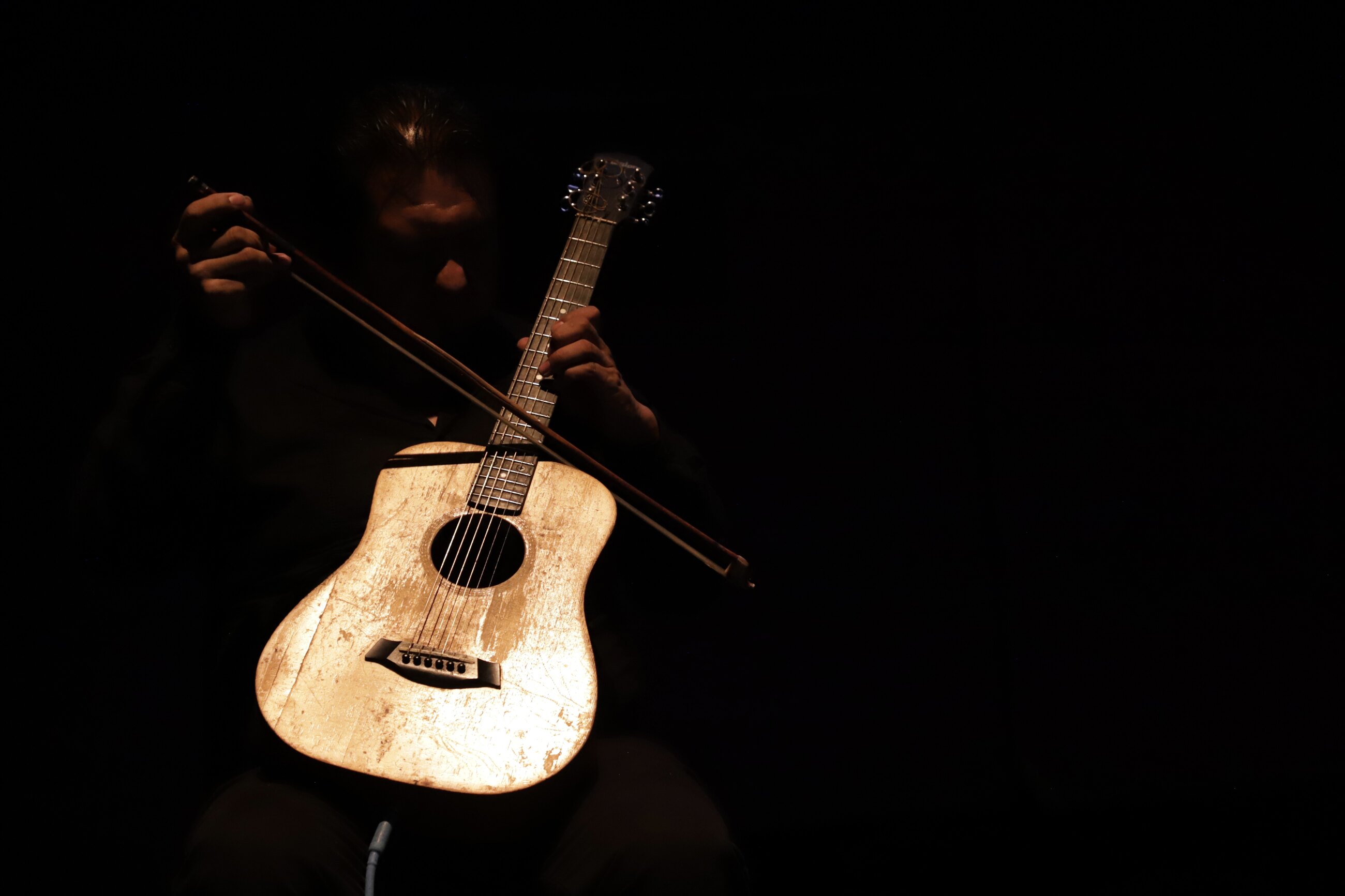
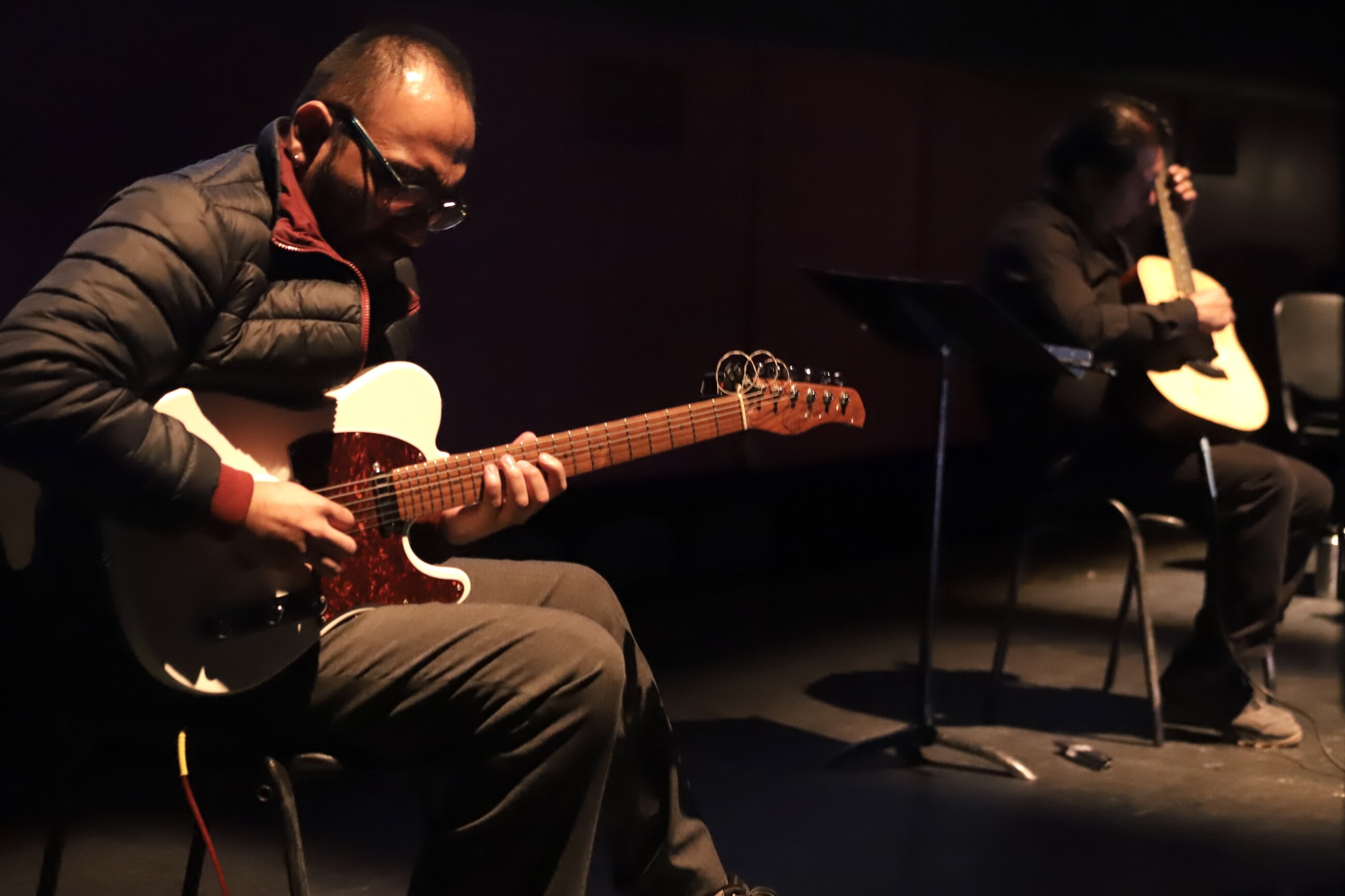
Fernando Vigueras Sánchez, guitar
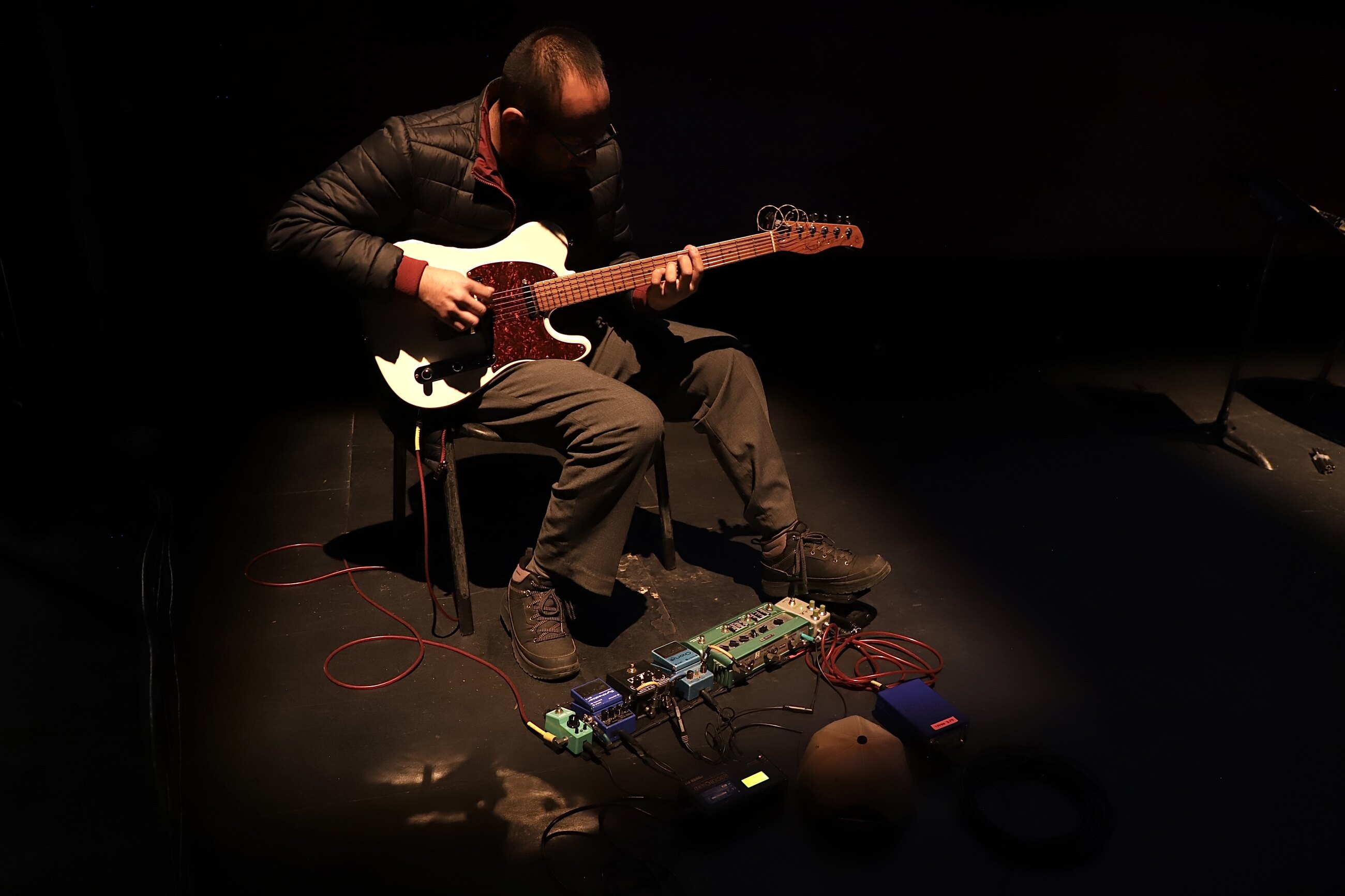
Hegel Pedroza Villalobos, processed electric guitar
Hugo Solís García, keyboards and electronics
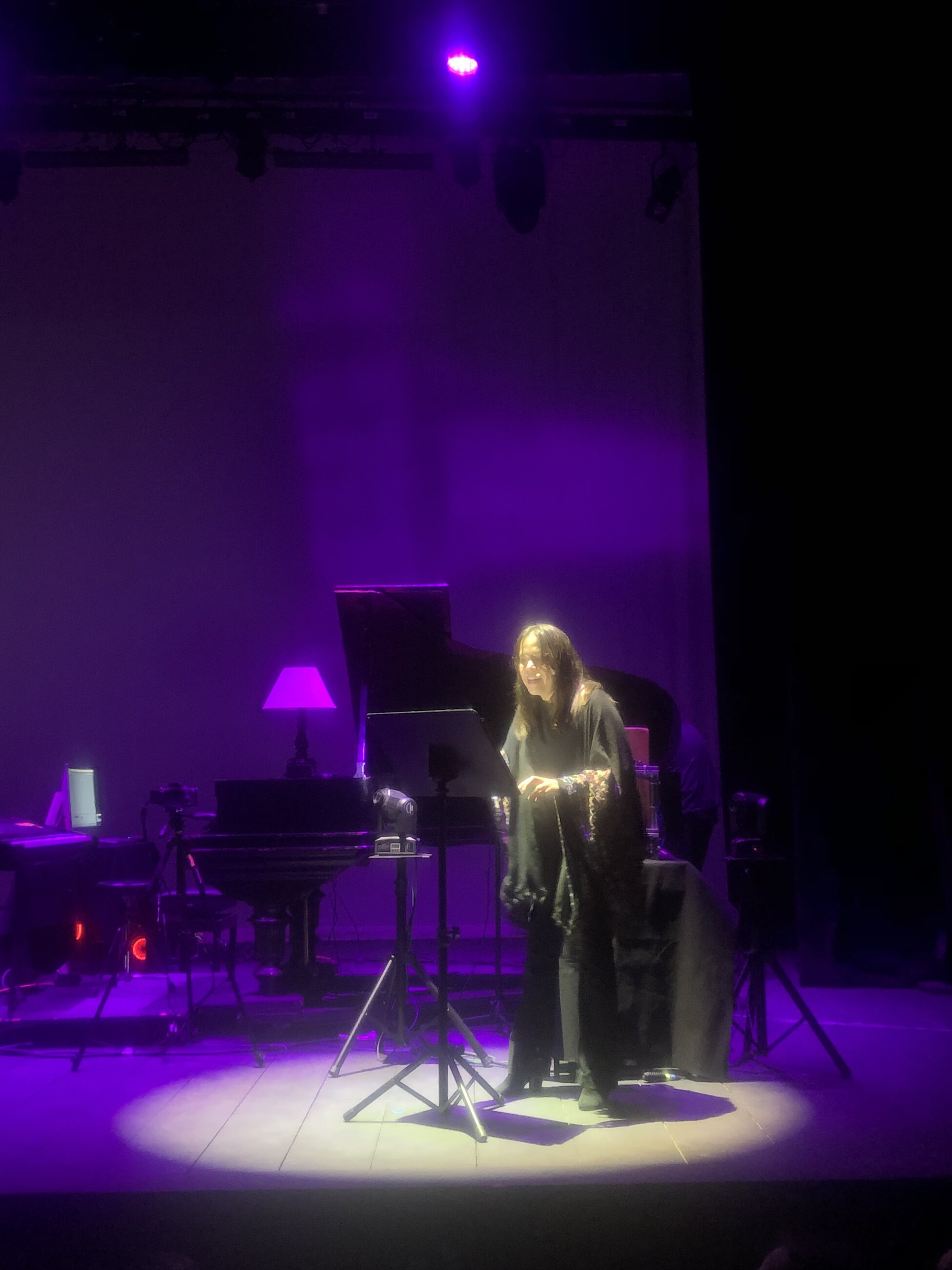
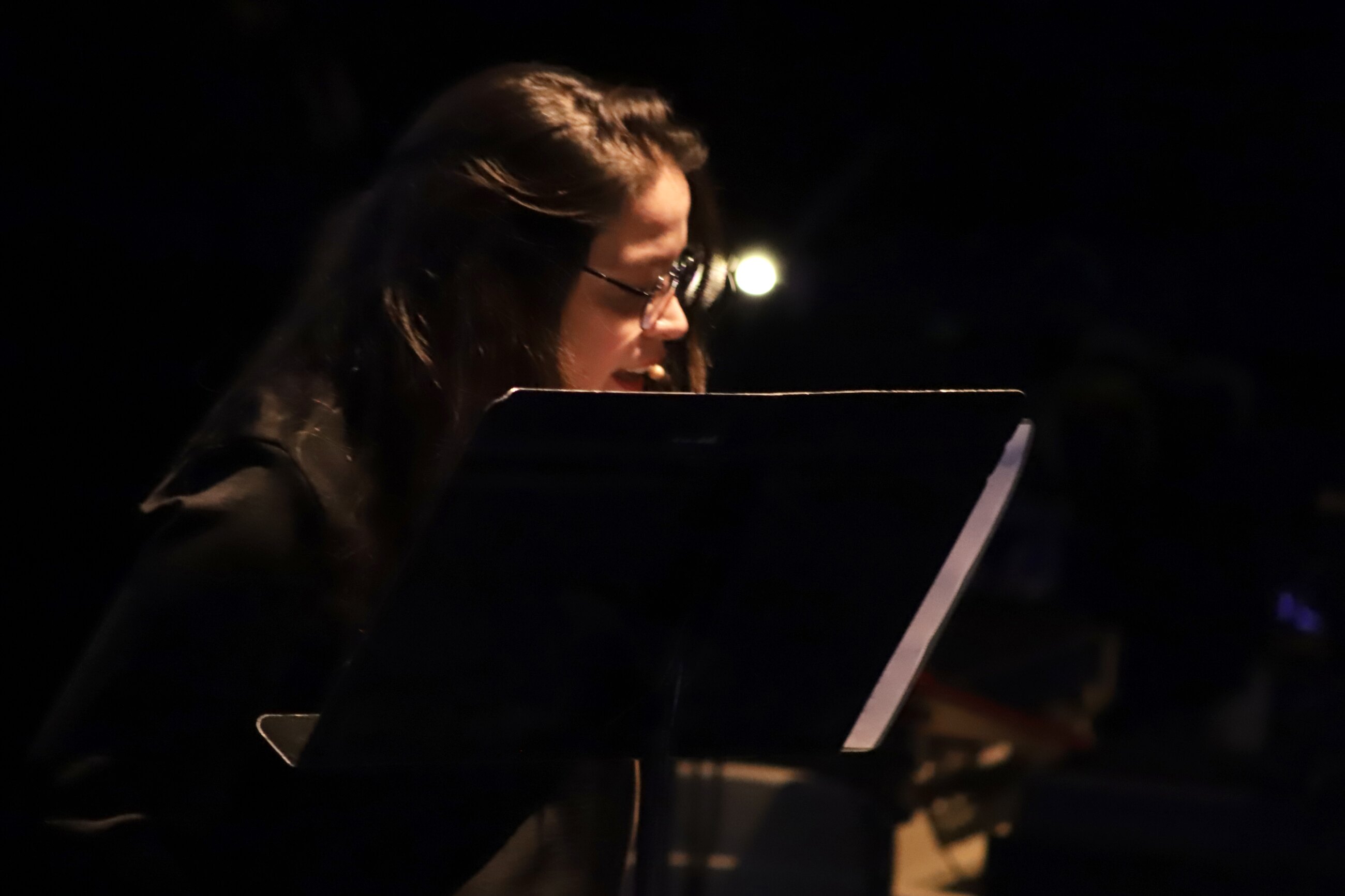
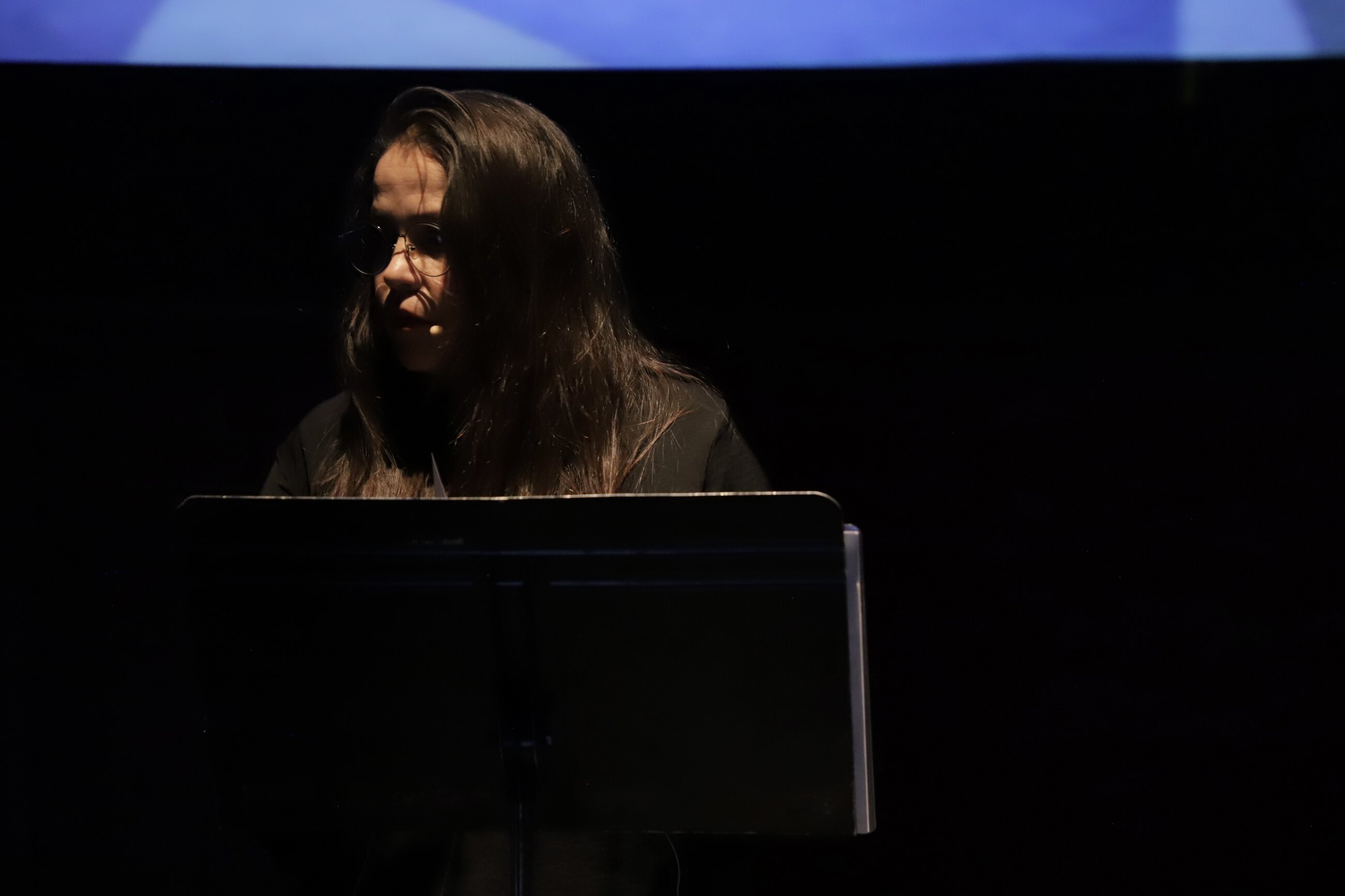
Gabriela Villa Galindo, texts and voice
Production
Josué Martínez Alcántara, artistic production
Hugo Solís García, concept, research, data handling, computer programming, procedural video, ambisonic audio, drone footage, interviews and 3D modeling
Thanks to the Universidad Autónoma Metropolitana for supporting the production of the version with material about the university's 50th anniversary.
Biographies
Hugo Solís García. Electronic artist and researcher. His work focuses on the creative and aesthetic possibilities that arise at the intersection of sound, digital technologies and interactivity. He studied piano at the Escuela Nacional de Música (UNAM), holds a Master of Science from the Massachusetts Institute of Technology, a DEA in Computer Science and Digital Communication from Universitat Pompeu Fabra, and a PhD in Digital Arts and Experimental Media from the University of Washington. He has presented his works and concerts nationally and internationally with support from FONCA, UNAM, TELMEX, MIT, University of Washington, DXARTS, IMEB-Bourges, Centro Multimedia, Transitio_MX and Leonardo, among others. He is the author of the book El proceso en la producción de arte digital (2019). He has twice been a member of Mexico's Sistema Nacional de Creadores de Arte and is a member of the Sistema Nacional de Investigadores, level I.
Fernando Vigueras Sánchez. Musician and sound artist specializing in experimental practices and languages. He explores the use of musical instruments as objects to recreate specific modes of sound production, through site-specific interventions, concerts and interactive installations. He holds a Master's in Music Performance from UNAM, a degree in guitar performance from UNAM's Facultad de Música and a degree in Jazz from the Escuela Superior de Música (INBA). His series of sound installations Traslaciones was presented at the Centro Multimedia of the CNA (2019). He has received the FONCA Jóvenes Creadores grant and is a beneficiary of the Creadores Escénicos program in Interdisciplinary Arts. He has curated programs for the Centro Cultural de España en México, Ex Teresa Arte Actual, Museo Universitario del Chopo and Casa del Lago.
Hegel Emmanuel Pedroza Villalobos. Guitarist, composer, multimedia creator and researcher. He holds a degree in Contemporary Popular Music Composition from the Academia de Música Fermatta and a Master's in Music Technology from UNAM. His work has been presented at international competitions such as the Premis Zyrab (Spain), Kaleidoscope Call for Scores (USA) and INSEKTEN (Germany), and at institutions including the Asociación de Música Electroacústica de España, Casa América de Cataluña and the Centro de Cultura Digital. His research focuses on technological tools for musicians and on automatic electric guitar transcription using deep learning. He performs with his jazz trio at venues such as the Mexico City International Jazz Festival.
Gabriela Villa Galindo. Born in Hermosillo, she focuses on narrative and poetry. She studied music at the Conservatorio de las Rosas, completed the Master's in Poetic Creation at Billar de Letras (Spain, 2019–2021) and studied Education through the Arts at the Universidad Veracruzana. Her work explores poetic-sound forms in various formats. She has published Páramo errante (2005) and Aguijón de miel (Círculo de poesía, 2024). She created the poetic-sound installations Conjuro de la Memoria (2017 and 2018) and Memorial (2018), and has been a "cuentafotos" (photo-storyteller) at the Museo del Palacio de Bellas Artes, the Centro de la Imagen and the Tragaluz Festival, among others.