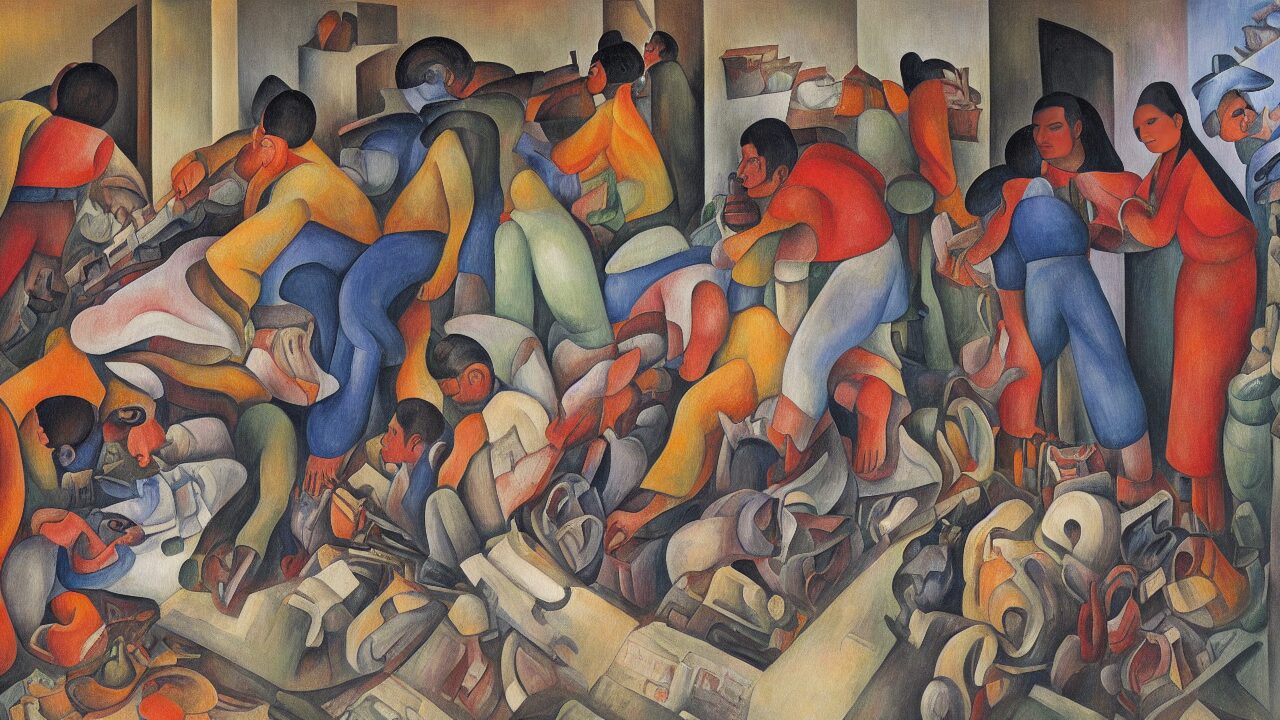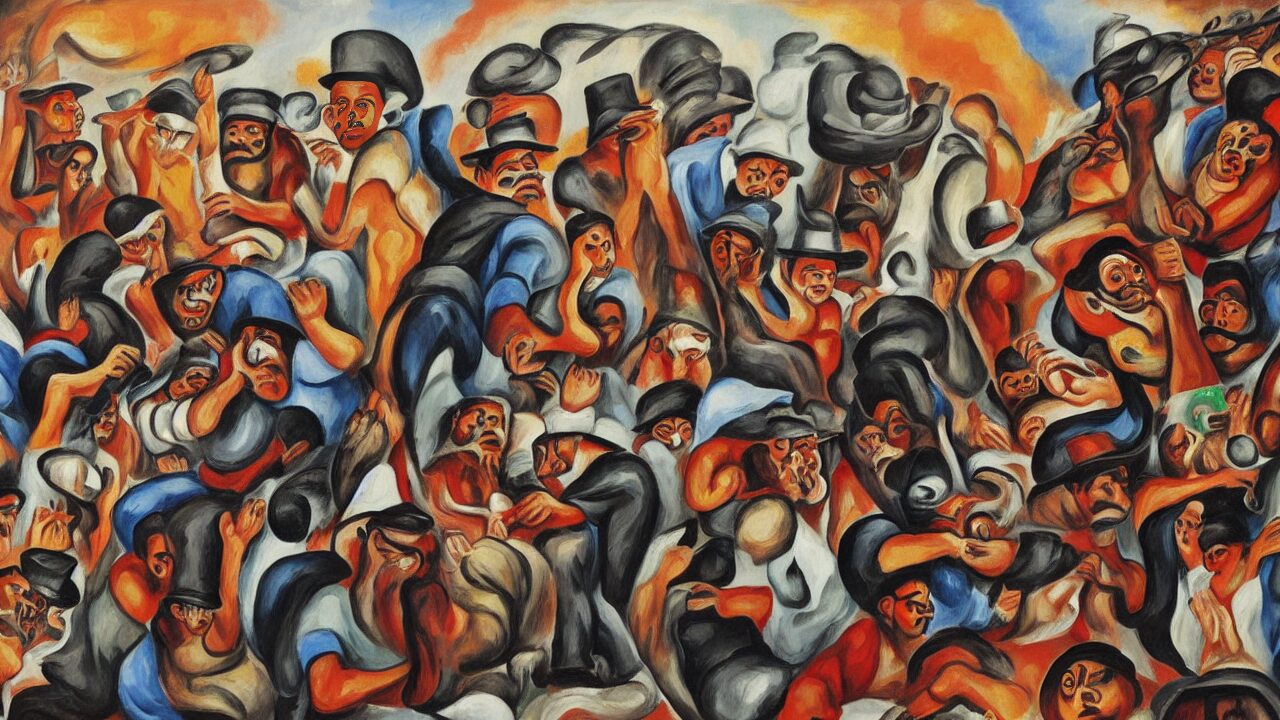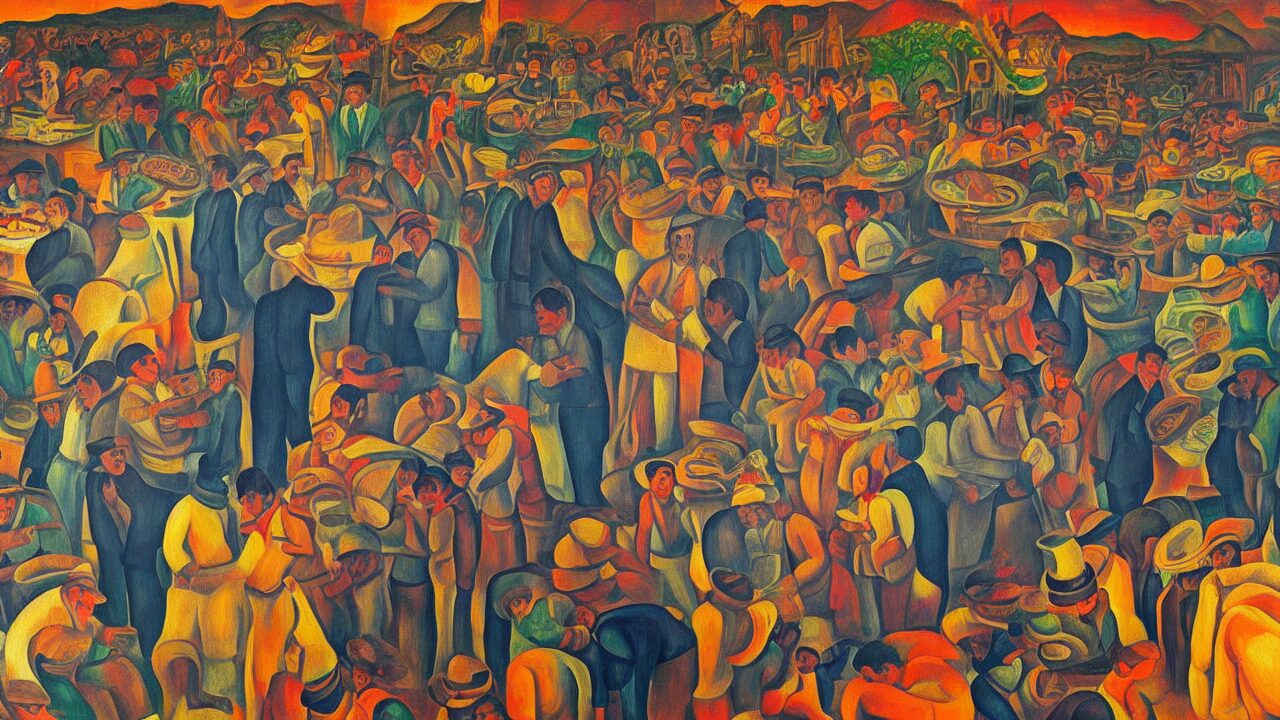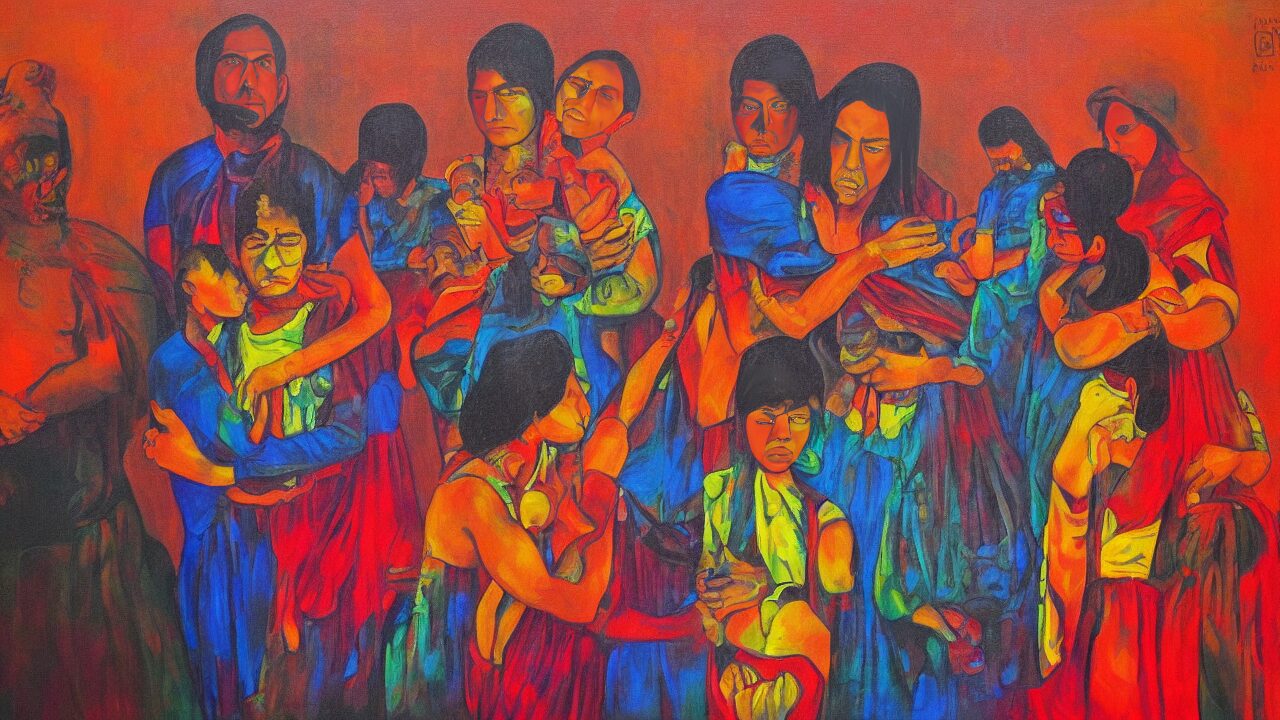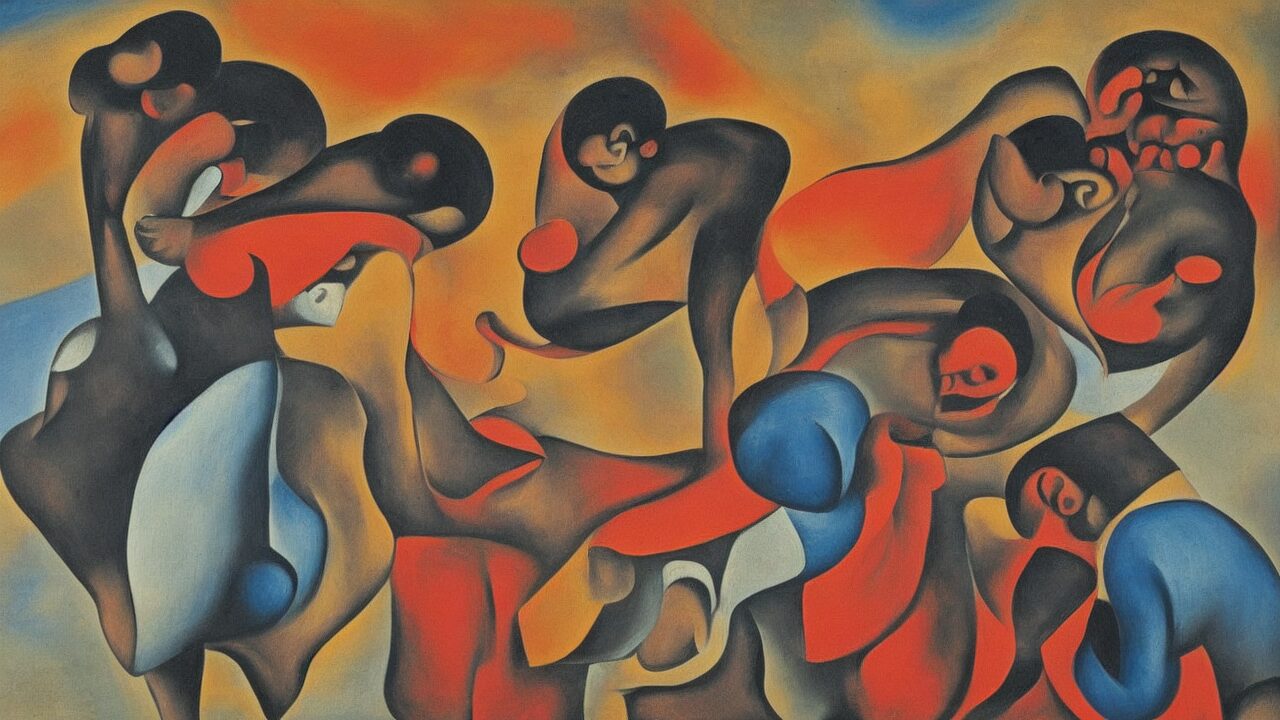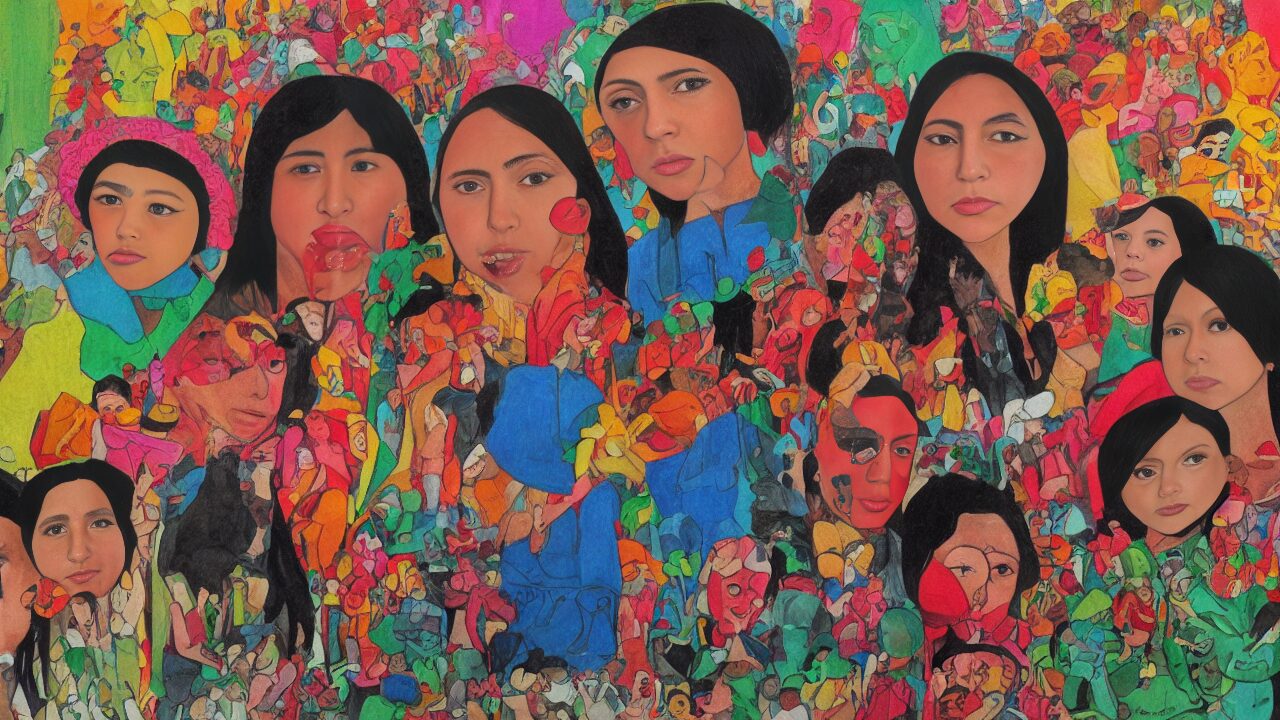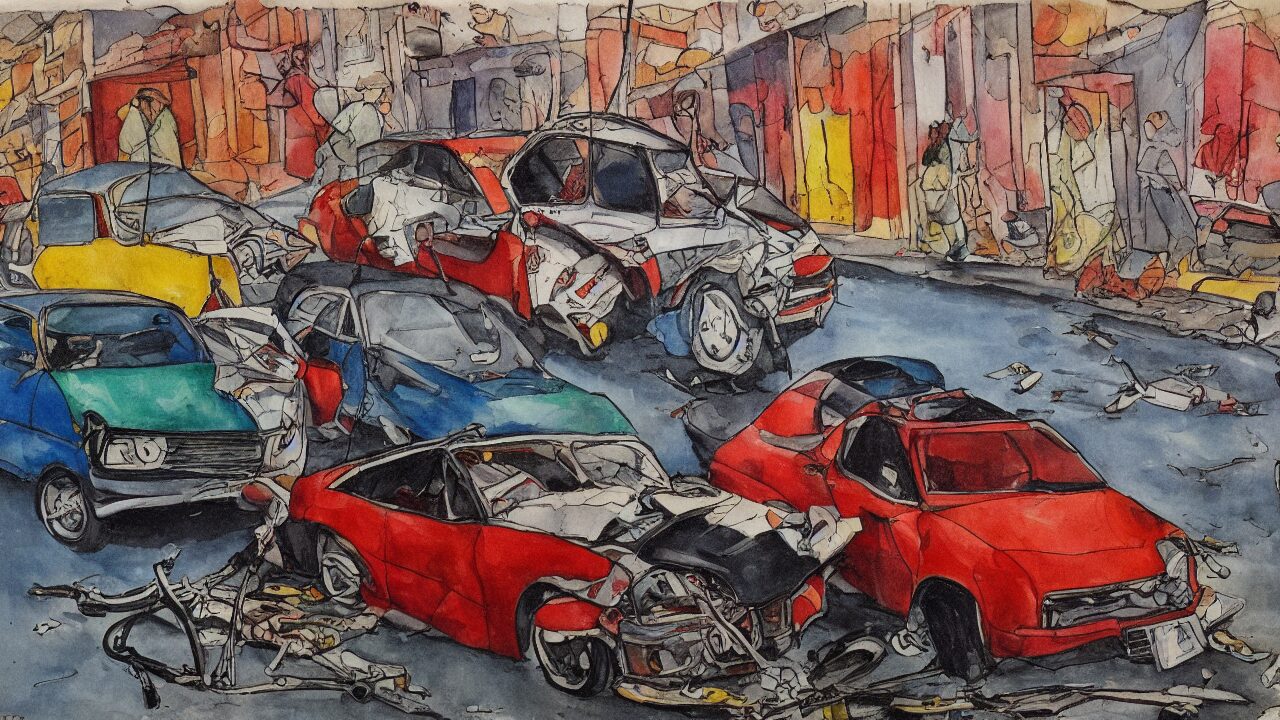
Cities around the world have imaginaries and identities shaped by their history, culture and traditions. To visitors, Mexico City is a cosmopolitan, colourful and multicultural place. This computational art project sets that joyful collective image against the harsh reality of the city, from an iconographic perspective.
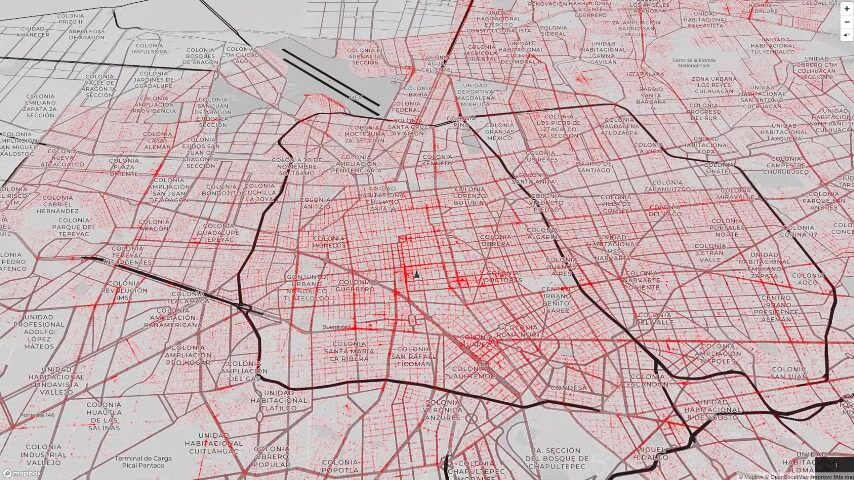
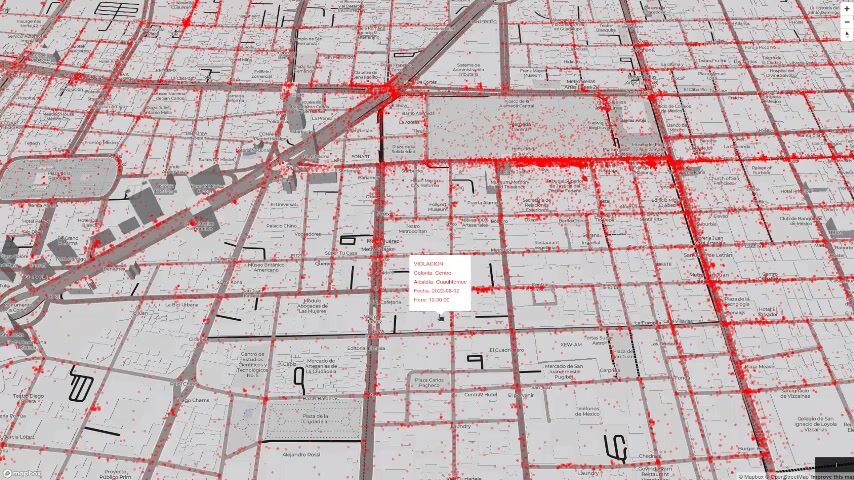
The comparison relies on generative artificial intelligence. Mexico City's open data portal lets anyone download the Attorney General's history of criminal investigation files: a short record of every crime reported since 2014, with its type, date, time and location. Placed on an interactive map, the data reveals a devastating truth: there is no territory in Mexico City without violent events. The reports alone are enough to redraw the map of the city.
The map does not lie and is covered with stains, / with marks, / with forgotten footprints / where there is no corner, / nor a street without its burden.
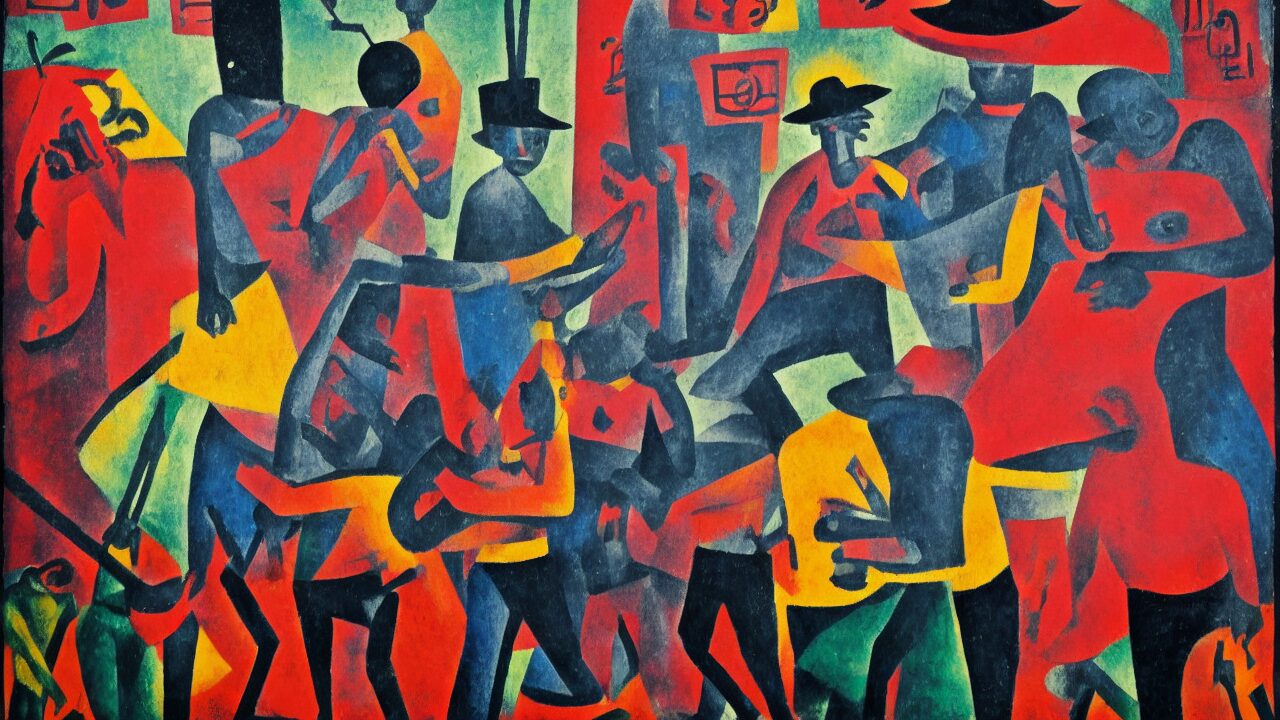
Each record holds only a brief label; the situations, names and personal sorrows remain unknown. Using generative techniques, the work writes a short fictional story for each event to give it a body and a life, and produces a digital painting in the style of the canonical painters of Mexican art —Diego Rivera, David Alfaro Siqueiros, Rufino Tamayo, Francisco Toledo, Frida Kahlo, Manuel Felguérez and others— creating an emotional contrast and a sense of aesthetic bewilderment.
The stories are read by a synthetic voice trained on the “niños gritones”, the children who call out the results of the National Lottery, over recordings of the organ grinders found all over the city. This sound material is recombined algorithmically in real time to create the voice that “sings the news”.
The work revisits urban violence without alarmism or superficiality, staging an aesthetic conflict between social reality, traditional pictorial values and, perhaps, play as a cathartic and healing process.