What symbolic trace did the post-pandemic era leave on the city?
Which references of our interactions changed? Can data speak of who we are and who we have been? Will we long for silence now that we can return to the city's shared spaces?
As we came out of lockdown, out of its silence and monotony, the stillness of Mexico City was gradually left behind. Along that passage I missed the symbolic reference of quietness, and it gave way to a need to explore: a personal research woven from a longing for contemplation.
From where I stood, collective gesture kept changing, and with each new day that brought us closer to the “new normal” that flow, and my appetite for calm, grew. Moving on from a very still and transparent individuality produced data that modified, transformed and mutated my (our) path, from the impossibility of moving through public space to a gradual return to reality.
I must confess that this relationship with a mostly private space sharpened my gaze toward “the outside” of Mexico City. I discovered that urban objects hold an infinite range of relationships. Through the collective observation of the data produced by human interaction, and through a numerical analysis that comes not only from the possibility of taking inventory but from the will to play with data, we can return whenever we wish to the objects that trigger the networks inhabiting our city. They reveal a symbolic fabric in which the poetic is set free when we expand our appreciation of the image, through a visual interface that draws on the human digital footprint and shows us who and how we are.
Data has always been present in decision-making. What matters in this proposal and in my search, I believe, is that where an image once represented the city's reality because it had a single way of being inhabited and defined, it can now also be read through a symbolic function. That function lets us understand the city through multiple paths recreated on the platform (the interface), opening up a polysemy of stories: an urban diegesis, subject to our interpretation, that shows the almost countless affinities woven between objects, city, dwelling and human flow.
Every corner, every park, every intersection, the tree, the empty swing, the window, the quesadilla stand, the new building, the public pool, the metro network, the tacos al pastor bicycles and the rooftops have an infinite potential for relationships. They let us identify trends, patterns and behaviours, and, through data analysis and an aesthetic proposal, they can also be travelled as a poetic symbolic becoming. Almost any object can then confirm our present and the ephemeral nature of human existence, and also show us who we have been or who we will be. This is a data-history that opens the way to the endless eventualities that fiction can create, based on the “real” of open data. It promotes the philosophy of free access to our own information, without restrictions or mechanisms of control, and emphasises the appropriation of our collective and individual existence.
Enter the interactive experience
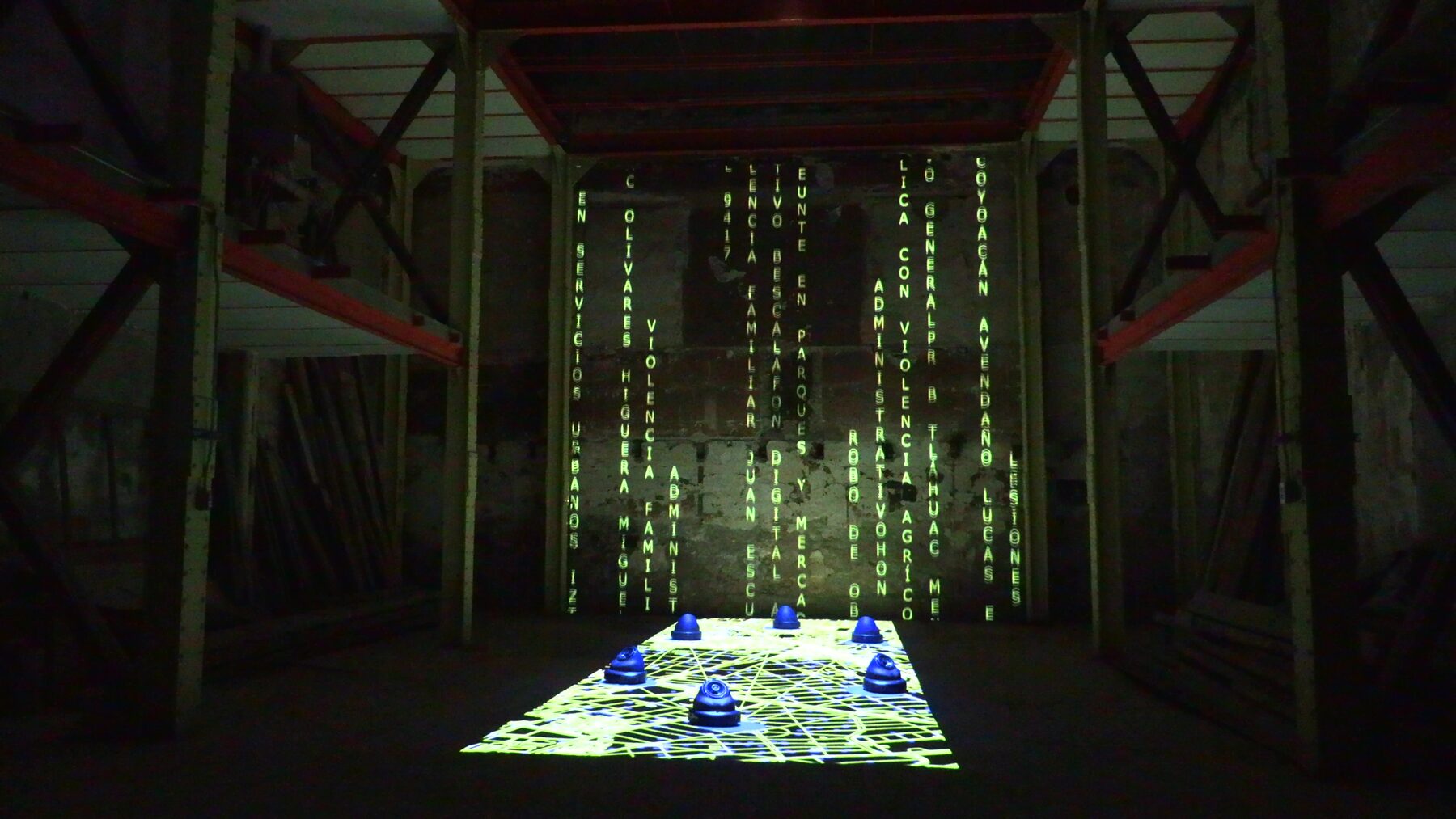
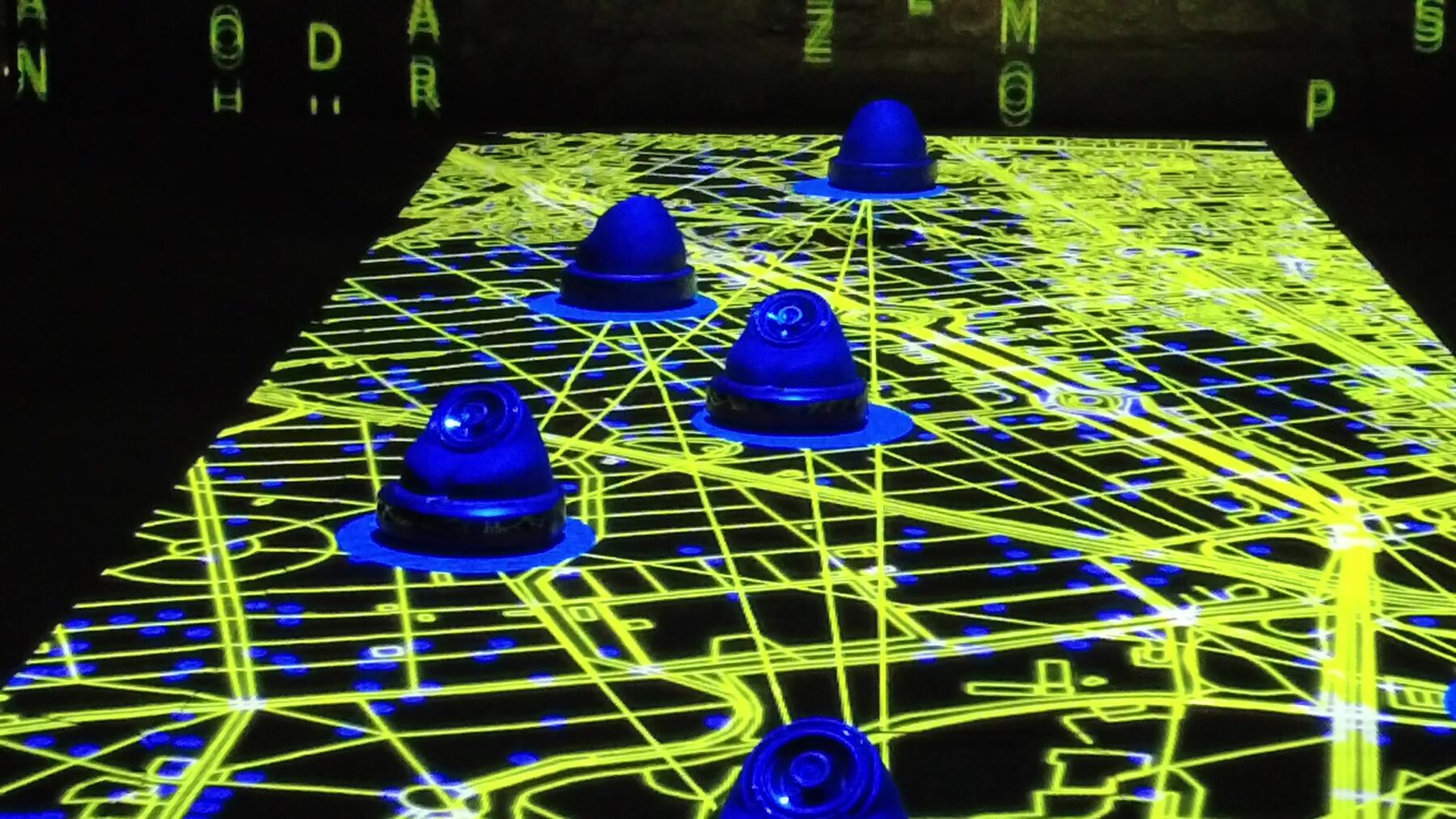
Installation at Uruguay 25
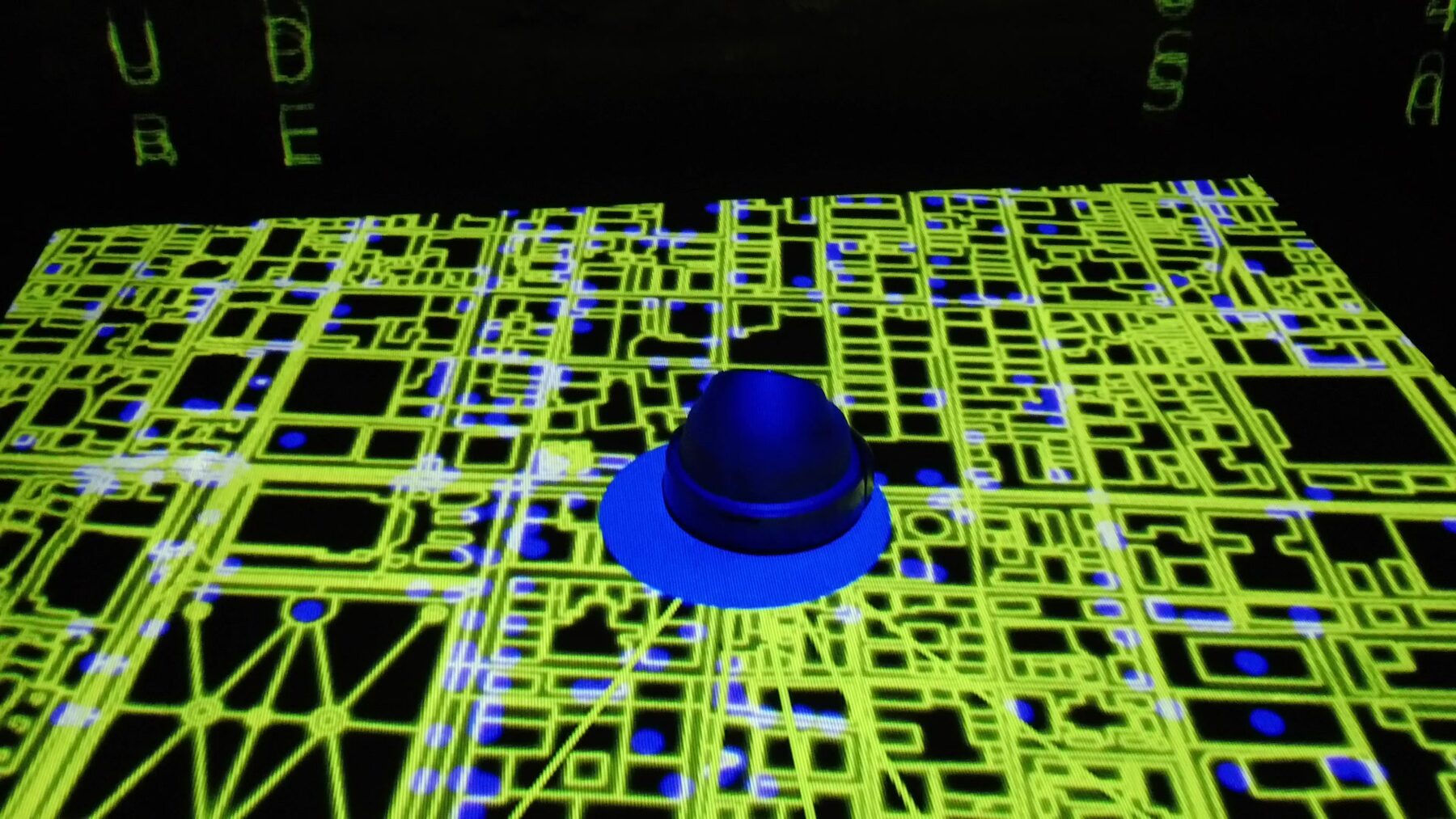
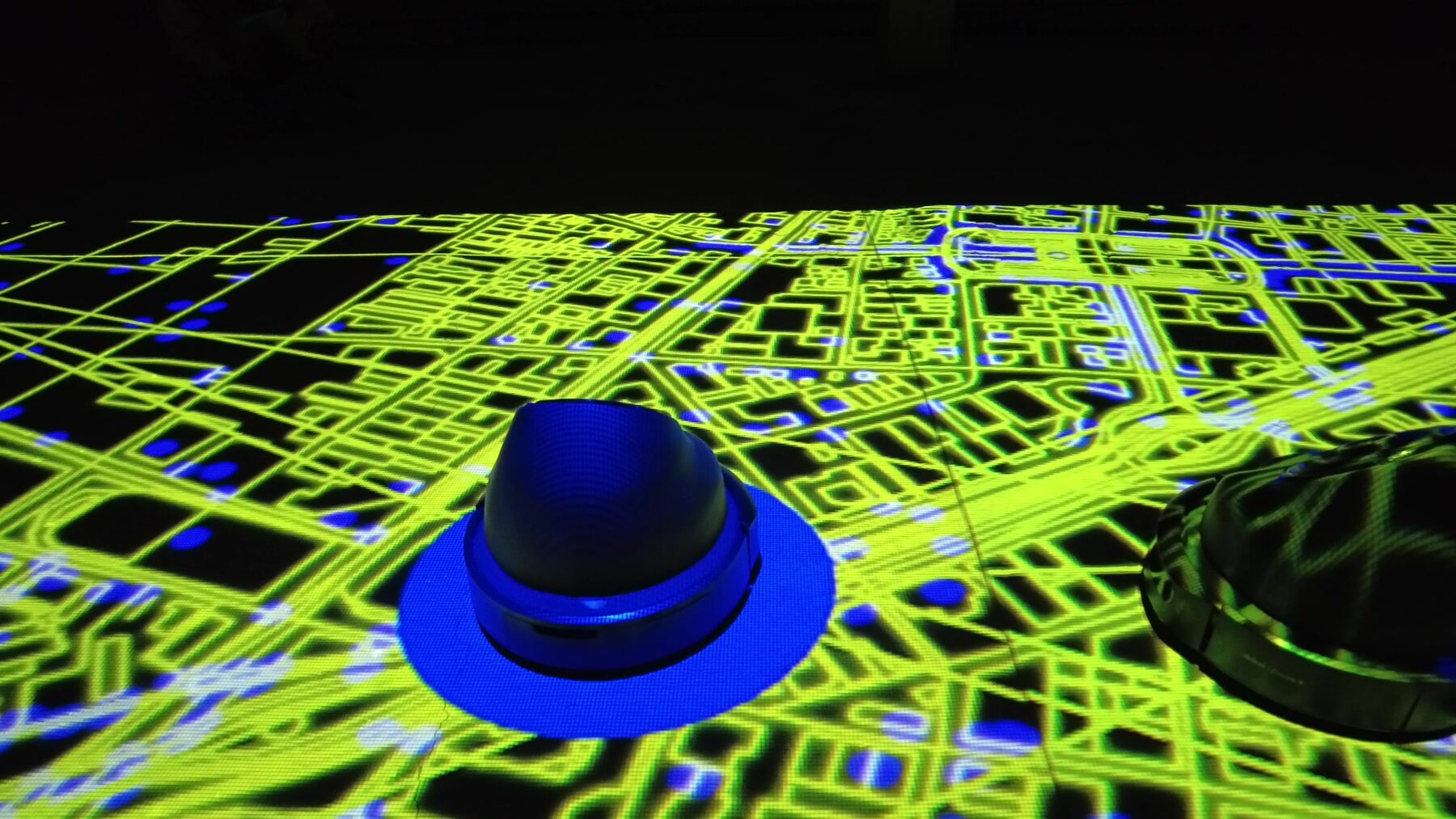
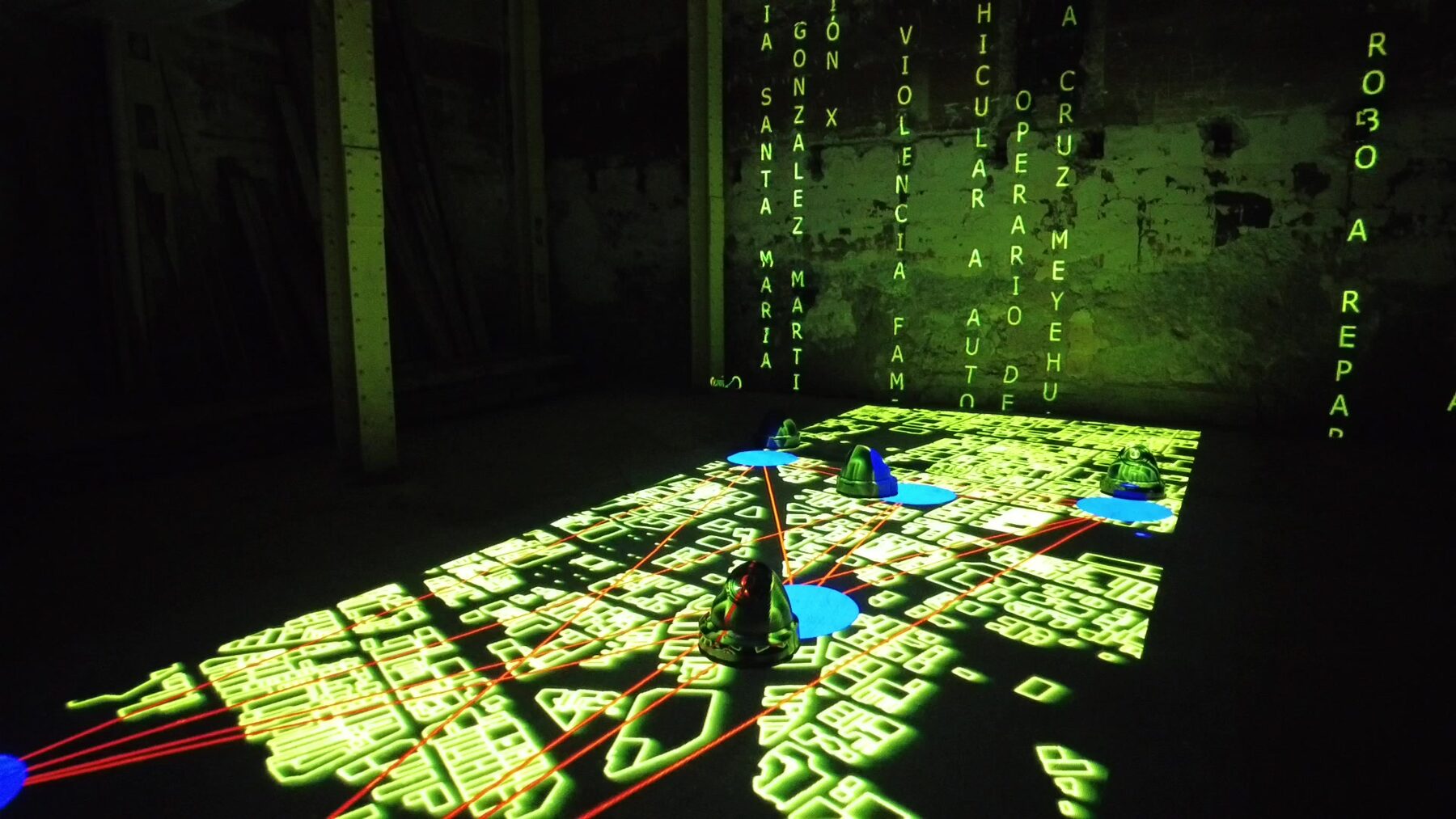
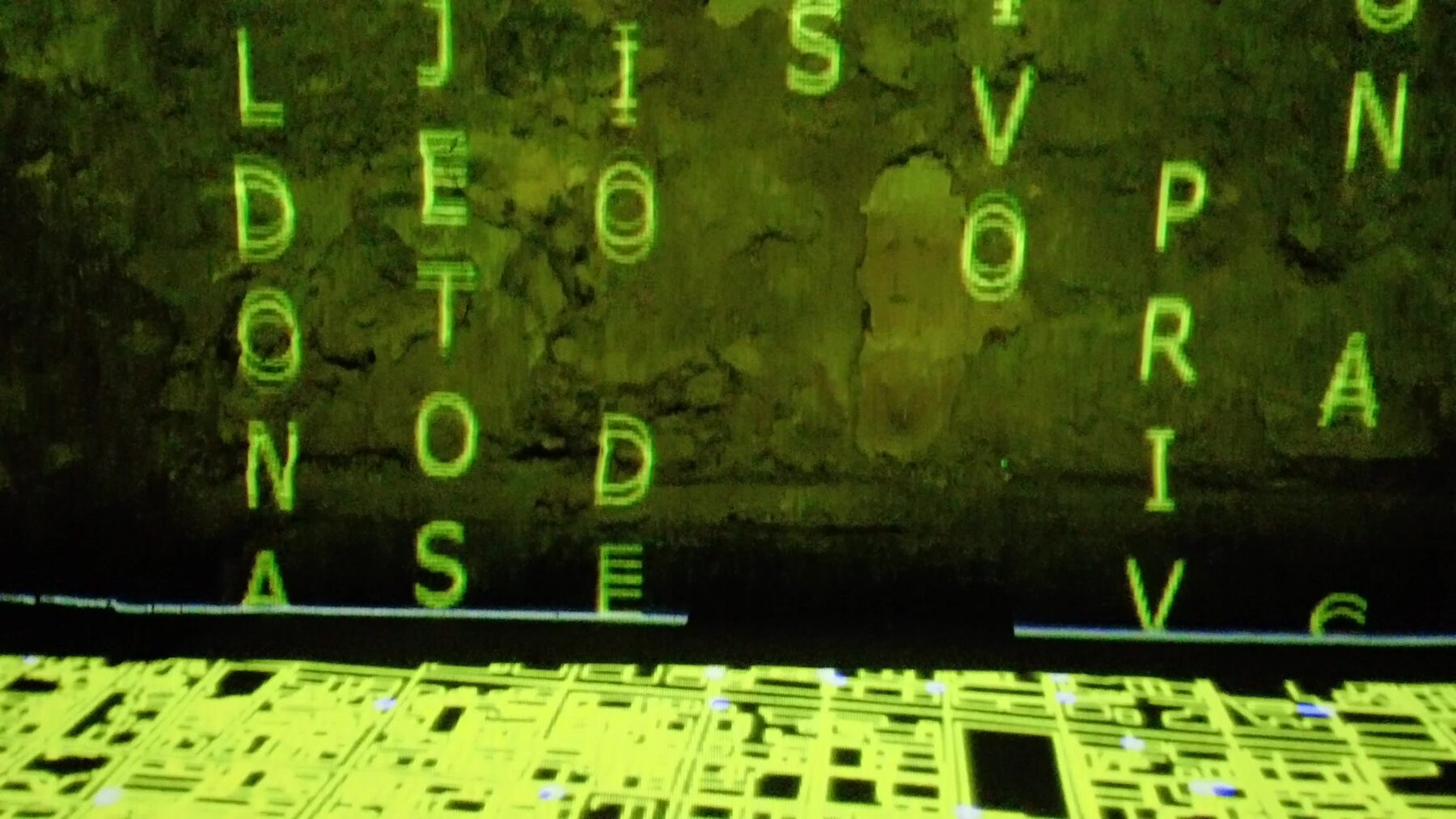
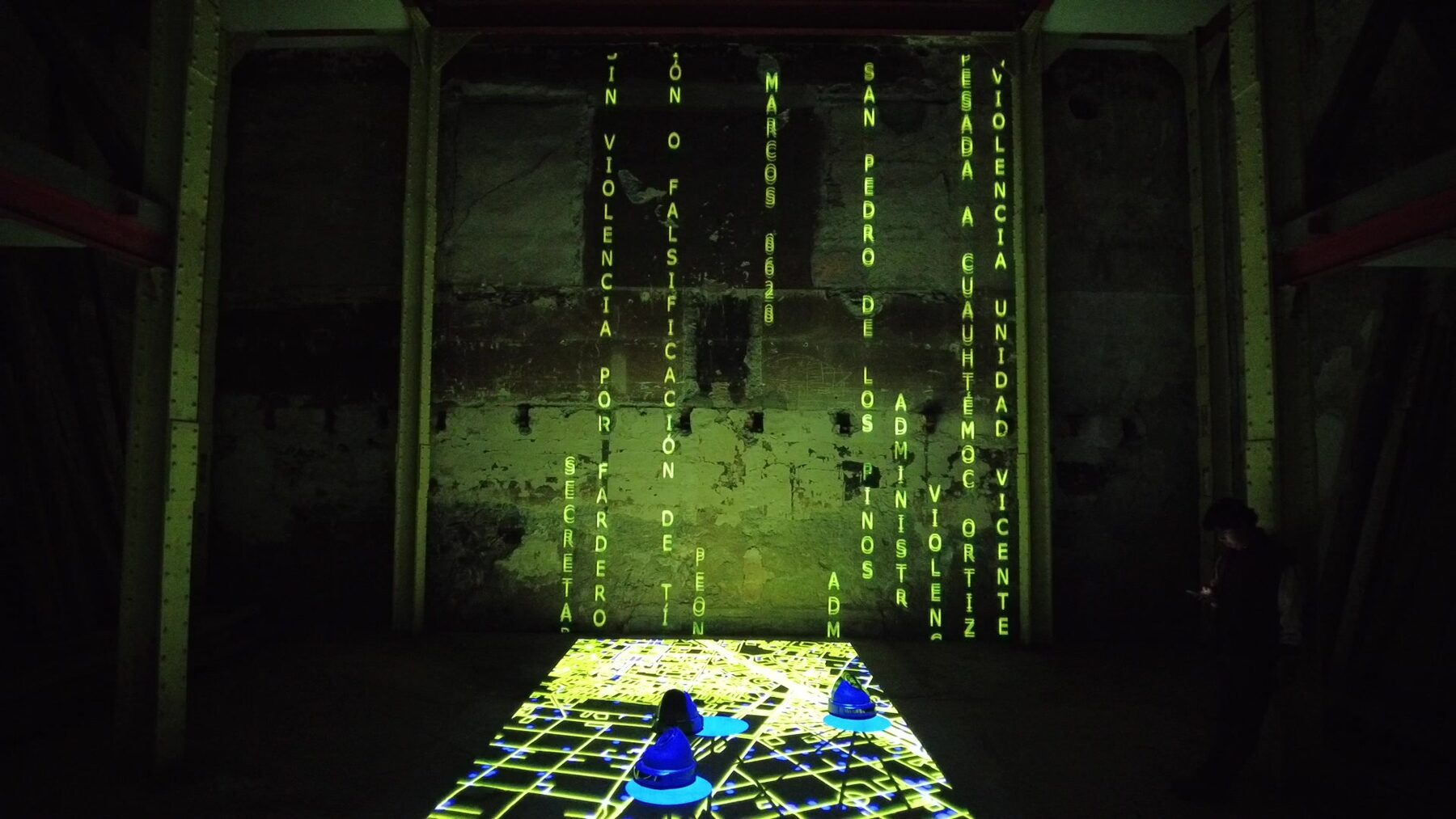
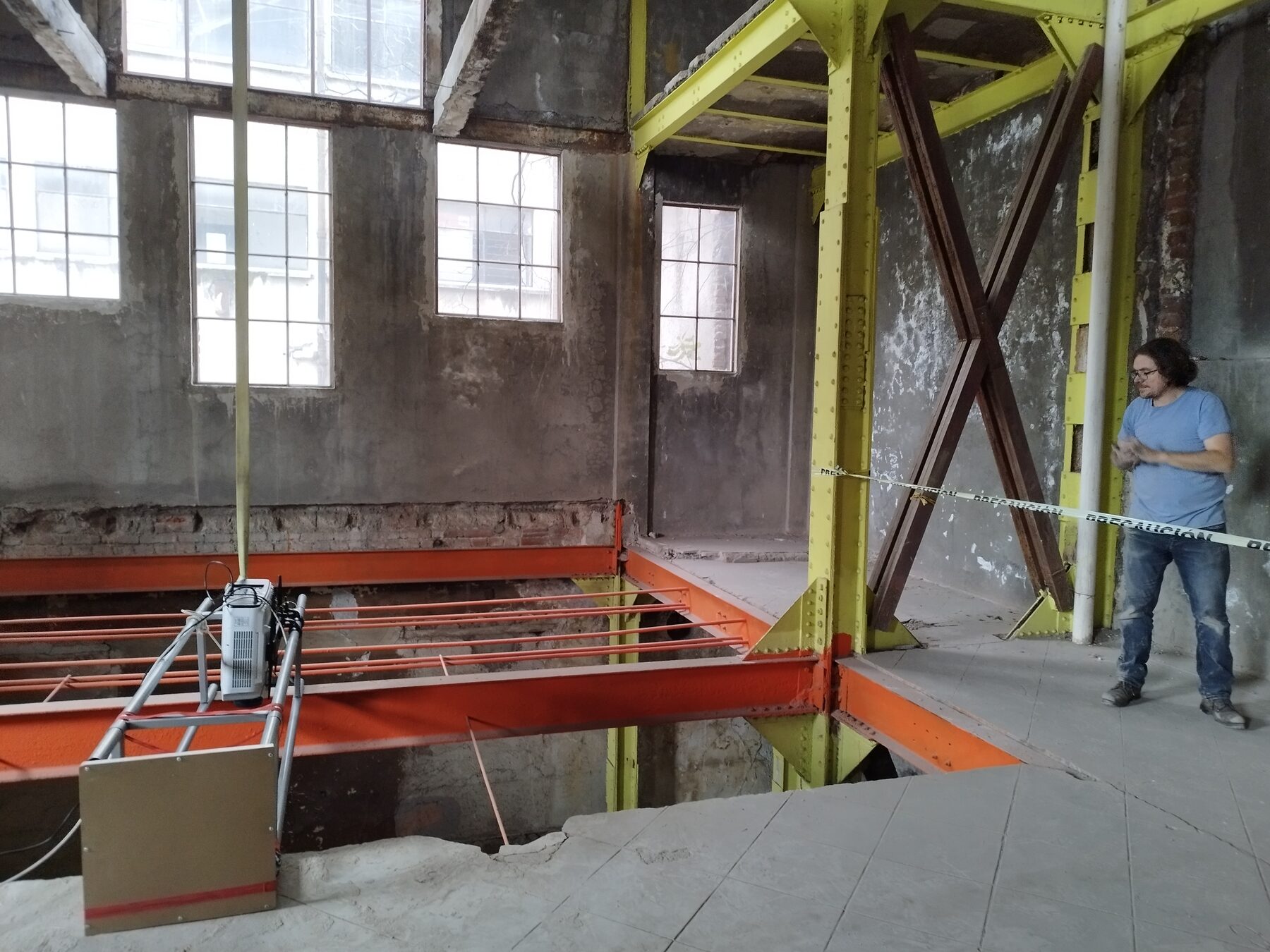
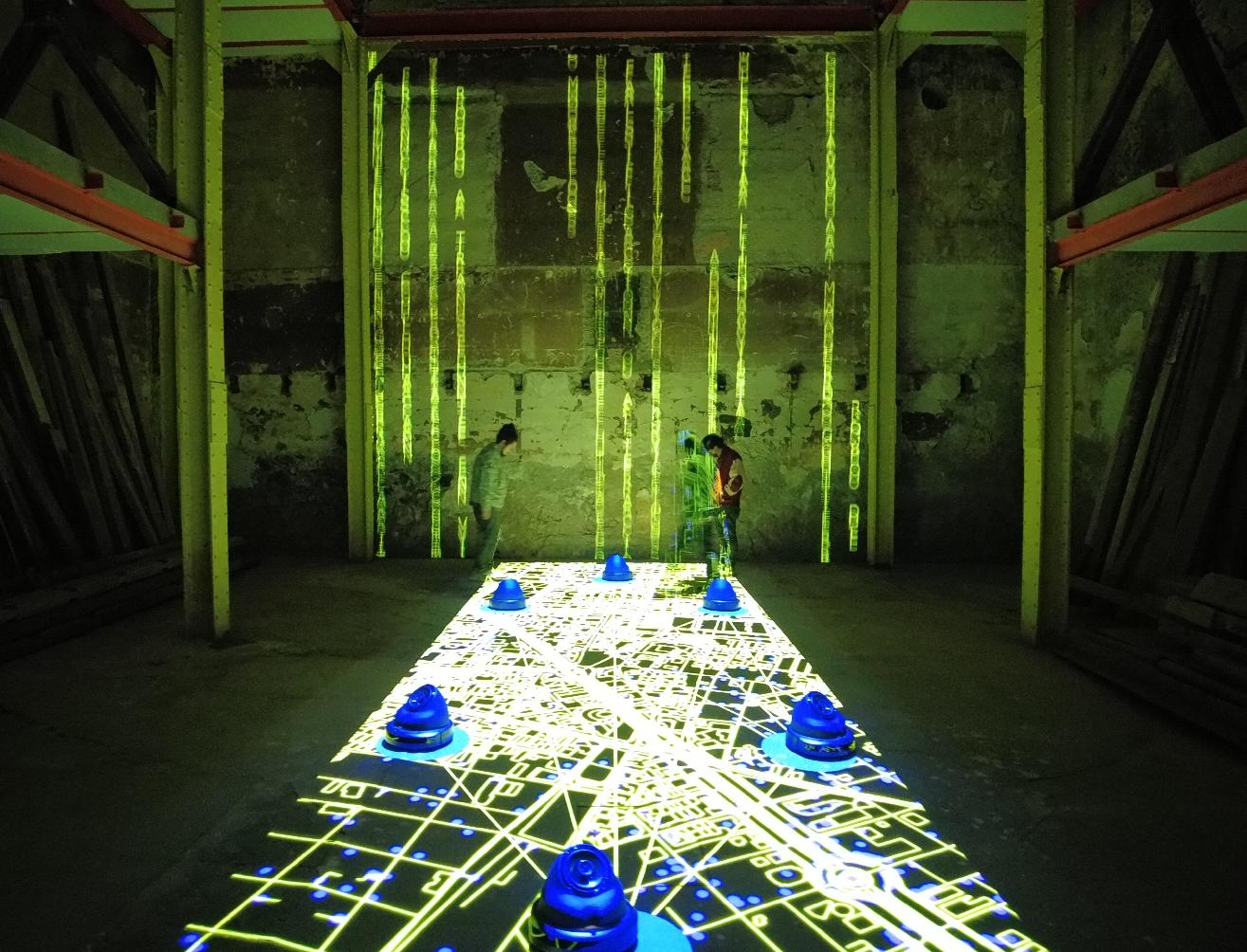
In October 2022 the work was installed at UAM's Uruguay 25 university cultural centre in Mexico City's historic centre: a data map of the city projected on the floor and travelled by small robots, with moving text projected on the walls of the building.